
Northern Xinjiang Grand Loop, 2022/06
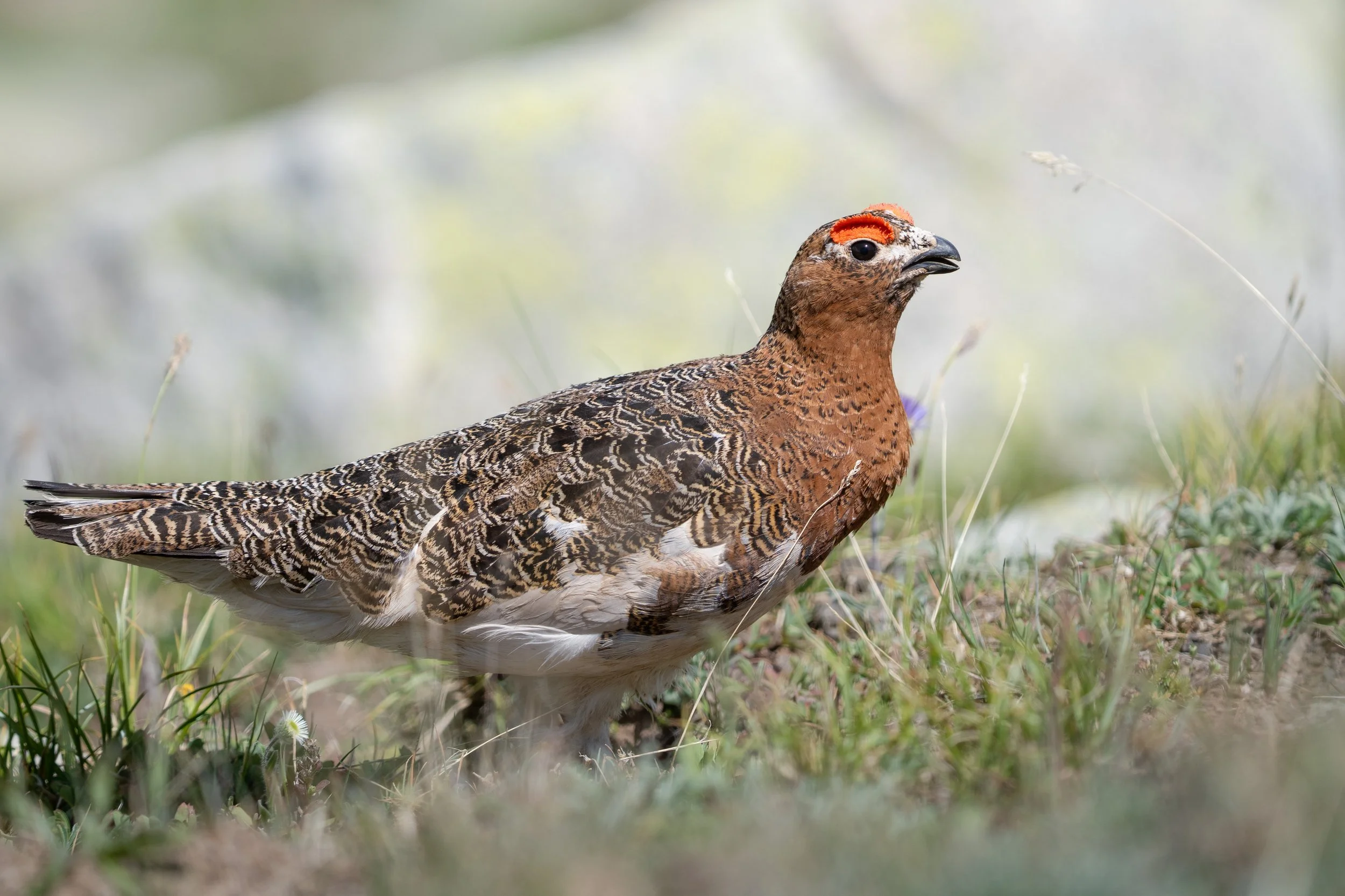
Willow Ptarmigan (Lagopus lagopus)
Dates: 21–30 June 2022 (10 days)
Location: Northern Xinjiang, China
eBird Trip Report: https://ebird.org/tripreport/106098
Guide: Allen Xue, Xinchen Bu
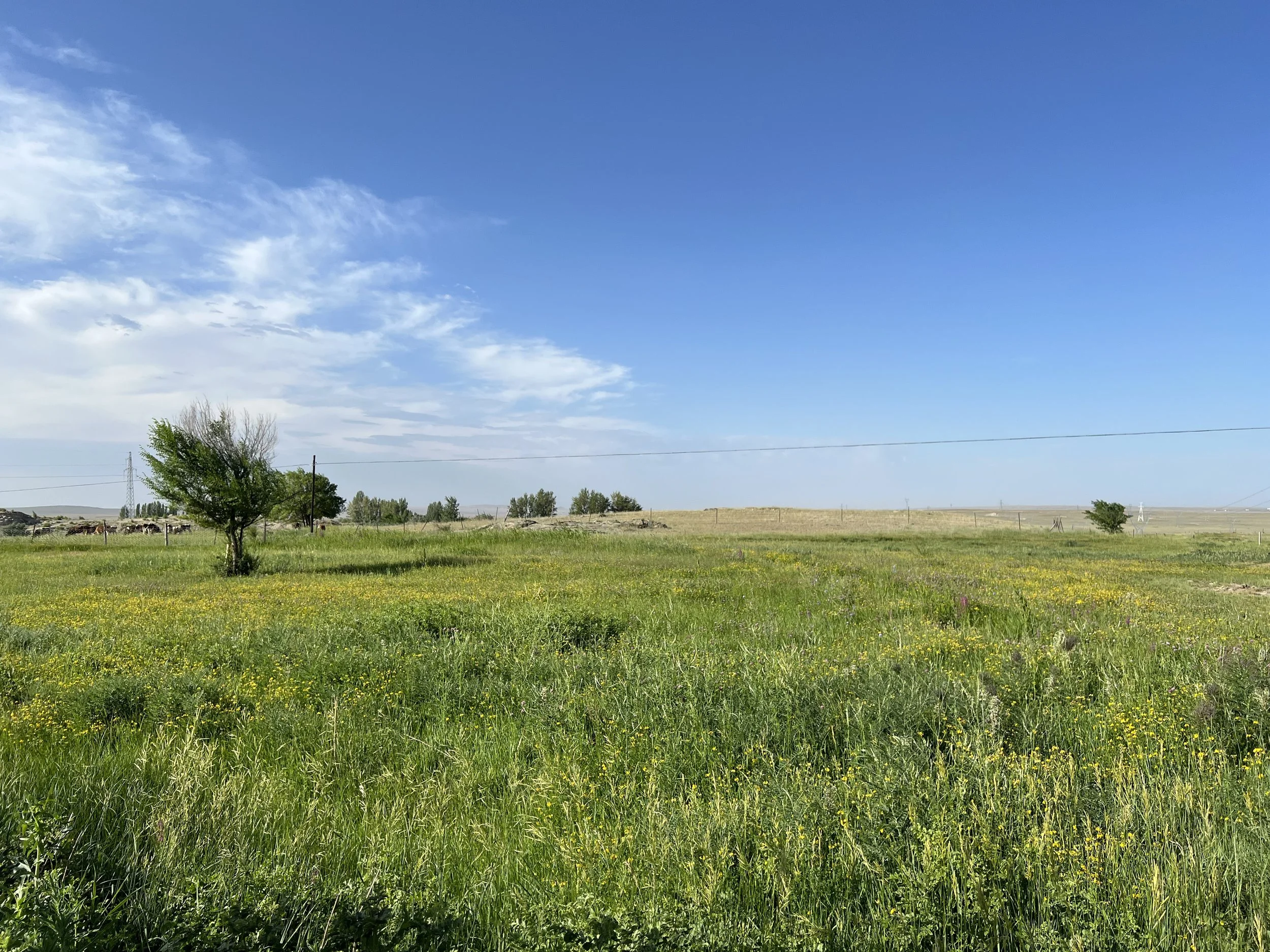
A mosaic of farmland and scattered trees is one of the characteristic habitats of northern Xinjiang. Many of the region's key bird species can be found in these productive landscapes.
Introduction: Xinjiang lies in the far northwest of China, and Northern Xinjiang (Beijiang) occupies the northern part of the region. It offers a rich variety of habitats — highlands, steppe, desert, and wetlands — and is the place to look for a number of Central Asian specialties. Early summer is the best season here, as the birds are in full breeding display and at their most active.
Northern Xinjiang is vast, so the distances between birding sites are often long. Combined with the high latitude and correspondingly long summer days, this makes for long days in the field. Add in the heat of the desert and the effort of working at higher elevations, and a birding trip here can be fairly demanding.
Because the region is deep in the continental interior and at a high latitude, its overall bird diversity is not exceptional. The appeal of birding here lies in everything that comes with it: experiencing local Xinjiang culture and customs, taking in spectacular geology and scenery along the way, and sampling the region’s distinctive food. This 10-day trip began in Urumqi and worked broadly south to north — through the Manas River Valley, Gurtu, Karamay, and Tacheng, then by air to Altay — covering habitats from the northern foothills of the Tianshan to the Altai Mountains, and recording 140 species in total. One practical note: checkpoints are frequent in parts of Northern Xinjiang, so carry your passport and other documents at all times and keep an eye on local, short-notice access restrictions.
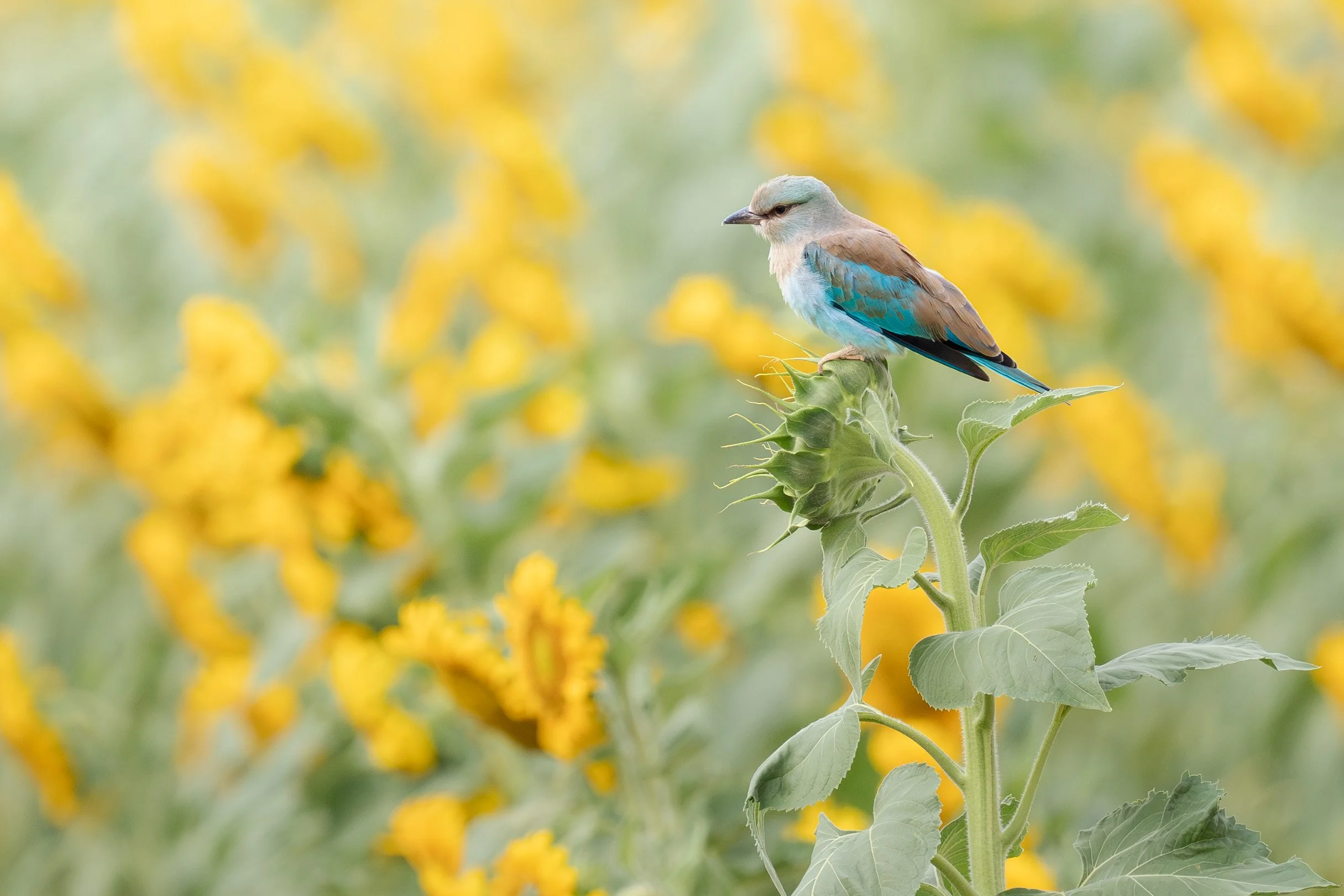
European Roller (Coracias garrulus)
D0: Arrived in Urumqi; overnight in Urumqi.
D1: We started birding around Urumqi. Beishan, on the city’s outskirts, is a good place to get acquainted with Xinjiang’s birds, with habitat dominated by villages and desert. The main goal here was to pick up some of the region’s more common specialties.
Target species: Red-headed Bunting, Pine Bunting, Godlewski’s Bunting, Isabelline Wheatear, Pied Wheatear, Azure Tit, Red-tailed Shrike, Isabelline Shrike, European Roller, Booted Eagle.
After a day in the field, we moved on in the evening to bird the Manas River Valley, where the habitat is mainly an arid river valley with stretches of reedbed and woodland.
Target species: Ruddy Shelduck, Oriental Turtle-Dove, White-winged Woodpecker, White-crowned Penduline-Tit.
Overnight in Shihezi.
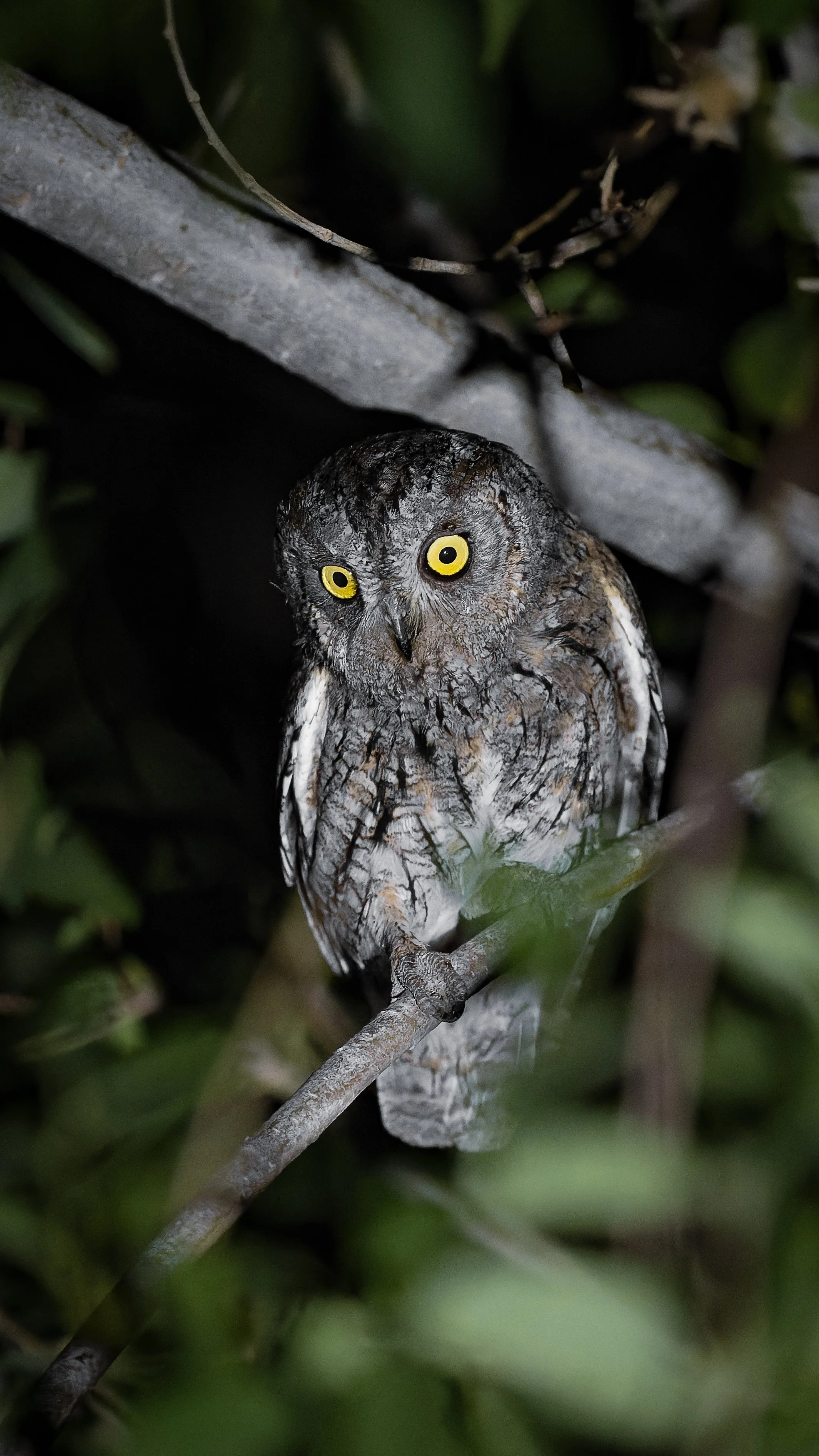
Eurasian Scops-Owl (Otus scops)
D2: From morning through the afternoon we birded a reservoir near the Manas River Valley. The main habitats were the reservoir itself and the surrounding exposed riverbanks and wetland.
Target species: Collared Pratincole, Mongolian Gull, European Bee-eater, Rosy Starling, Long-legged Buzzard, Gray-crowned Goldfinch, Rock Sparrow, Siberian Stonechat, Common Myna, Booted Warbler.
In the evening we reached Gurtu for some night birding. Gurtu is the best place to look for the scarce Pallid Scops-Owl at night: the density of Eurasian Scops-Owl here is astonishing, and the encounter rate for Pallid Scops-Owl is also relatively high. (Pallid Scops-Owl favors mature stands of plain poplar/desert poplar, while Eurasian Scops-Owl is the commoner of the two here.) The night session can also turn up mammals such as Long-eared Hedgehog and three-toed jerboa.
Target species: Pallid Scops-Owl, Eurasian Scops-Owl.
Overnight in Gurtu.
D3: In the morning we drove from Gurtu to Karamay. On arrival we birded the desert near the city (Takacho). Diversity in the desert is low, but the species are highly distinctive.
Target species: Saxaul Sparrow, Asian Desert Warbler, Sykes’s Warbler, Desert Wheatear, Pale Martin.
Overnight in Karamay.
D4: Setting out from the Karamay area, we spent the day birding the Tacheng region. There are extensive croplands here, and these fields are a breeding ground for the scarce Black Lark. We watched male Black Larks rise in song-flight over the fields; later in the breeding season you can also see Black Lark parents feeding fledglings perched on the wire fences around the fields.
Target species: Black Lark, Bluethroat, Lesser Gray Shrike.
In the evening we headed to Orku Poplar Forest for night birding. The habitat here is village edge with large patches of tall grass nearby — ideal for Eurasian Nightjar.
Target species: Eurasian Scops-Owl, Eurasian Nightjar.
Overnight in Karamay.
D5: From Karamay we flew to Altay. The Altay region is known as the “water tower of Northern Xinjiang”: noticeably more humid than other parts of Xinjiang, it holds a correspondingly different bird community.
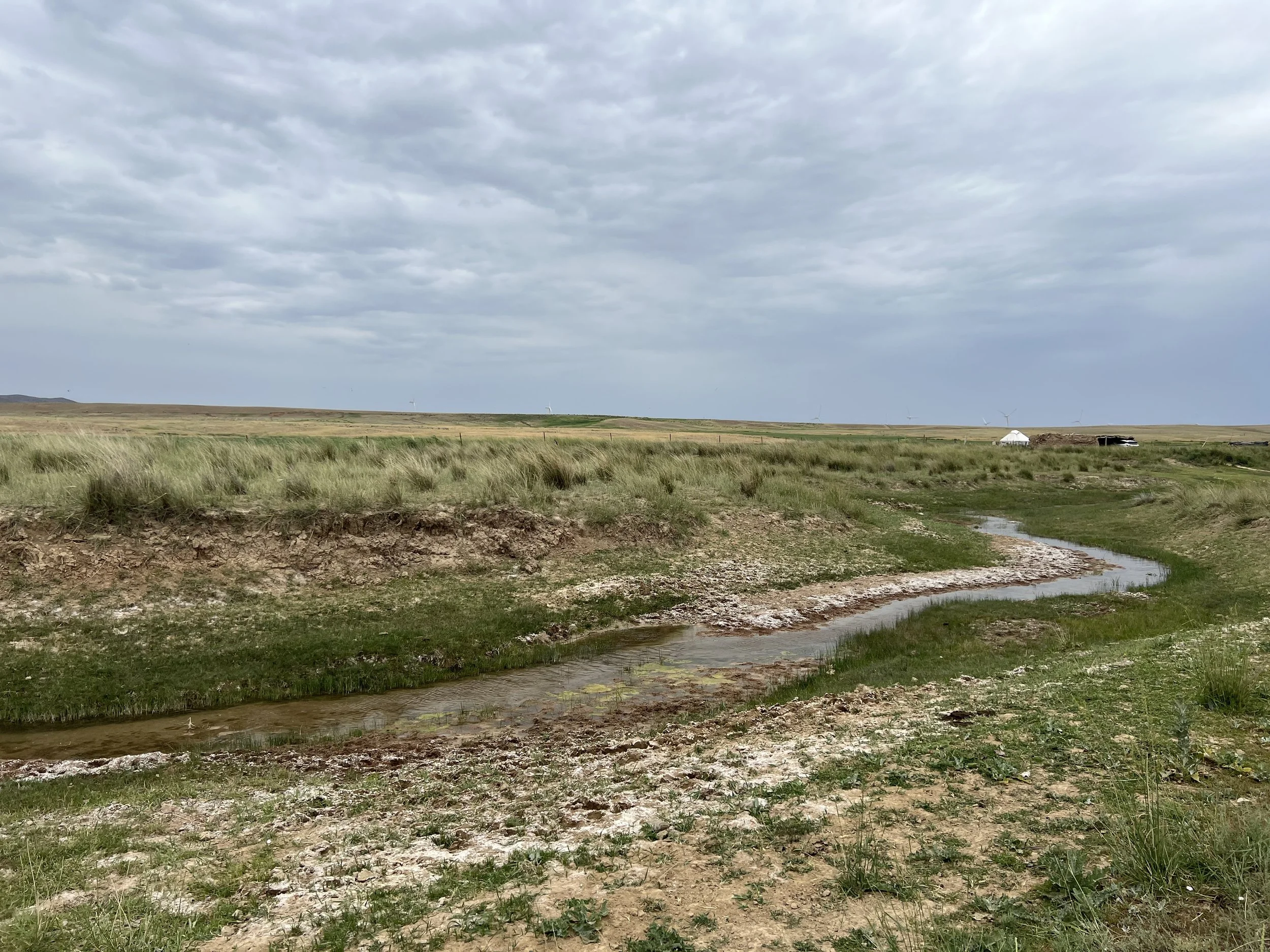
Extensive grasslands and grazing pastures dominate the northern Xinjiang plains. These habitats support a rich diversity of larks, including the desirable target Black Lark.
D6: After the long journey, we took it easy in the town of Altay and birded the in-town Hualin Park in the afternoon. The park has tall woodland and a small river running through it.
Overnight in Altay.
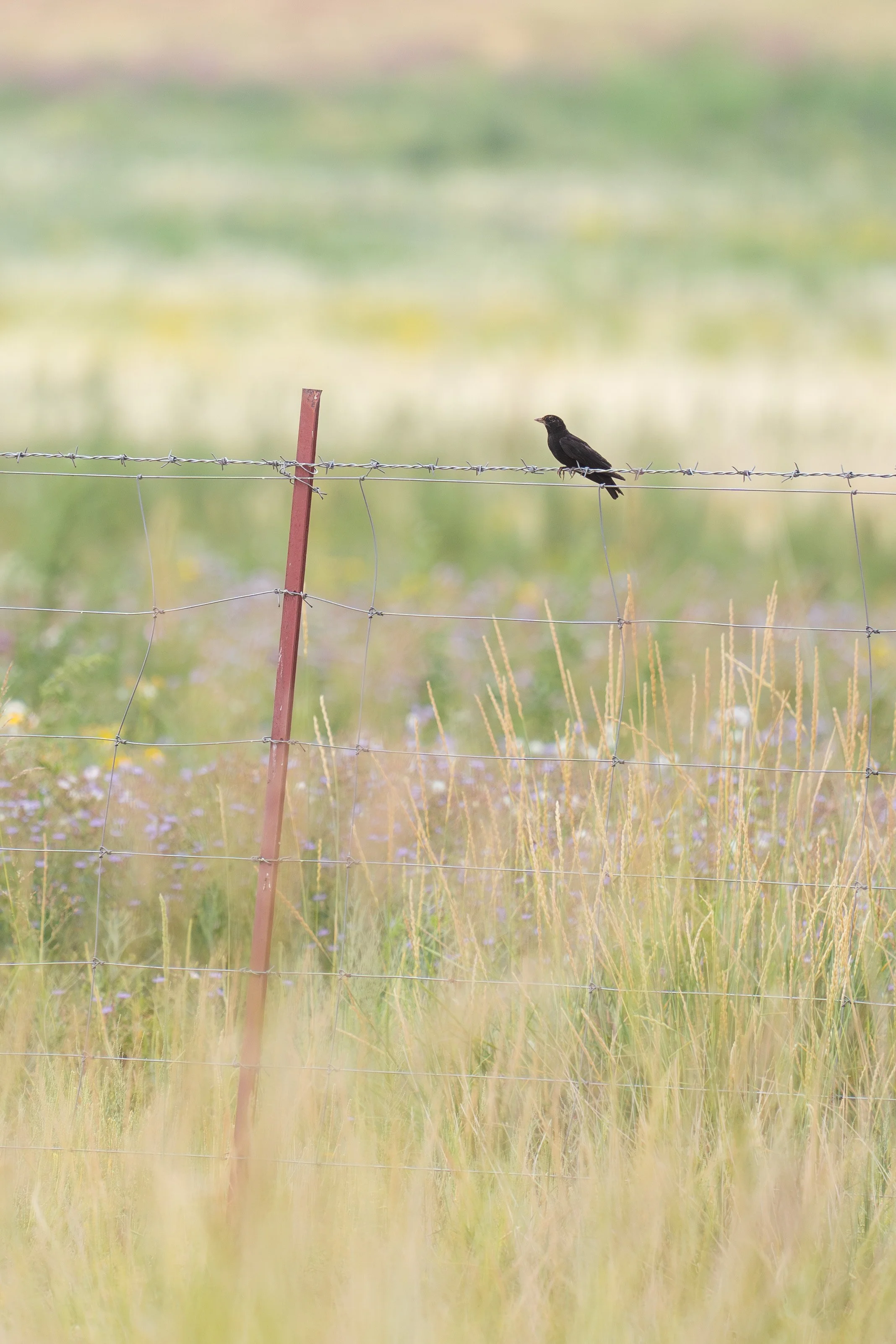
Black Lark (Melanocorypha yeltoniensis)
D7: We spent the whole day at Xiaodonggou Forest Park, where the habitat is high-elevation scree and alpine meadow. The altitude makes for slightly heavy going, but the site offers reliable views of several hard-to-see species.
Target species: Willow Ptarmigan, Rock Ptarmigan, Eurasian Dotterel, Altai Accentor, Blue-capped Redstart, Cinereous Vulture.
Overnight in Altay.
D8: In the morning we set out from Altay for the “640” tableland to look for the secretive Asian Houbara. Finding these wary birds, whose plumage blends almost perfectly into the desert floor, takes both sharp eyes and good luck — fortunately, we located them in just one morning.
Target species: Asian Houbara, Stock Dove.
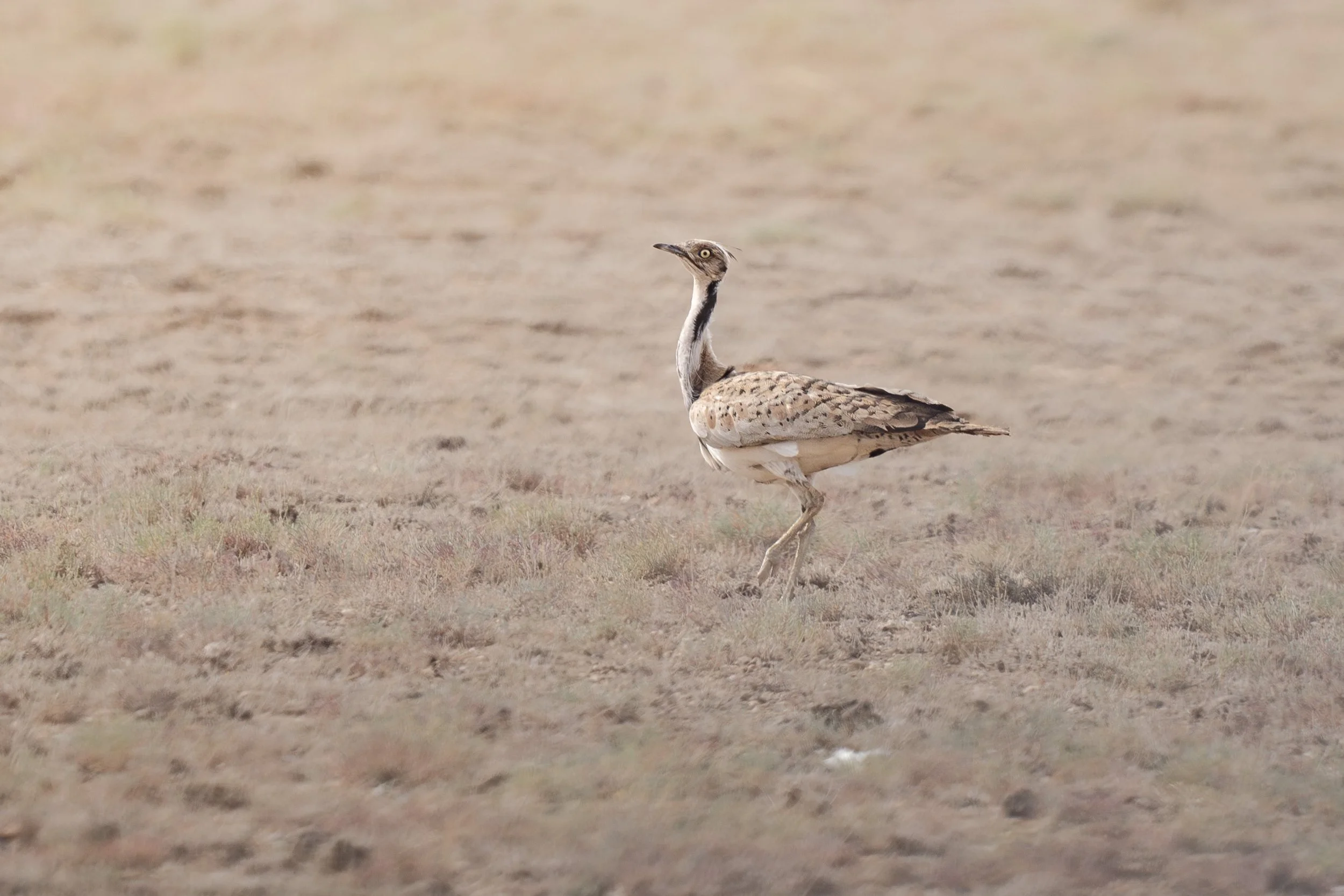
Asian Houbara (Chlamydotis macqueenii). A scarce and elusive bird, with populations declining rapidly throughout much of its range
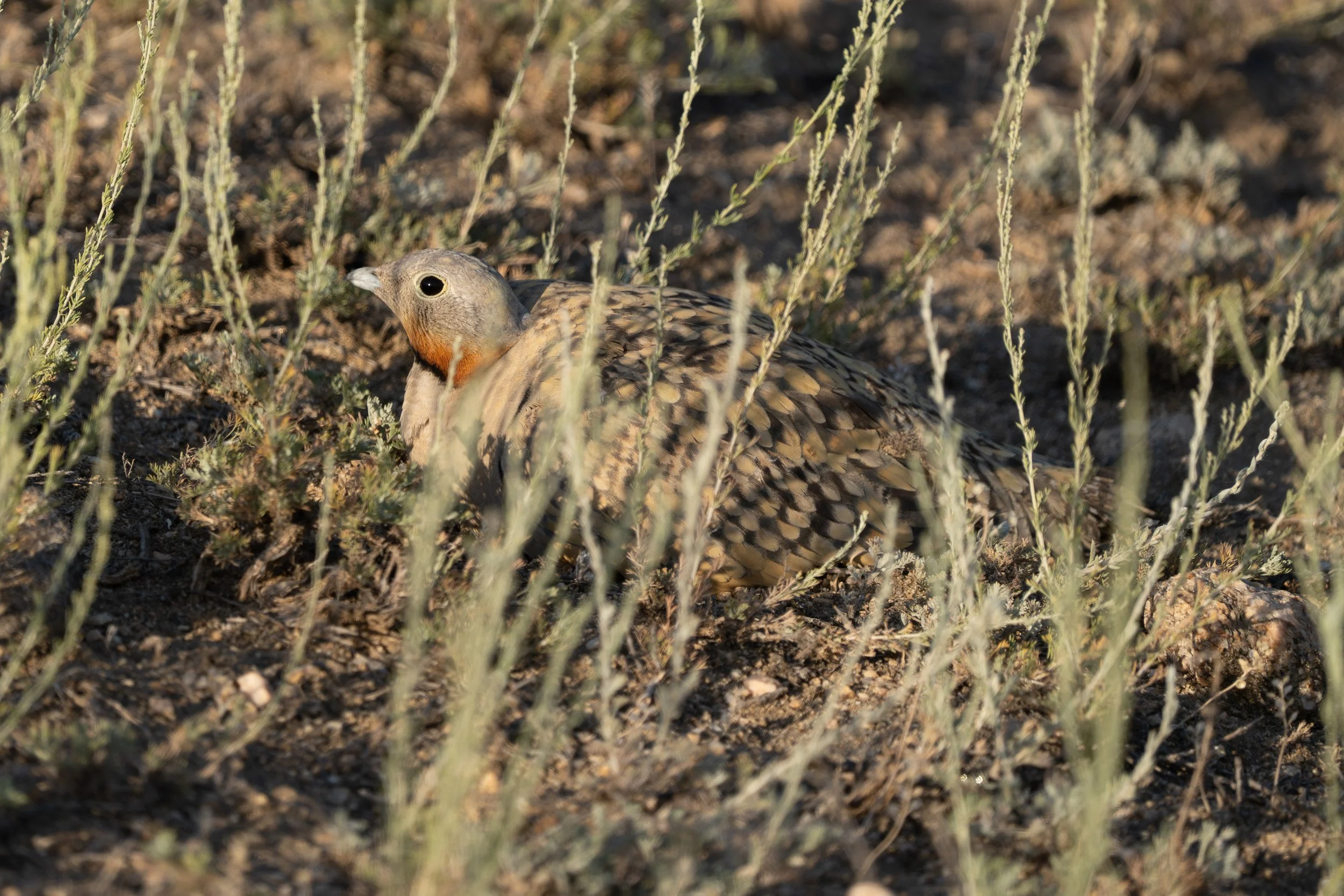
Black-bellied Sandgrouse (Pterocles orientalis). Fasinating camoflage.
In the afternoon we birded near Aweitan Reservoir. The reservoir wetland holds many breeding waterbirds, while the grassland along the shore is home to Black-bellied Sandgrouse.
Target species: Black-bellied Sandgrouse, Arctic Loon, Gray-necked Bunting, Demoiselle Crane, Bar-headed Goose, Pallas’s Gull, Common Quail.
Overnight in Burqin.
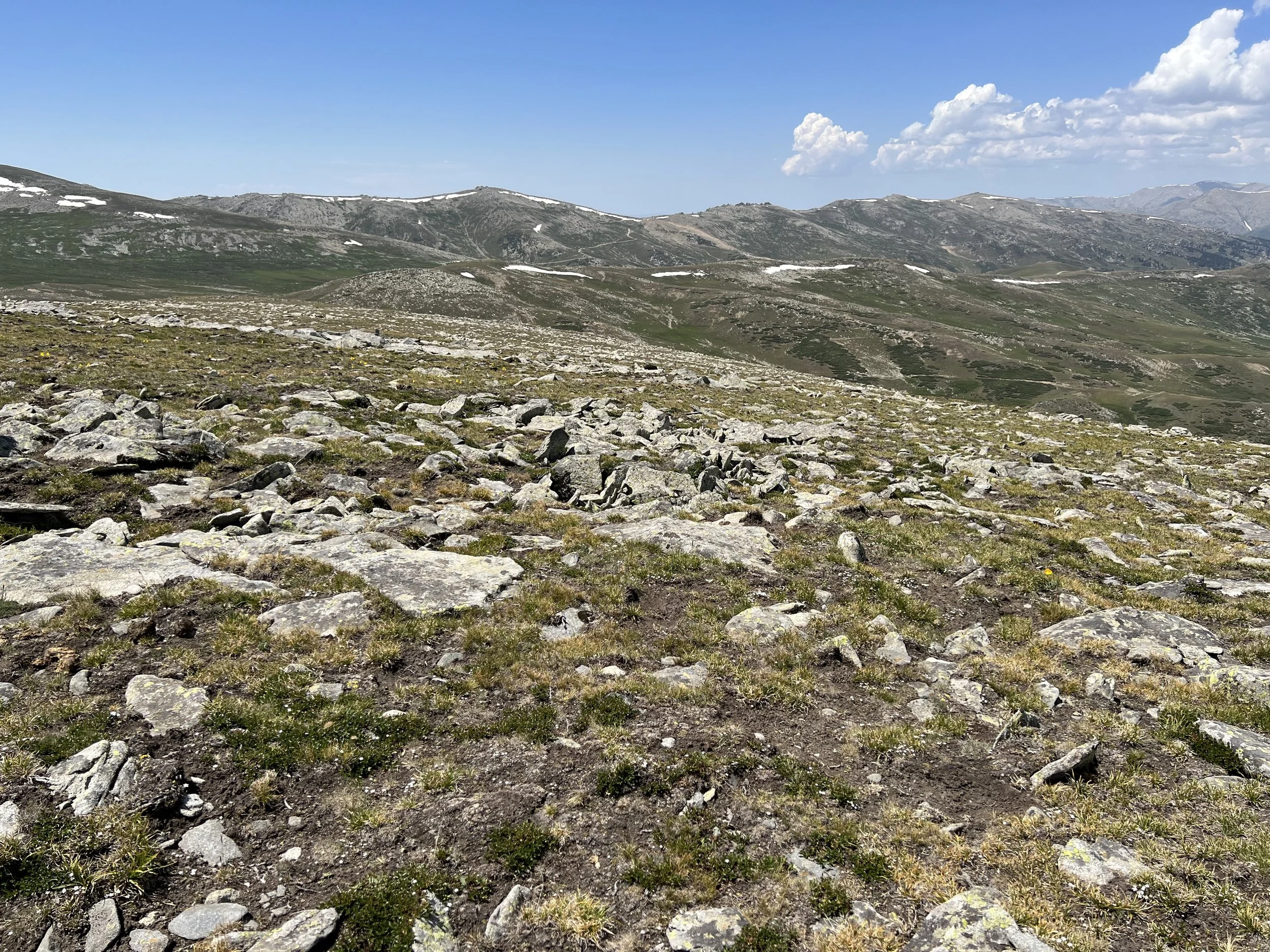
Xiaodonggou Forest Park is located in the Altai Mountains of northern Xinjiang at an elevation of around 2,000 m. The area consists of a mix of alpine meadows, conifer forests, and scattered woodland, creating excellent habitat for a variety of montane bird species
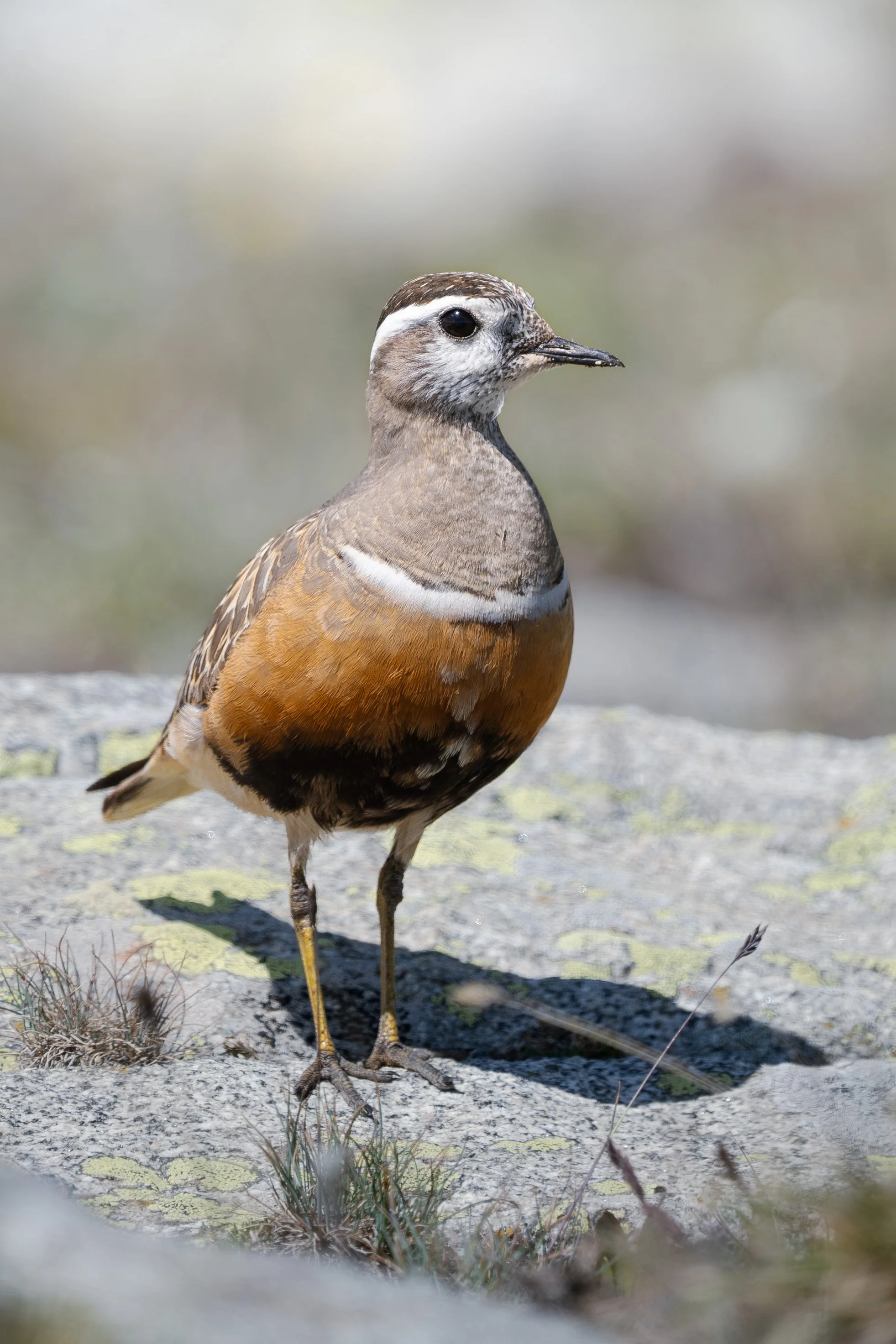
Eurasian Dotterel (Eudromias morinellus) in distinctive breeding plumage
D9: From Burqin we birded the Burqin–Jiadengyu route. Along the way we passed through a varied mix of habitats — croplands, woodland, and wetlands.
Target species: Ortolan Bunting, Rock Bunting, Paddyfield Warbler, Hume’s Warbler, Greenish Warbler, Black Stork, Richard’s Pipit.
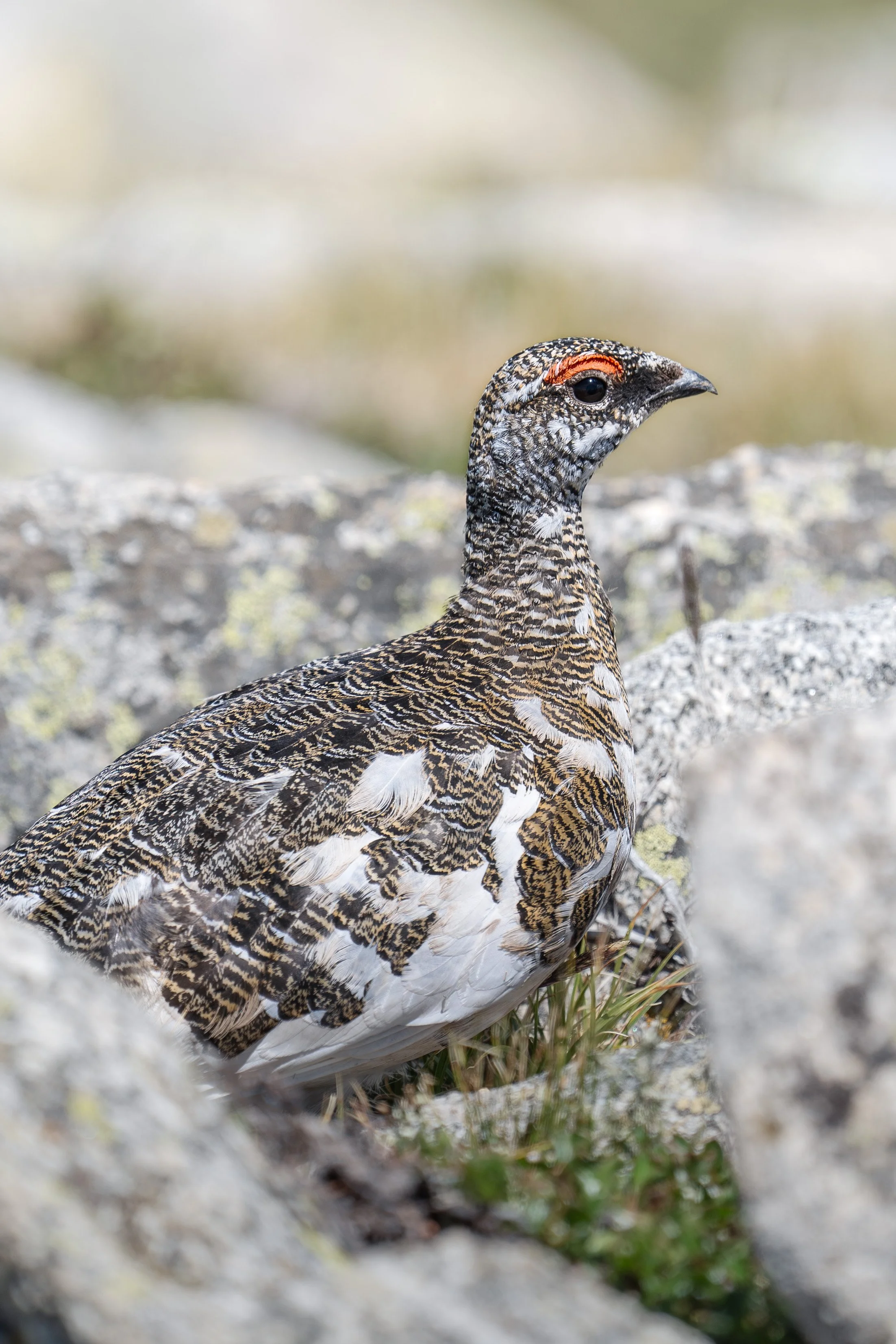
Rock Ptarmigan (Lagopus muta)
D10: This day we birded Burqin Magic Forest. Conditions here are fairly tough — chiefly because the mosquito density is beyond imagination, so a bug suit is needed to go in. The reward is a reliable site for Black Woodpecker and Eurasian Golden Oriole.
Target species: Black Woodpecker, Eurasian Golden Oriole, Gray-headed Woodpecker.
D11: Returned to Altay and flew out.
