
Poyang Lake & Wuyuan, Jiangxi, 2023/01
Willow Ptarmigan (Lagopus lagopus)
Dates: Nov 30, 2022 - Jan 2, 2023
Location: Poyang Lake and Wuyuan, Guangxi, China
Guide: Yinan Wu
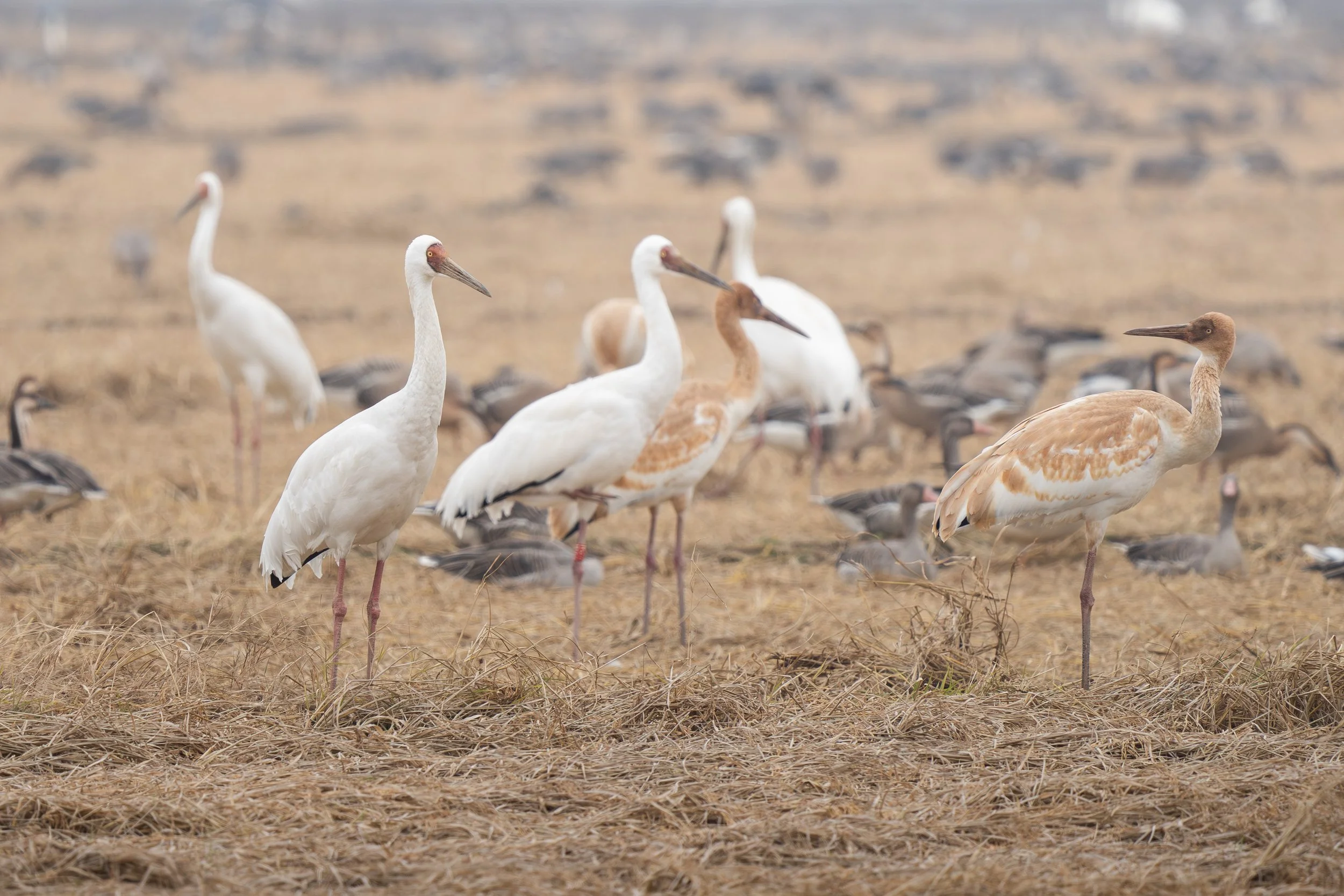
Introduction: Poyang Lake, located in Jiangxi Province, is the largest freshwater lake in China. In winter, its vast wetlands, mudflats, reedbeds, and surrounding agricultural fields support huge numbers of wintering waterbirds. Among them, the most famous is the Siberian Crane. As the most important wintering site for this species globally, Poyang Lake supports around 98% of the eastern population during the non-breeding season.
Wuyuan County lies not far from the Poyang Lake region. It is also an important birding destination, known for several highly sought-after species such as Pied Falconet and Scaly-sided merganser. Because the two areas are relatively close to each other, many birders visiting Poyang Lake also include Wuyuan in their itinerary.
D1-2: Xiaoqi Village and surrounding area
The birding habitats around Wuyuan are mainly composed of traditional villages, farmland, rivers, bamboo groves, and wooded hillsides. This mosaic landscape supports a distinctive mix of resident forest-edge birds, riverine species, and wintering passerines.
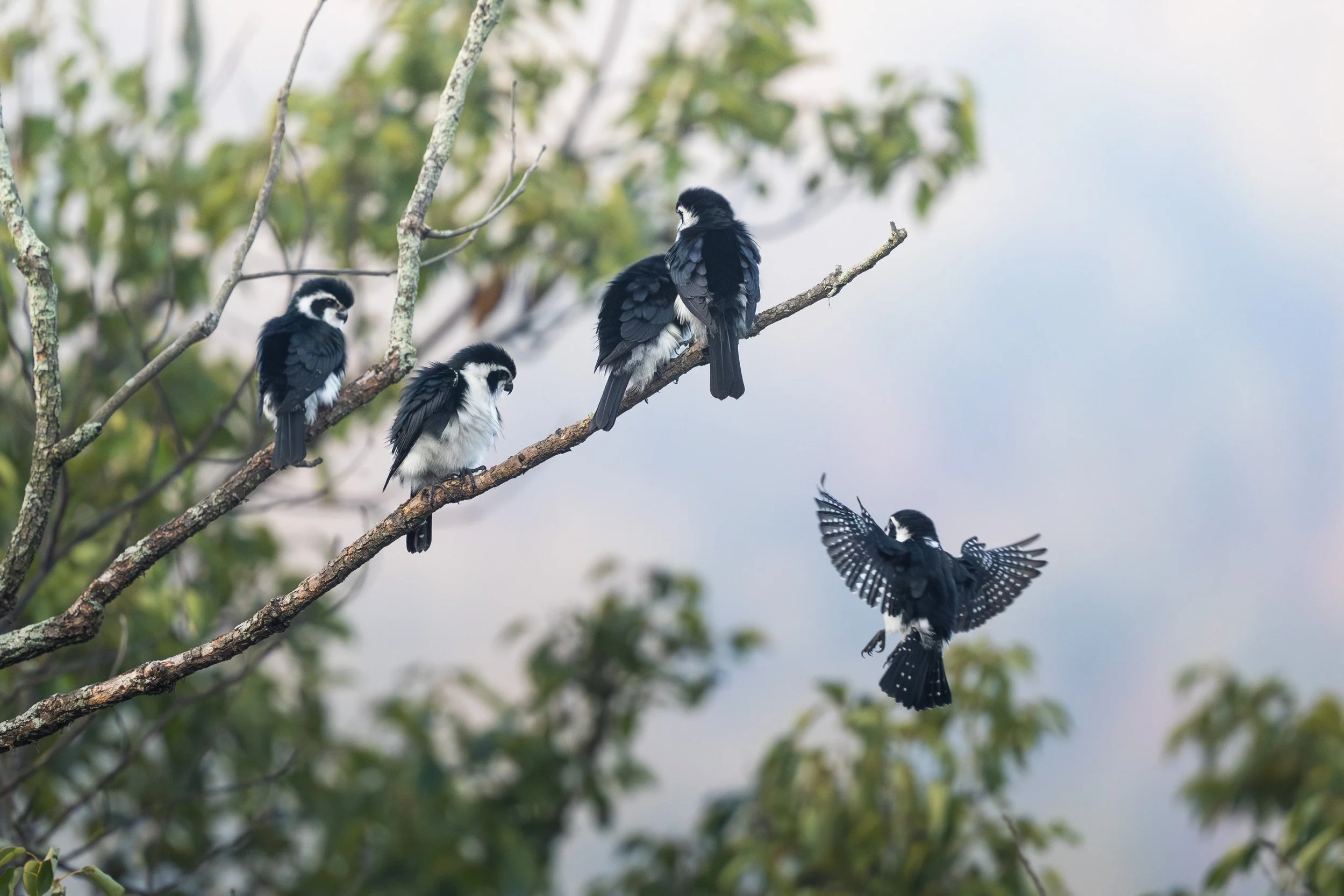
Pied Falconet (Microhierax melanoleucos)
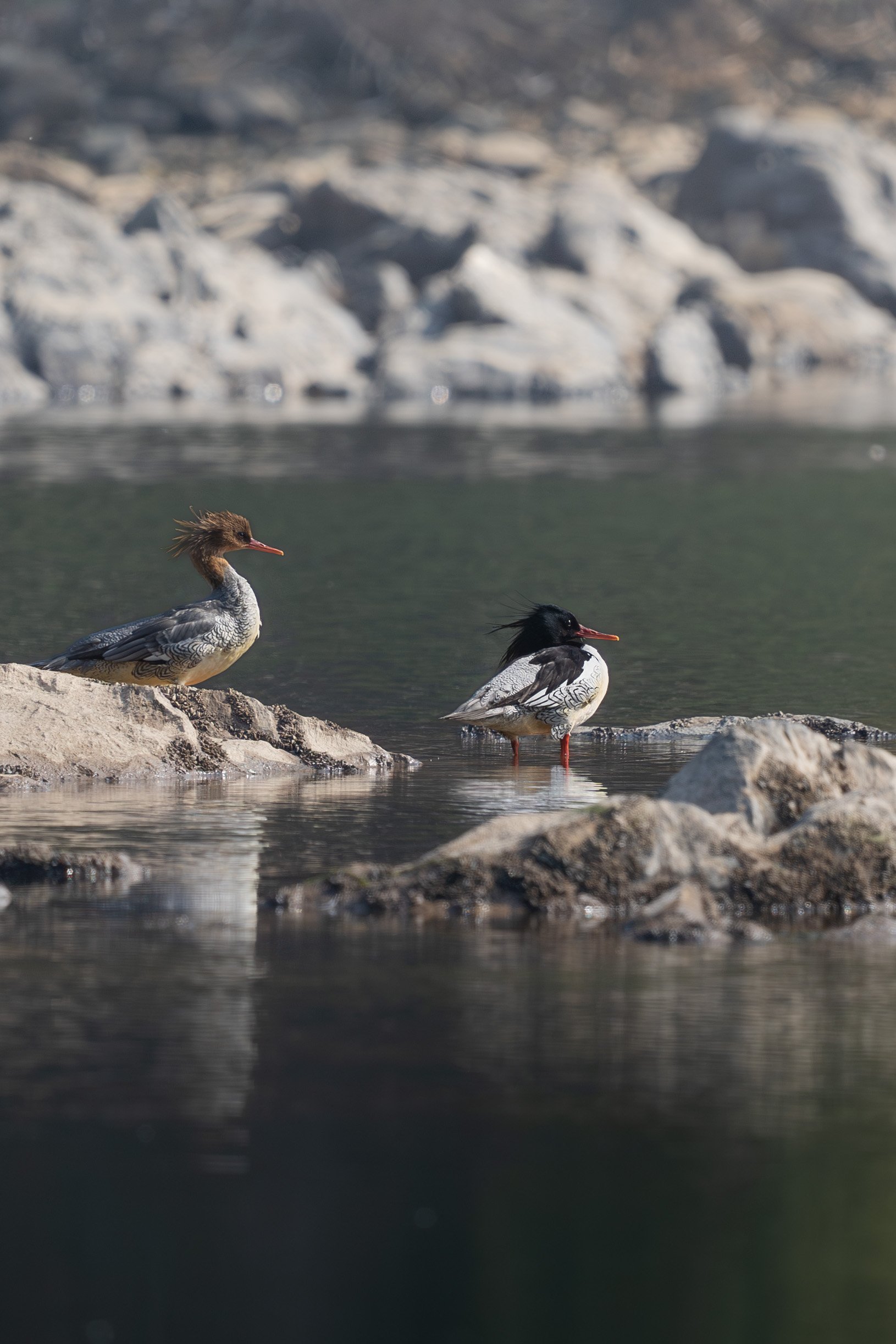
Scaly-sided Merganser (Mergus squamatus)
Xiaoqi Village is one of the essential birding sites for visitors to Wuyuan, largely because it has a reliable population of Pied Falconet. This tiny black-and-white raptor is widely admired by birders for both its striking appearance and charismatic behaviour. During this trip, we stayed at a birding guesthouse in Xiaoqi Village, giving us easy access to the surrounding birding sites.
Target species: Pied Falconet, Black-faced Bunting, Plumbeous Redstart, Brown Dipper, Chinese Hwamei, Crested Kingfisher, Brown Crake, Gray-chinned Minivet, Scarlet Minivet
Another important site near Xiaoqi is Shijian Village, which holds a different star species: Scaly-sided Merganser. These shy and beautiful ducks inhabit the river channels close to the village.
The bamboo groves around the village also support another highly localized and secretive species: Short-tailed Parrotbill. This bird can be difficult to detect, and careful searching in suitable bamboo habitat is always required.
Target species:Scaly-sided Merganser, Short-tailed Parrotbill, Long-billed Plover, Huet’s Fulvetta, Yellow-browed Bunting.
On the evening of Day 2, we drove to Yongxiu County and stayed overnight at a hotel in the county town, positioning ourselves for two full days of birding around Poyang Lake.
D3-4: Poyang Lake area
On Days 3 and 4, we explored the wetlands, lakeshores, mudflats, reedbeds, and agricultural fields around Poyang Lake by vehicle. The birding here is very different from Wuyuan. Around the lake, extensive exposed mudflats attract large numbers of wintering waders, while the surrounding fields and wet meadows support geese, ducks, cranes, storks, and raptors.
The reedbeds along the lake edge also hold another rare and sought-after species: Marsh Grassbird. This species is often difficult to see well, requiring careful scanning and patience in suitable reed and marsh habitat.
One of the best places to observe Siberian Crane in the Poyang Lake region is Chaqi Fenchang. Large numbers of Siberian Cranes gather here in winter, and the site allows visitors to view them at surprisingly close range. As an accessible protected area open to visitors, Chaqi Fenchang attracts not only birders but also many general tourists who come to witness the spectacular winter gathering of cranes.
Target species: Marsh Grassbird, Siberian Crane, Hooded Crane, White-naped Crane, Common Crane, Oriental Stork, Black Stork, Snow Goose, Red-breasted Goose, Lesser White-fronted Goose, Chinese Penduline Tit, Temminck’s Stint, Bluethroat, Short-eared Owl, Eastern Marsh Harrier, Eastern Buzzard, Pied Harrier, Dusky warbler, Black-collared Starling.
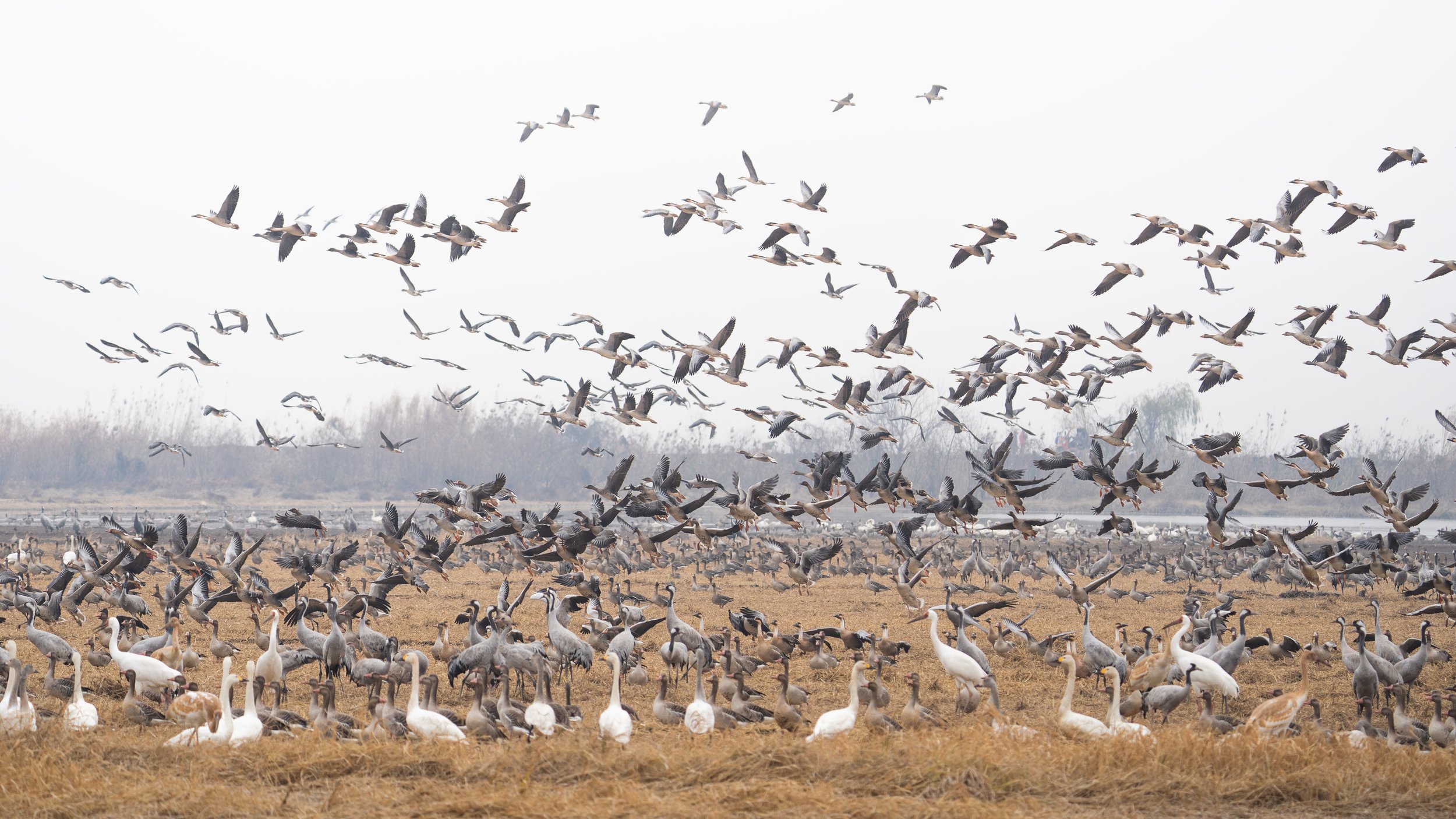
The farmlands surrounding Poyang Lake support enormous numbers of wintering waterbirds. Four species of cranes are regularly encountered here: Siberian Crane, Common Crane, Hooded Crane, and White-naped Crane, along with Oriental Storks and countless geese and ducks.
