
Western Sichuan, 2024/05
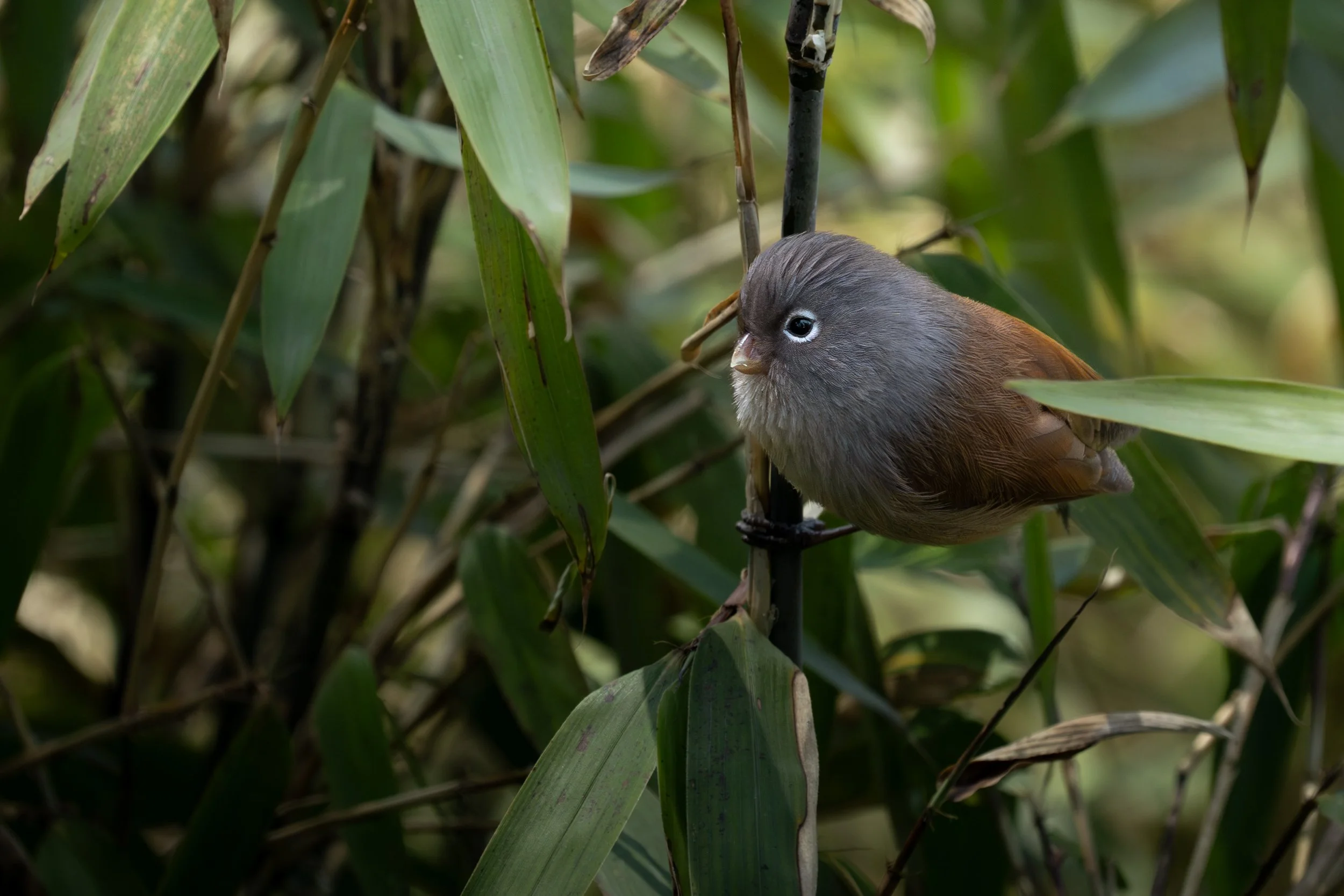
Gray-hooded Parrotbill (Suthora zappeyi)
Dates: May 20-27, 2024
Location: Wawushan & Balangshan & Mengbishan, Sichuan, China
eBird Trip Report: https://ebird.org/tripreport/246162
Guide: Allen Xue, Xinchen Bu
Introduction: Because of convenient transport, rich biodiversity and abundance of endemic species, Sichuan is perhaps the most attractive destination for international naturalists. Wawu Mountain, the largest table mountain in Asia, is also one of the best birding sites in the province, where at least seven species of parrotbill can be found, along with Red Panda. With its summit at over 5000m above sea level, Balangshan is one of the nearest snow mountain from the provincial capital of Chengdu. Further northwest near Ma’erkang (Malkan) city, the capital of Aba Tibetan & Qiang Autonomous Prefecture, Mengbishan is covered with dark coniferous forests and colorful rhododendron flowers. Great altitudinal differences lead to strong vertical zoning of fauna and flora, which is a special advantage for birding tourists.
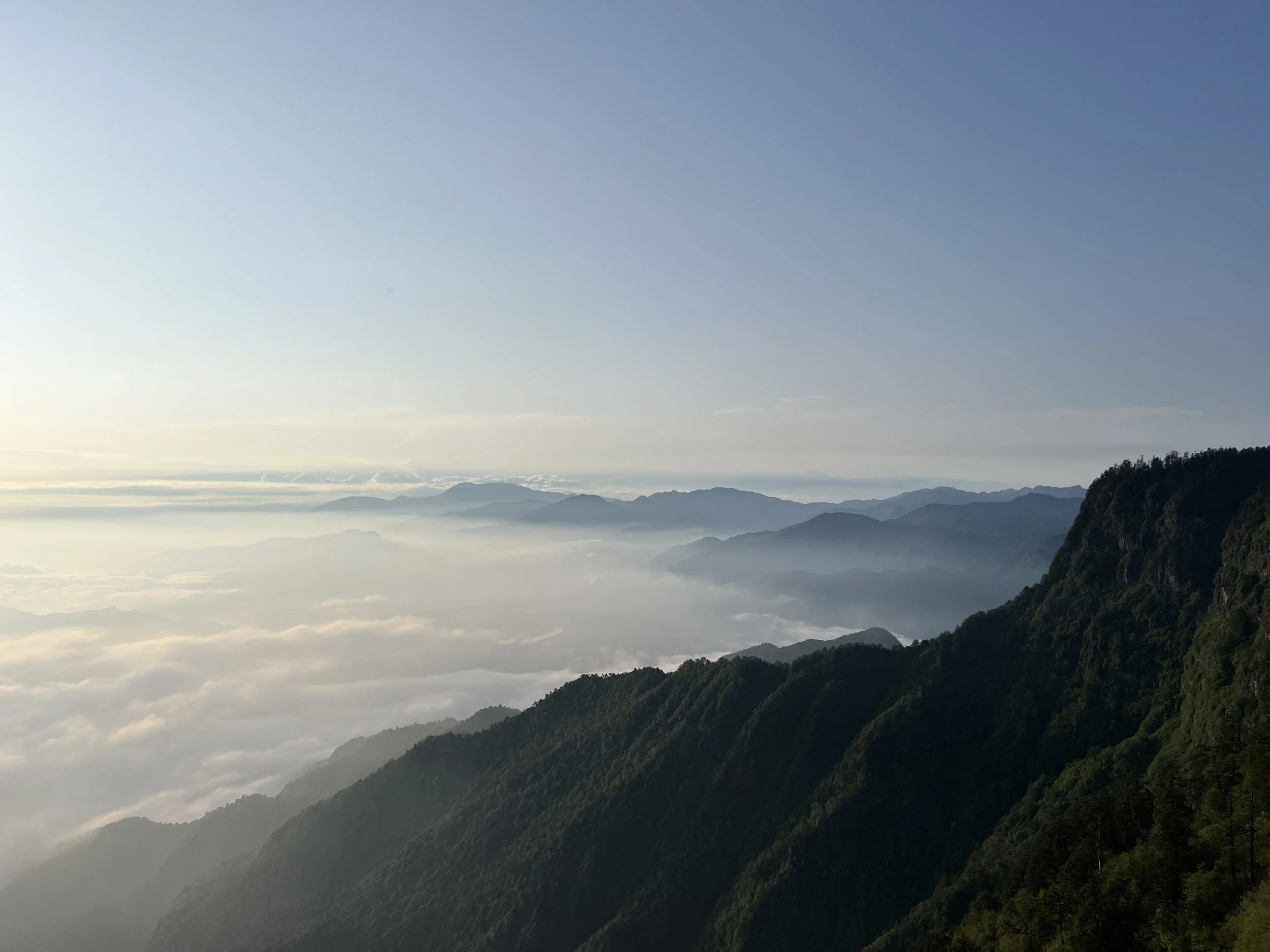
From the summit of Wawushan, the dramatic edge of the tabletop mountain emerges above an endless sea of clouds.
Day 1: We arrived in Wawushan Town the evening before and stayed overnight, so that we could catch the first cable car up the moment Wawu Mountain Forest Park opened this morning. Wawu Mountain has three zones: the foot of the mountain (Jinhuaqiao), the mid-slope (Gongtong Mountain Villa), and the summit; the mid-slope and the summit are the main birding areas. Today we explored the summit first. The weather on Wawu Mountain is changeable, and very heavy fog often sets in, which makes birding difficult — but fortunately this morning was beautifully clear, and we had walked only a short way along the summit boardwalk before we found five species of parrotbill: Great Parrotbill, Brown Parrotbill, Three-toed Parrotbill, Fulvous Parrotbill, and the Grey-hooded Parrotbill that is so scarce elsewhere — along with other highlights such as Sharpe's Rosefinch, Spotted Bush Warbler, Pygmy Cupwing, Lesser Cuckoo (hard to find elsewhere, but here it sings boldly from the treetops), and Collared Owlet. Around midday we also saw a Red Panda; the red pandas here are used to visitors, and this one rested calmly in a tree. By the afternoon, however, the fog had thickened and we saw no further highlight birds. For the night we stayed at Xianger Mountain Villa on the summit, so that the next day we would not have to wait for the cable car to open and could bird the summit boardwalk before the other tourists arrived.
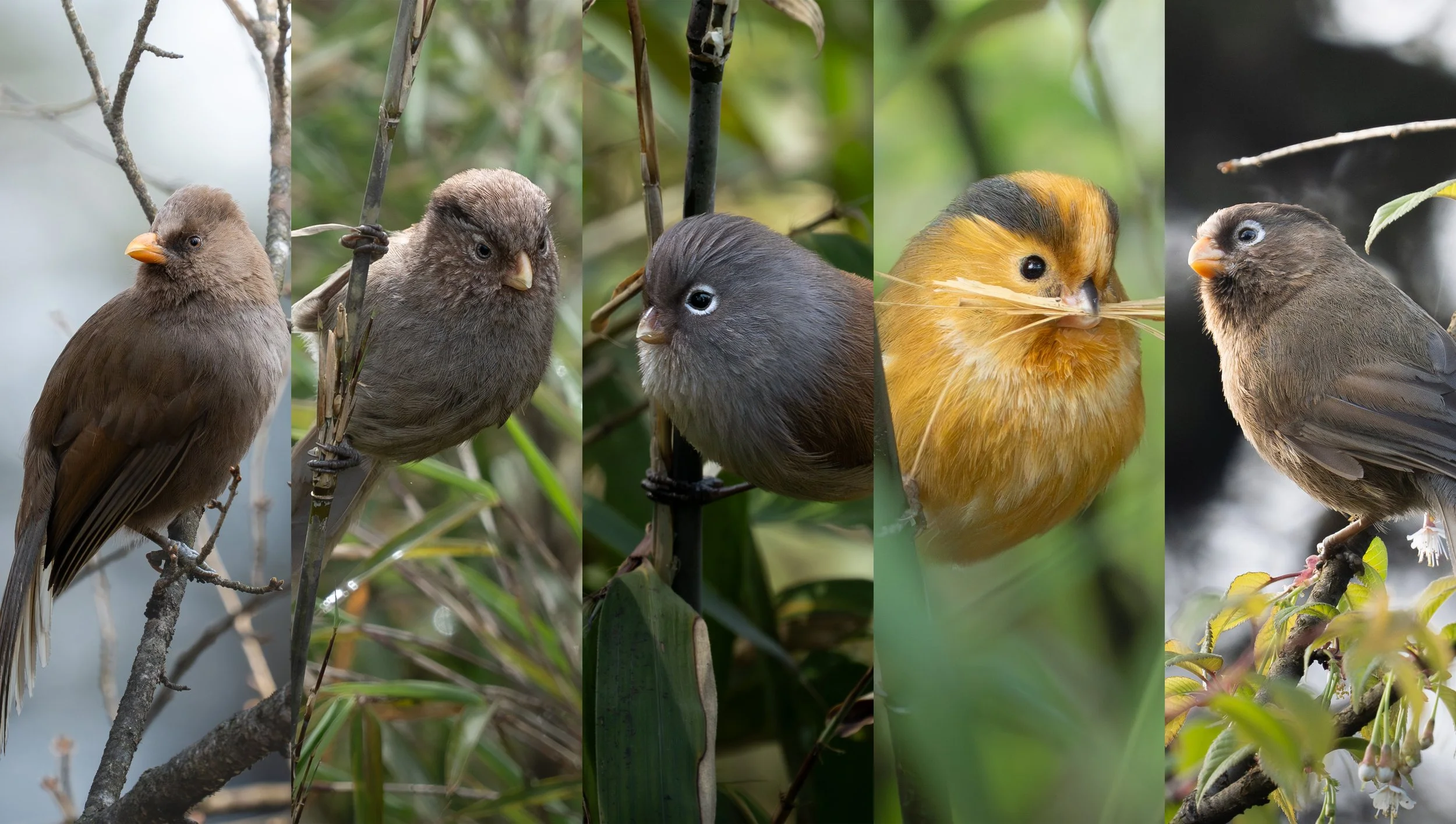
From left to right: Great Parrotbill (Paradoxornis aemodius), Brown Parrotbill (Paradoxornis unicolor), Gray-hooded Parrotbill (Suthora zappeyi), Fulvous Parrotbill (Suthora fulvifrons), and Three-toed Parrotbill (Paradoxornis paradoxus)
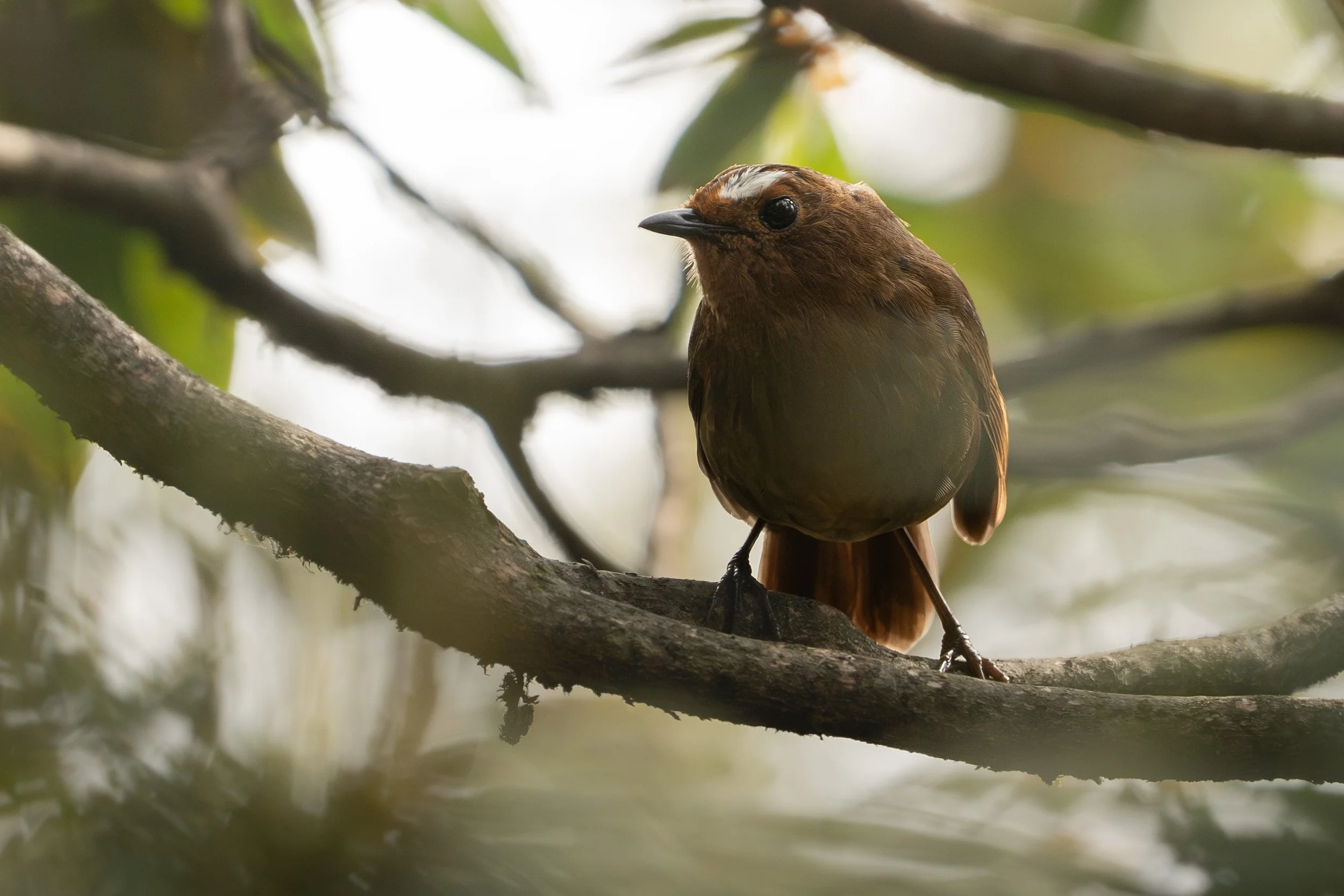
Himalayan Shortwing (Brachypteryx cruralis)
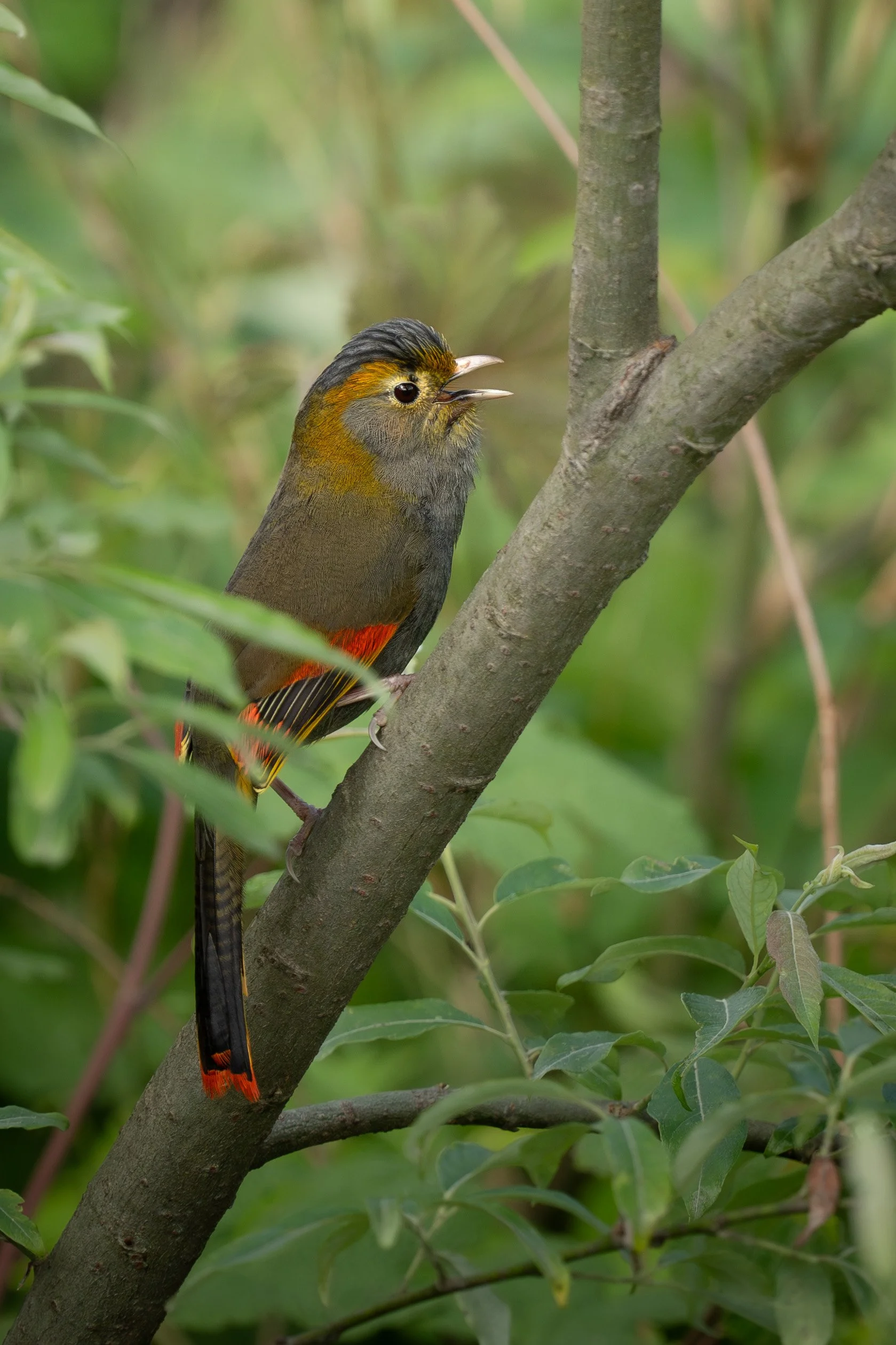
Emei Shan Liocichla (Liocichla omeiensis)
Day 2: We set out at 6:30 this morning, just as it grew light. Not far from Xianger Mountain Villa we heard the song of a Himalayan Shortwing and soon found a young bird. After a quick loop around the summit, we took the cable car down to the mid-slope, where, near the cable-car station, we quickly found a singing Emei Shan Liocichla, as well as Martens's Warbler, a mid-elevation species. Back at the summit, although we did not see the full set of parrotbills as on the previous day, we still turned up many highlights, such as Red-winged Laughingthrush, Scaly-breasted Cupwing, and the Sichuan Treecreeper that is rather scarce at Wawu. In the afternoon the fog returned, but through it we heard a Sichuan Thrush and located it at the tip of a tree. We had also hoped to find the funebris subspecies of Eurasian Three-toed Woodpecker nearby — the so-called “Dark-bodied Woodpecker” — but unfortunately found only a nesting Darjeeling Woodpecker. We spent the night at Xianger Mountain Villa again.
Day 3: Today we made a final round of the summit to mop up, and found an unusually confiding Spotted Laughingthrush beside the cable-car station. We then descended and, after lunch, returned to Chengdu.
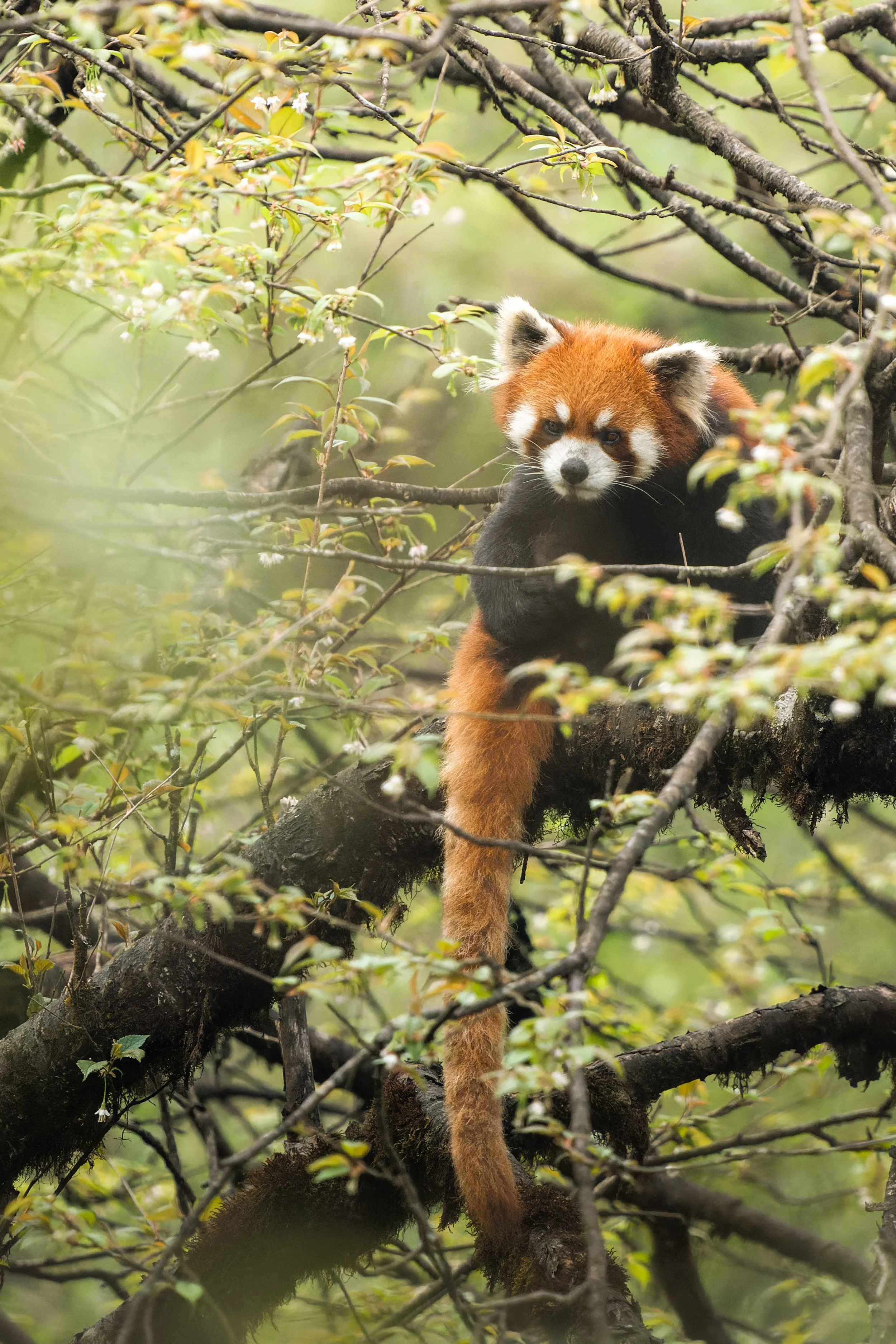
Red Panda (Ailurus fulgens) is one of the highlights of Wawushan. The species is relatively easy to find here and is often surprisingly unconcerned by nearby people.
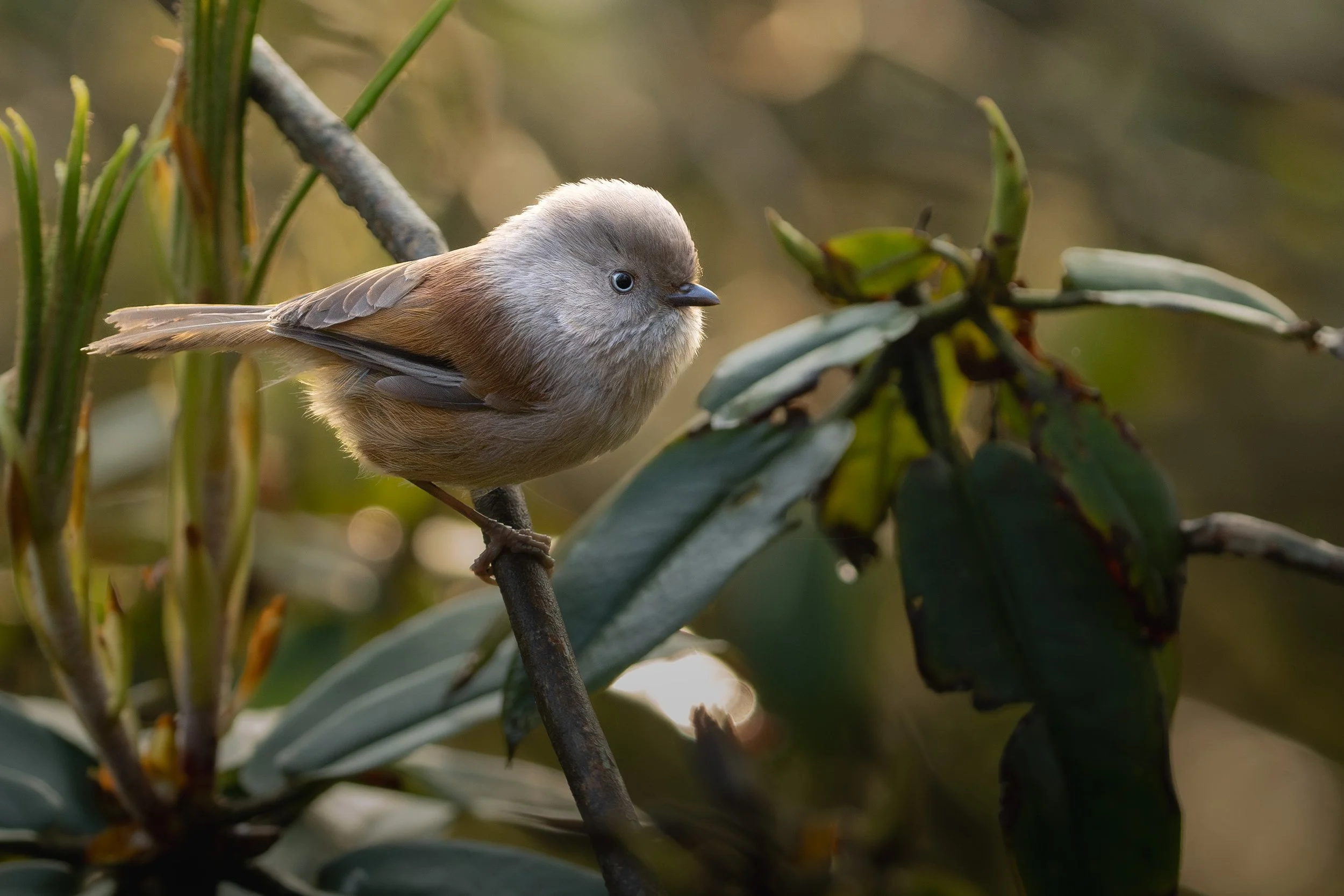
Gray-hooded Fulvetta (Fulvetta cinereiceps)
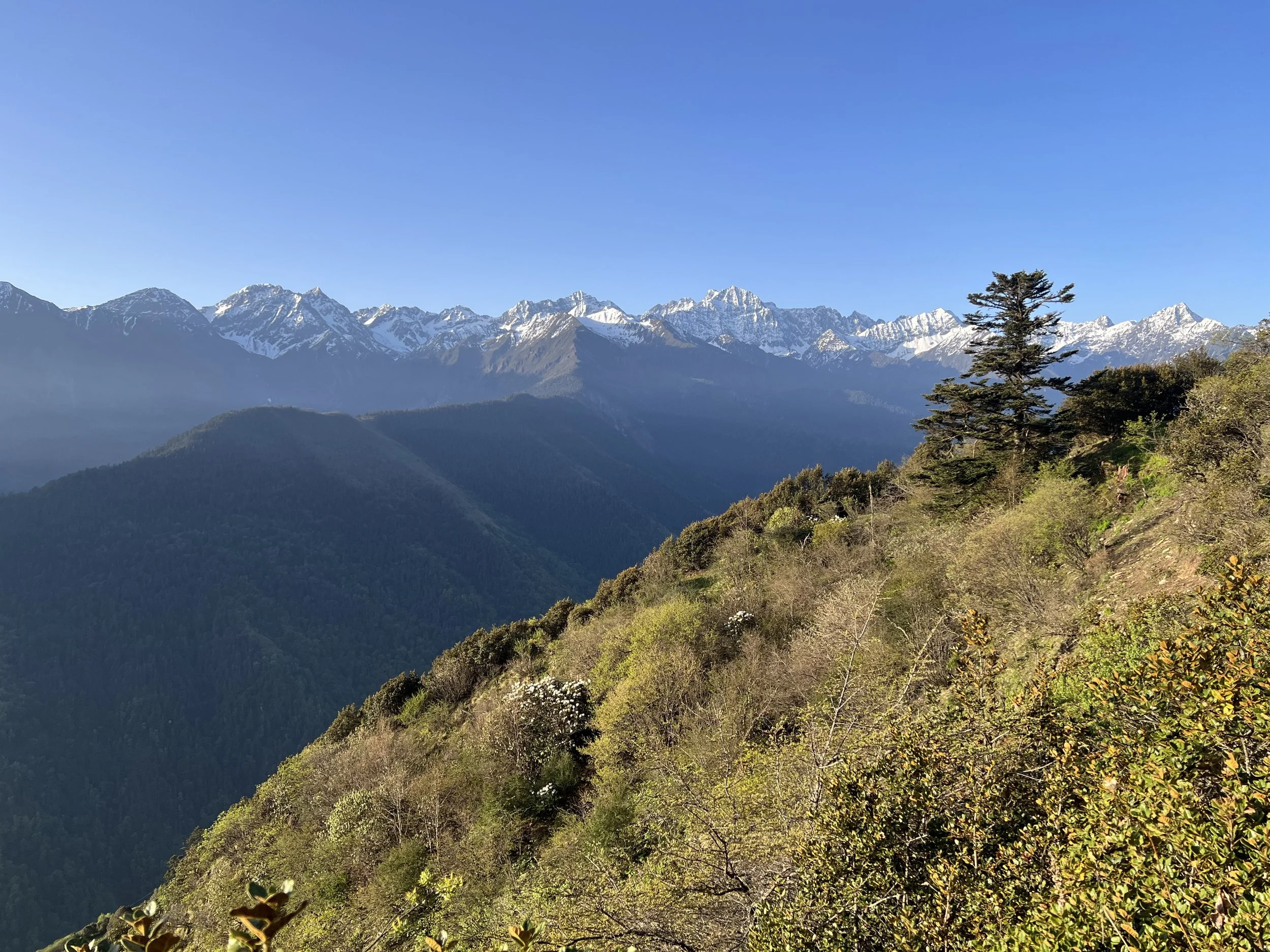
The habitat of Huayanzi Tunnel, where birders have the opportunity to see five species of pheasants, including the magnificent Chinese Monal.
Day 4: Depart from Chengdu in the morning and drove to Wolong (2 hr), the nearest town at the foot of Balangshan. Night at Wolong. Late May was the time for cherry picking and the traffic was heavy, so it is best to leave enough spare time in case of accidents or traffic jams.
Day 5: This morning we drove straight up the Huayanzi Tunnel (1 hr) to look for our main target, the marvelous Chinese Monal. Very luckily, upon our arrival we found the rooster on the top of the mountain, and the hen downhill. There were also White Eared Pheasant and the calls of Chestnut-throated Monal-Partridge and Koklass Pheasant, but we were not able to see the latter two. Apart from the galliforms, the passerines are worth watching as well, including Chinese Fulvetta, Dark-breasted Rosefinch, Elliot’s Laughingthrush, Giant Laughingthrush, the breeding Asian House Martin, and numerous Phylloscopus warblers. In the skies there were Himalayan Griffon, Himalayan Buzzard, Snow Pigeon, Northern Raven and Red-billed Chough.
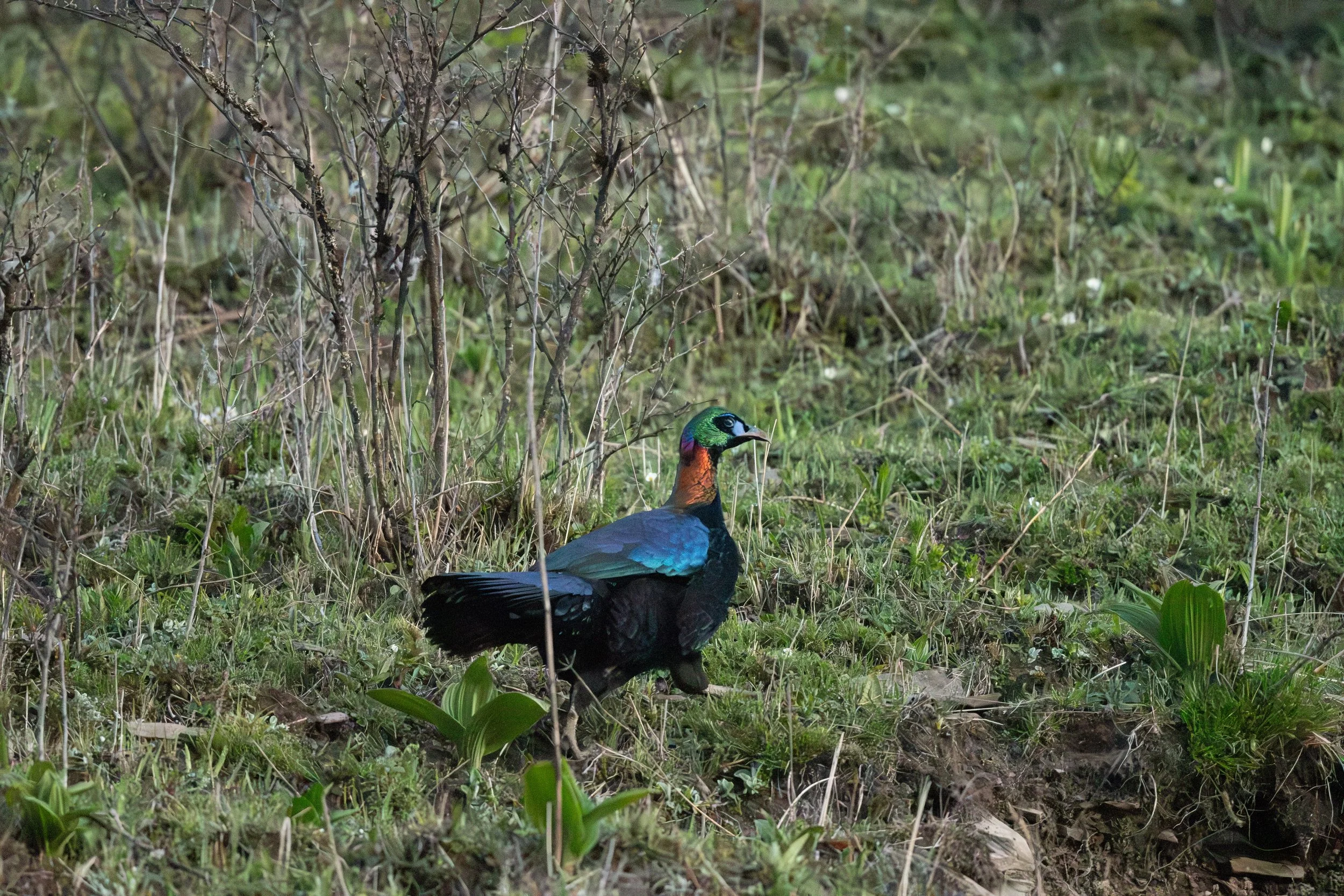
Chinese Monal (Lophophorus lhuysii), male
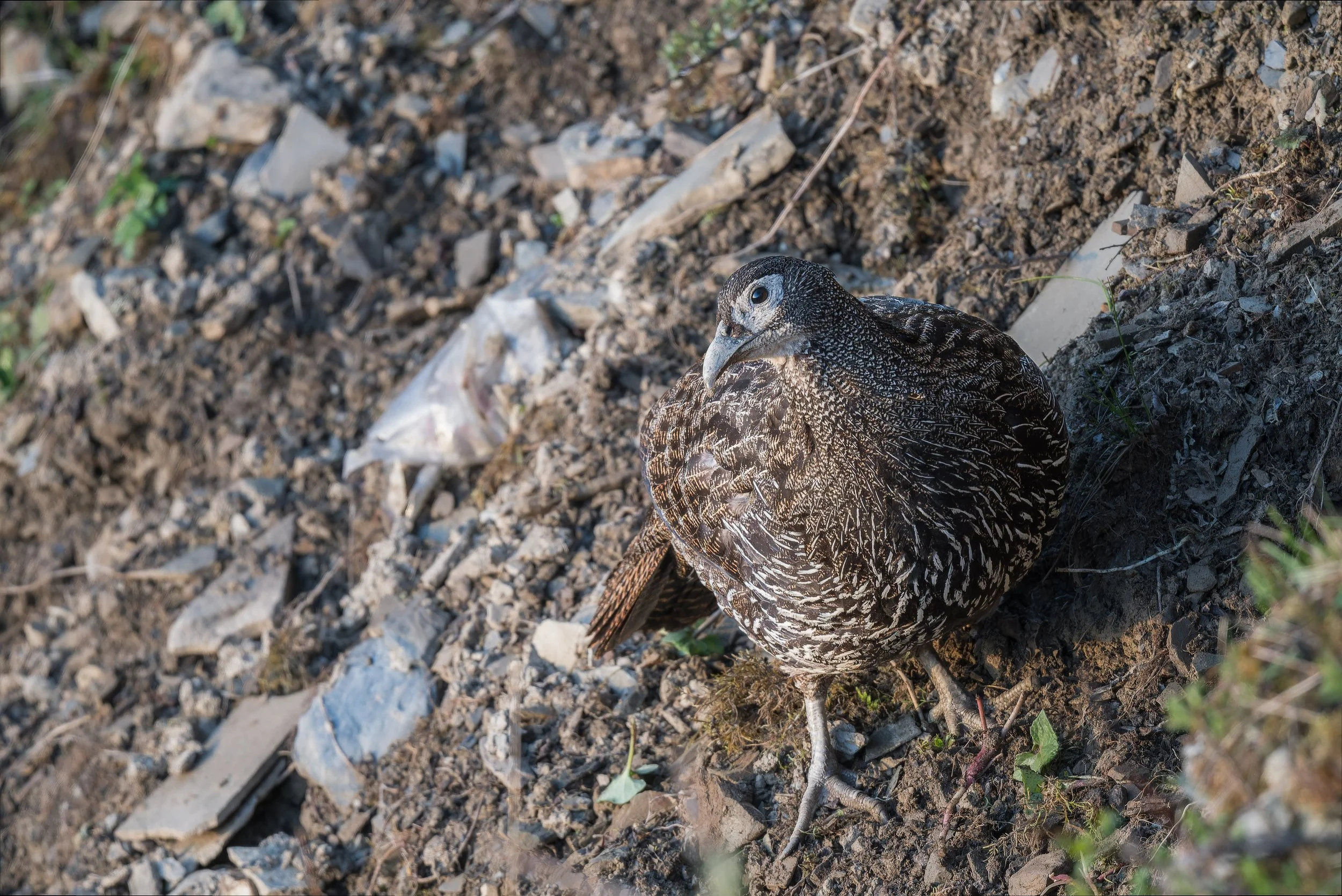
Chinese Monal (Lophophorus lhuysii), female
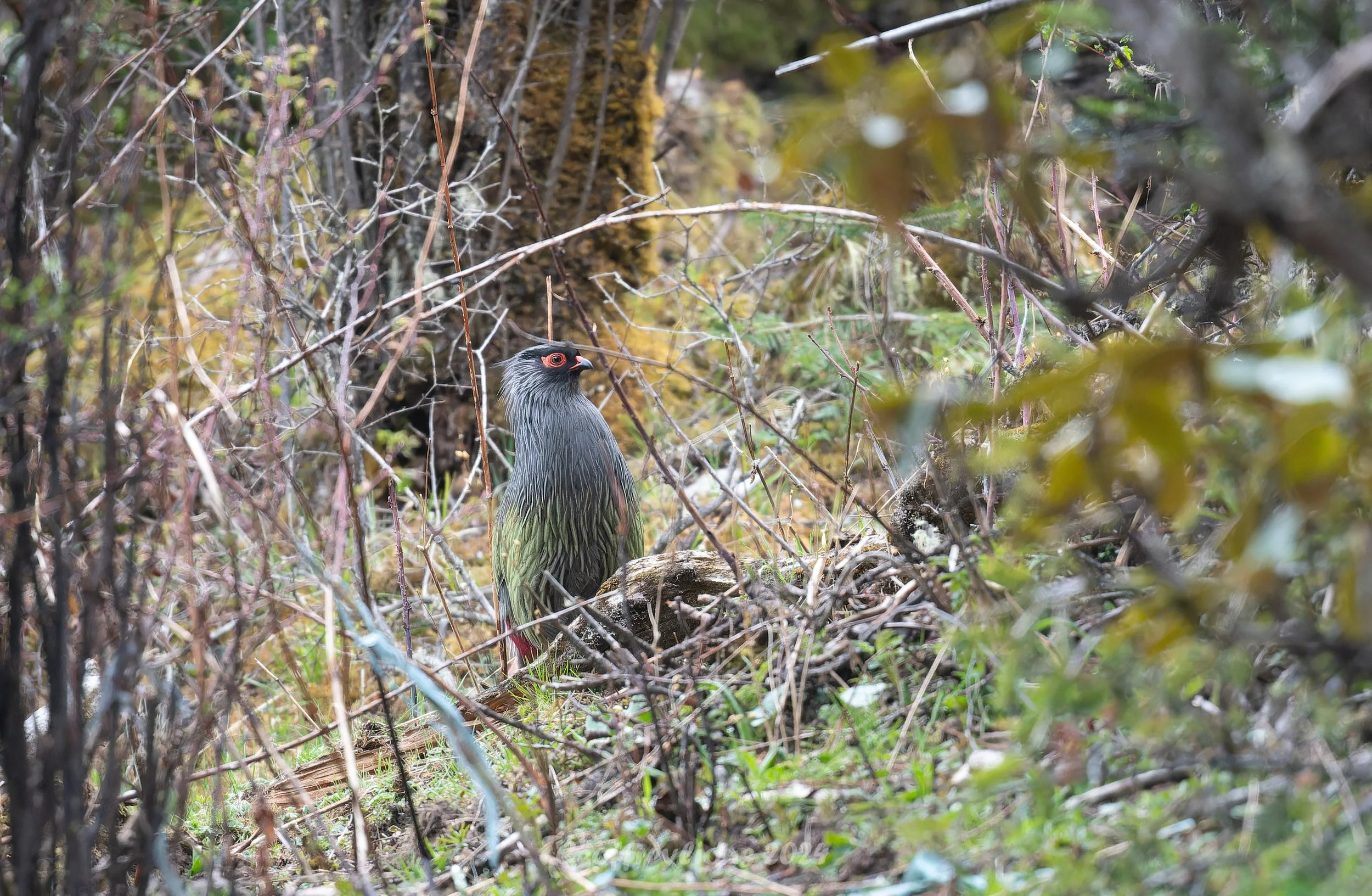
Blood Pheasant (Ithaginis cruentus)
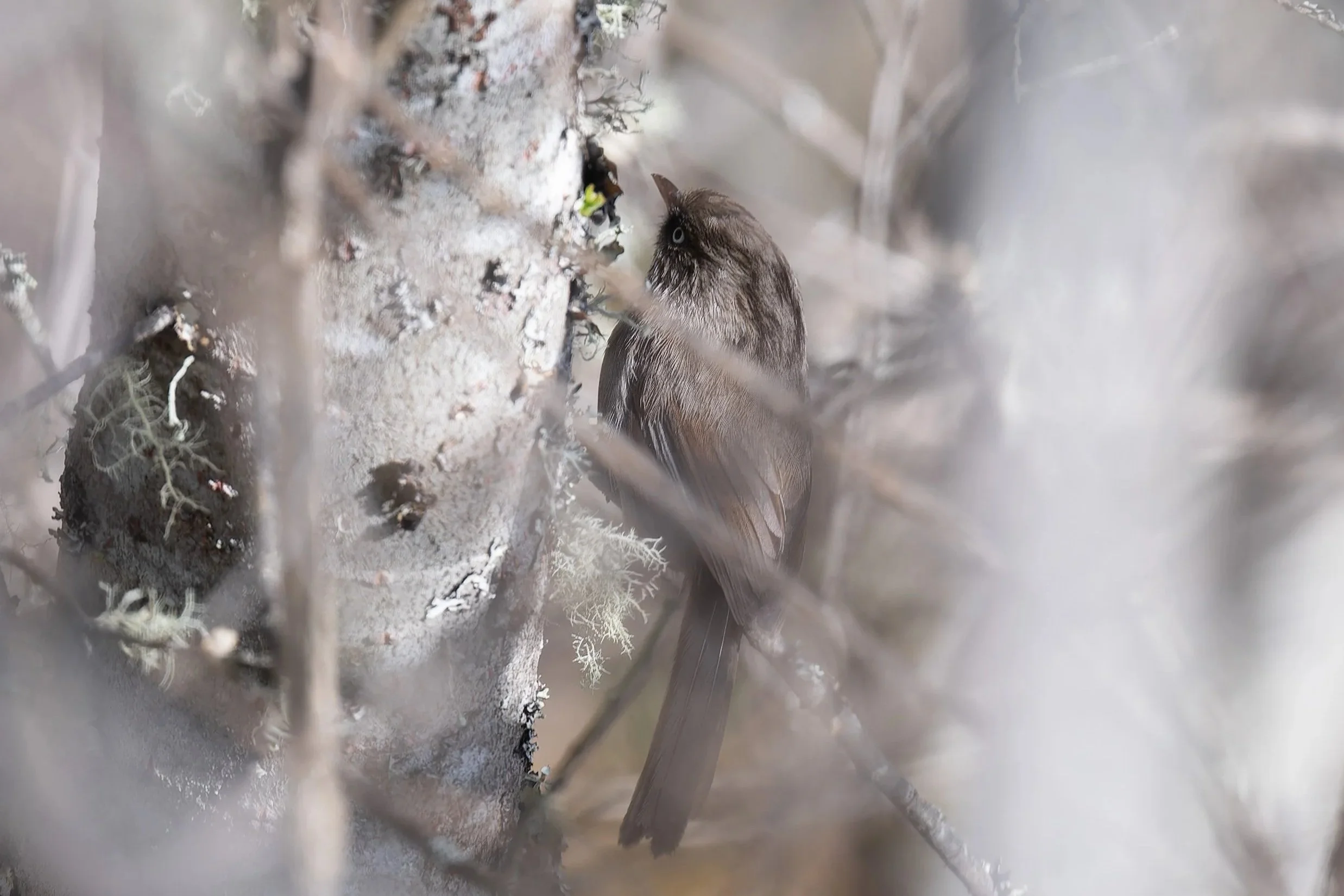
Chinese Fulvetta (Fulvetta striaticollis)
In the afternoon, we went to Wolong Lamasery for low-elevation birds, such as Golden Pheasant, Sichuan Bush Warbler, Long-tailed Minivet, Grey-backed Shrike, Southern Nutcracker, Grey-headed Canary-Flycatcher, Green-backed Tit, Chinese Leaf Warbler, Sichuan Leaf Warbler, Martens’s Warbler, and Indian Blue Robin. It is important to note that some of them were heard only. Night at Wolong.
Day 6: Today we spent the whole day climbing the Balang Mountain Pass (4523 m), looking for the birds in the highest elevations. In case of altitude sickness we brought two oxygen cans which proved to be vital. The original road was open to cars in the previous years, but as Balangshan tunnel was now put into use, the original mountain road was closed. We had to drive to the other side of the tunnel and climb all the way up. At the lower elevations Blood Pheasants were not hard to see; as we went up the Chinese Rubythroat was singing in the rhododendron bushes. Near the pass the road was covered with deep snow and we had to turn back, therefore we had no chance to see the Snow Partridge. However, we still managed to see some birds like Tibetan Snowcock and Red-fronted Rosefinch. We even saw Amur Paradise Flycatcher, Hair-crested Drongo, Red Collared Dove and Chinese Pond Heron along the way at over 4000 meters! Night at Wolong.
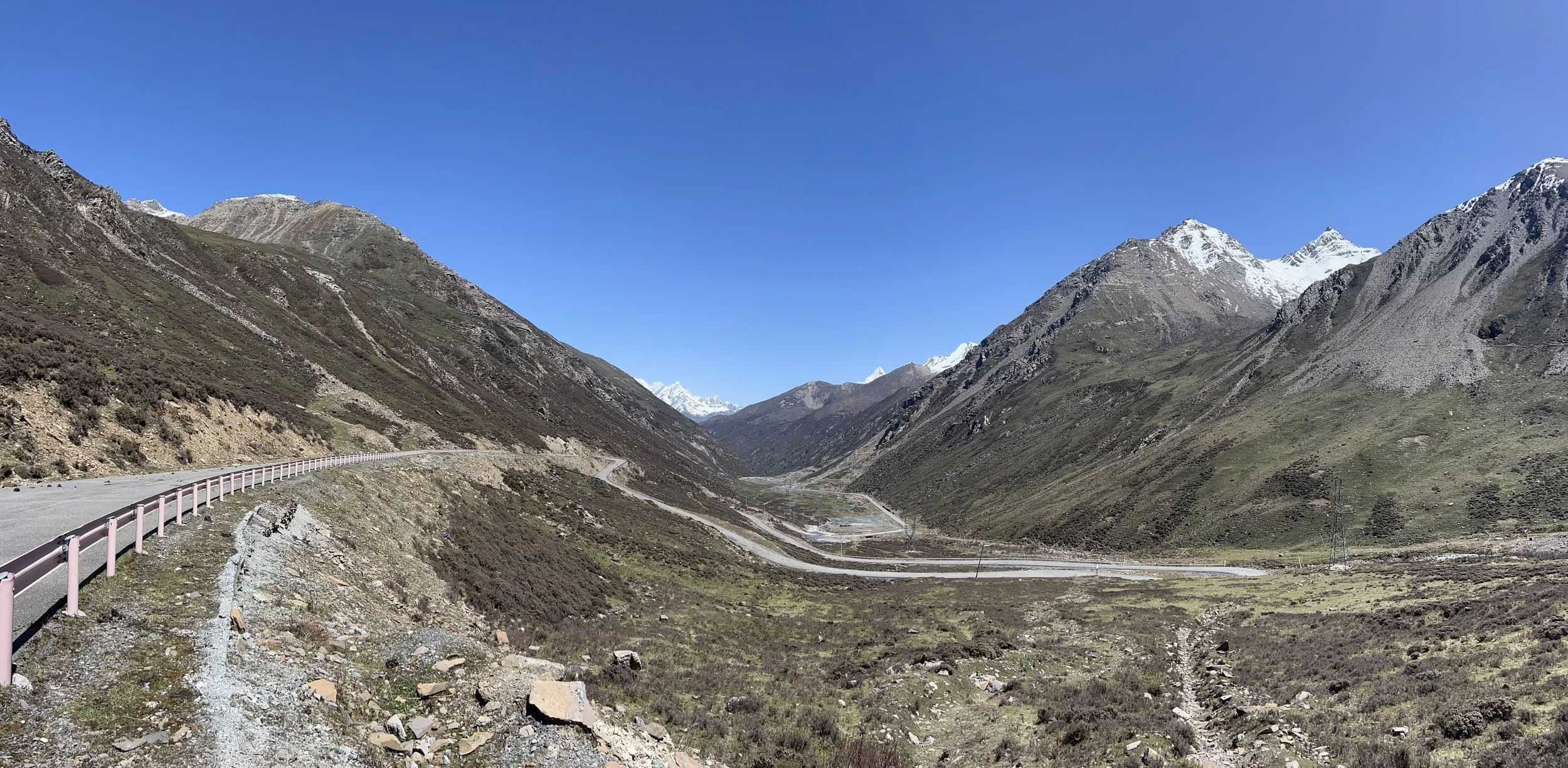
The high-elevation habitat of Balangshan, above 4,300 m.
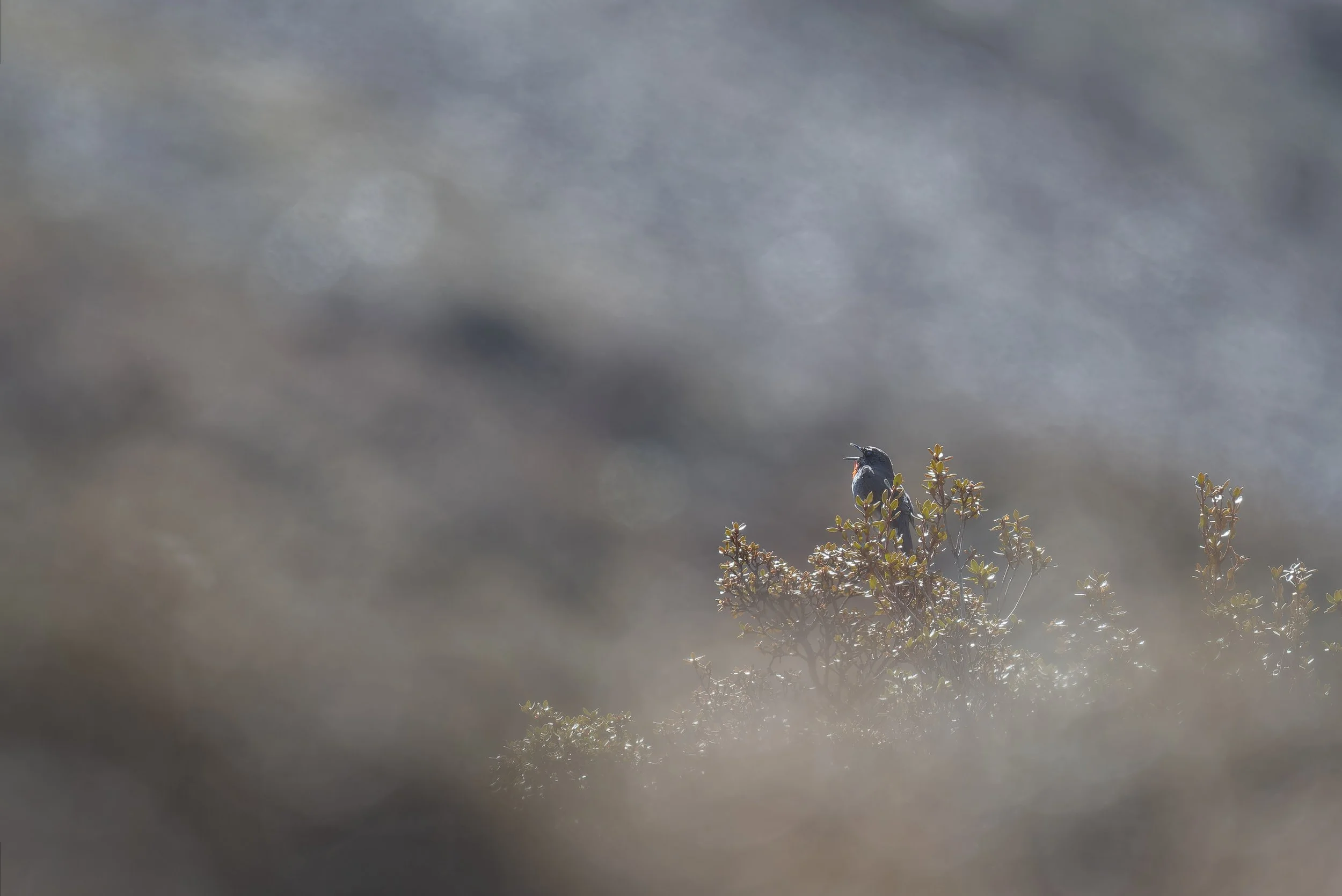
Chinese Rubythroat (Calliope tschebaiewi)
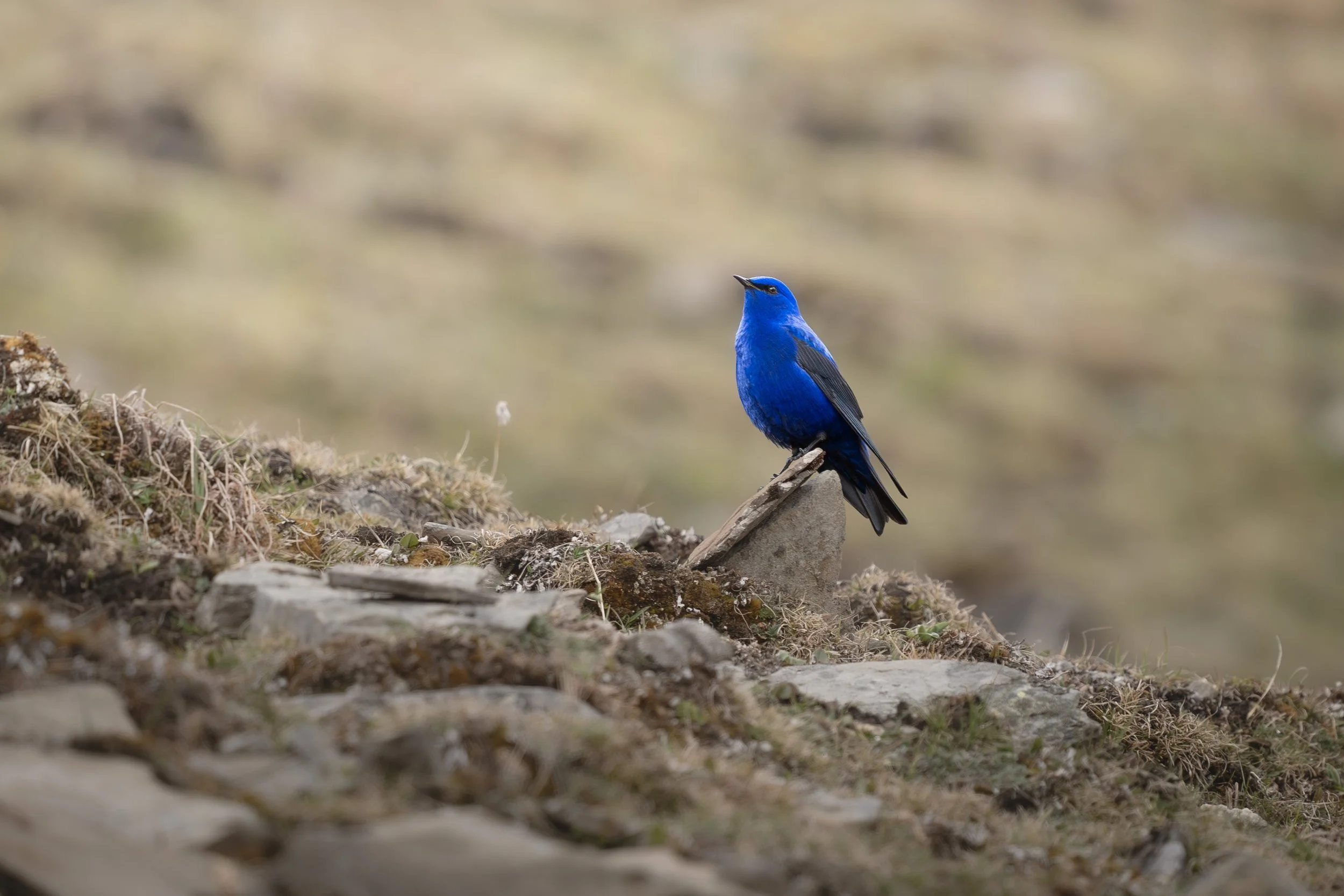
Grandala (Grandala coelicolor)
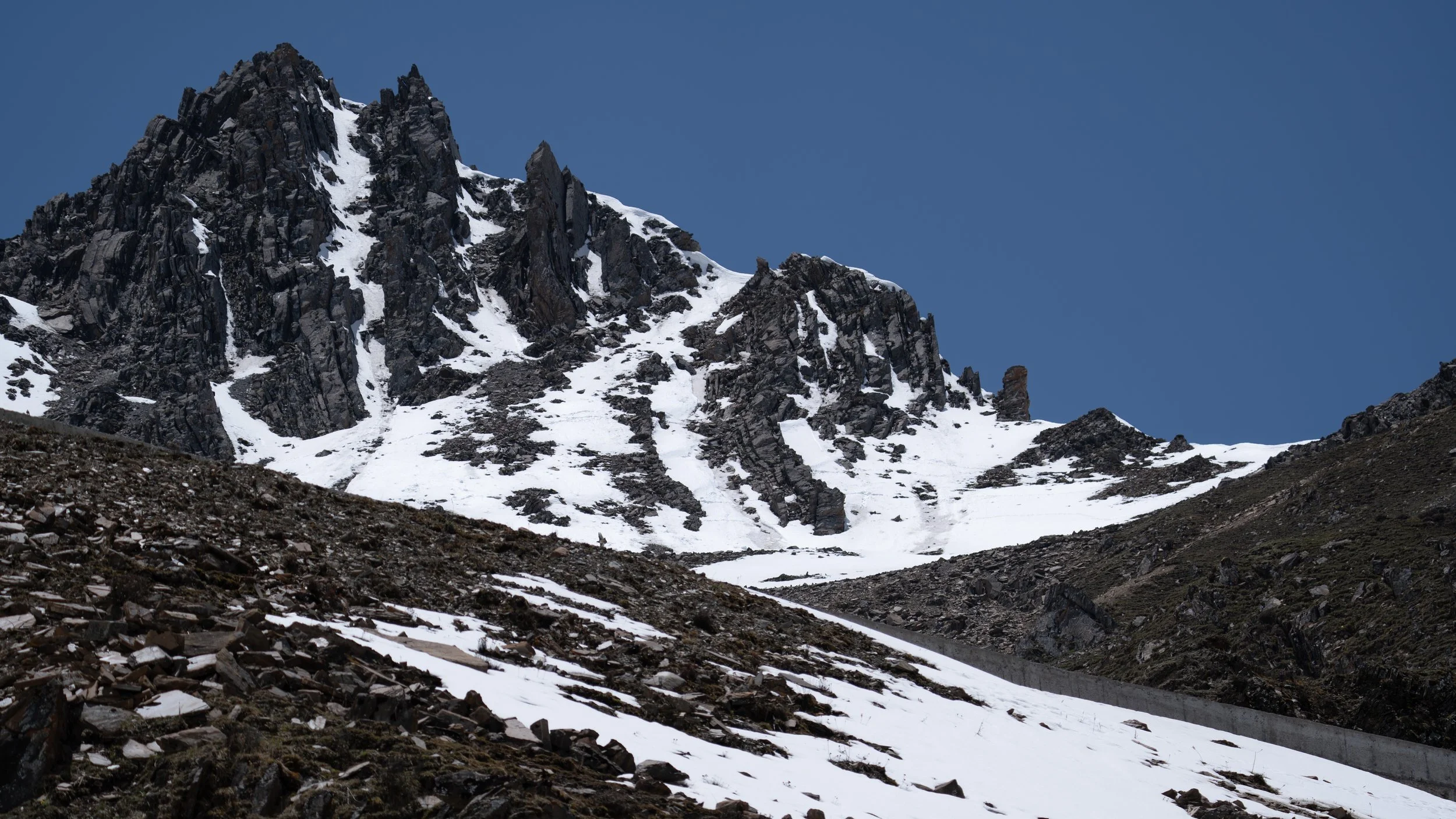
Even in late May, deep snow can still be found near the mountain pass. In the center of the image, a Tibetan Snowcock (Tetraogallus tibetanus) can be seen flying across the alpine landscape.
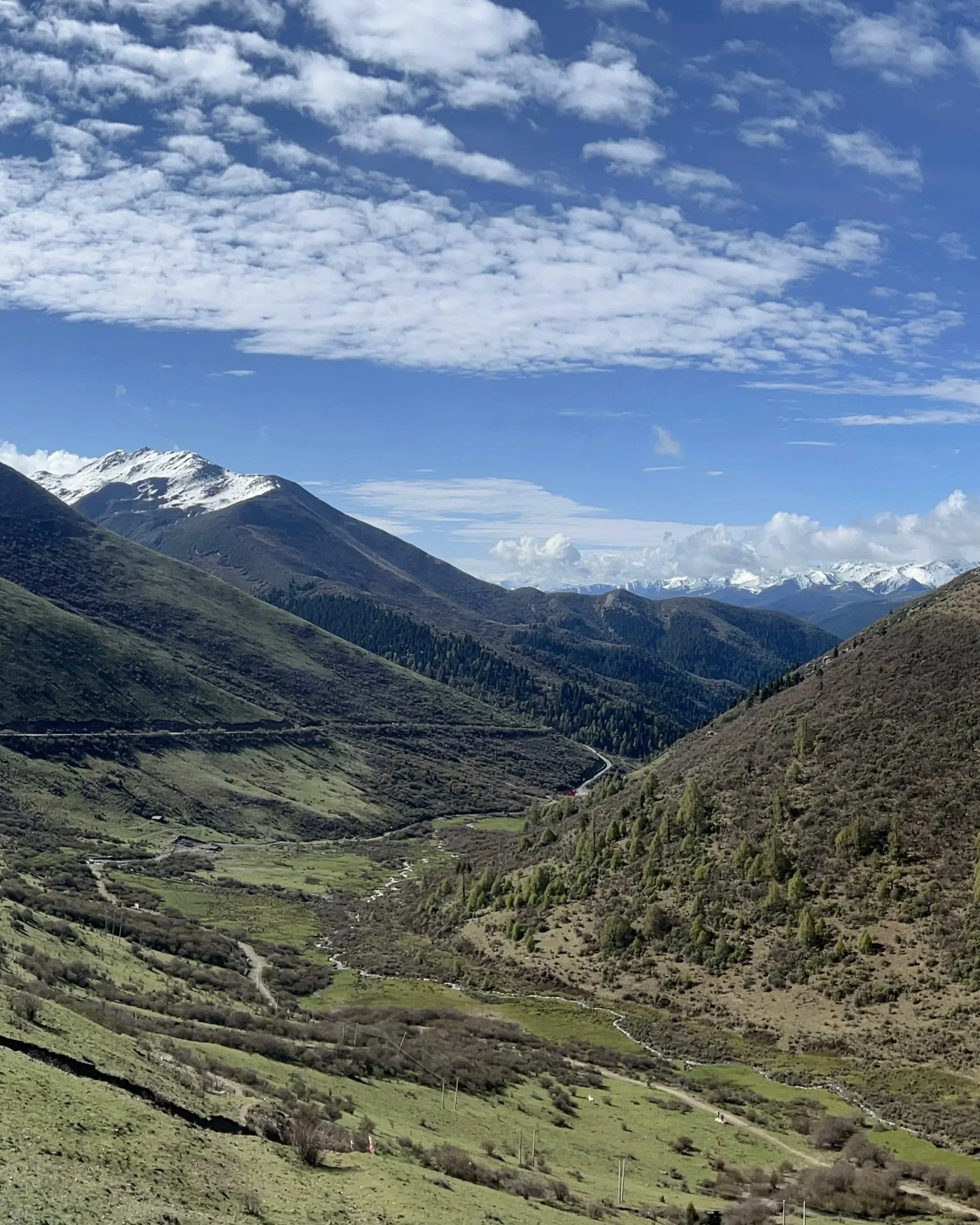
Alpine forest habitat of Mengbishan.
Day 7: This morning we visited Huayanzi Tunnel again. At noon we went to Beimuping for the mid-elevation birds, including Firethroat, Spotted Bush Warbler and Aberrant Bush Warbler. In the afternoon we drove to Ma’erkang (4 hr) and did some birding in the city. Night at Ma’erkang.
Day 8-9: These two days were dedicated to Mengbishan for alpine forest species. Targets include Sichuan Jay, Chestnut-throated Monal-Partridge, White Eared Pheasant, Blood Pheasant, Koklass Pheasant, Giant Laughingthrush, Sichuan Thrush, Long-tailed Thrush, Chinese Fulvetta, Rufous-vented Tit, Grey-crested Tit, Sichuan Tit, Black Woodpecker, Chinese White-browed Rosefinch, Maroon-backed Accentor, Slaty-backed Flycatcher, Hodgson’s Treecreeper, and allies. To look for the pheasants we arrived quite early and began birding at 6 a.m, and successfully saw Monal-Partridges crossing the mountain road. There were also records of Chinese Grouse, but we only saw an unconfirmed figure. The jays and woodpeckers lived in the same patch of forest, so there were plenty of chance to see both. Ma’erkang is a well developed city where one can easily find delicious food and comfortable accommodation. After spending two days in Ma’erkang, we returned to Chengdu as the end of our trip.
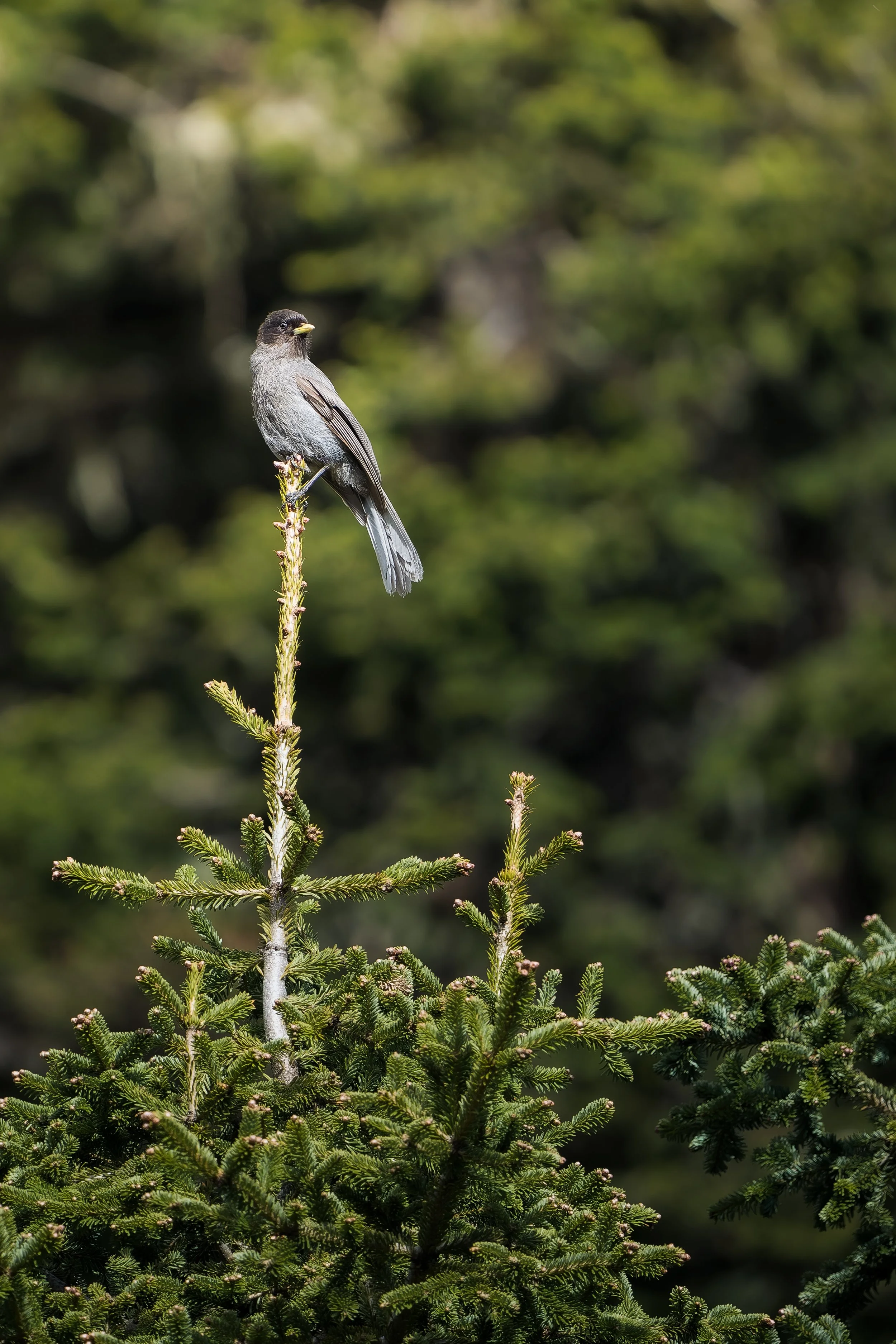
Sichuan Jay (Perisoreus internigrans)
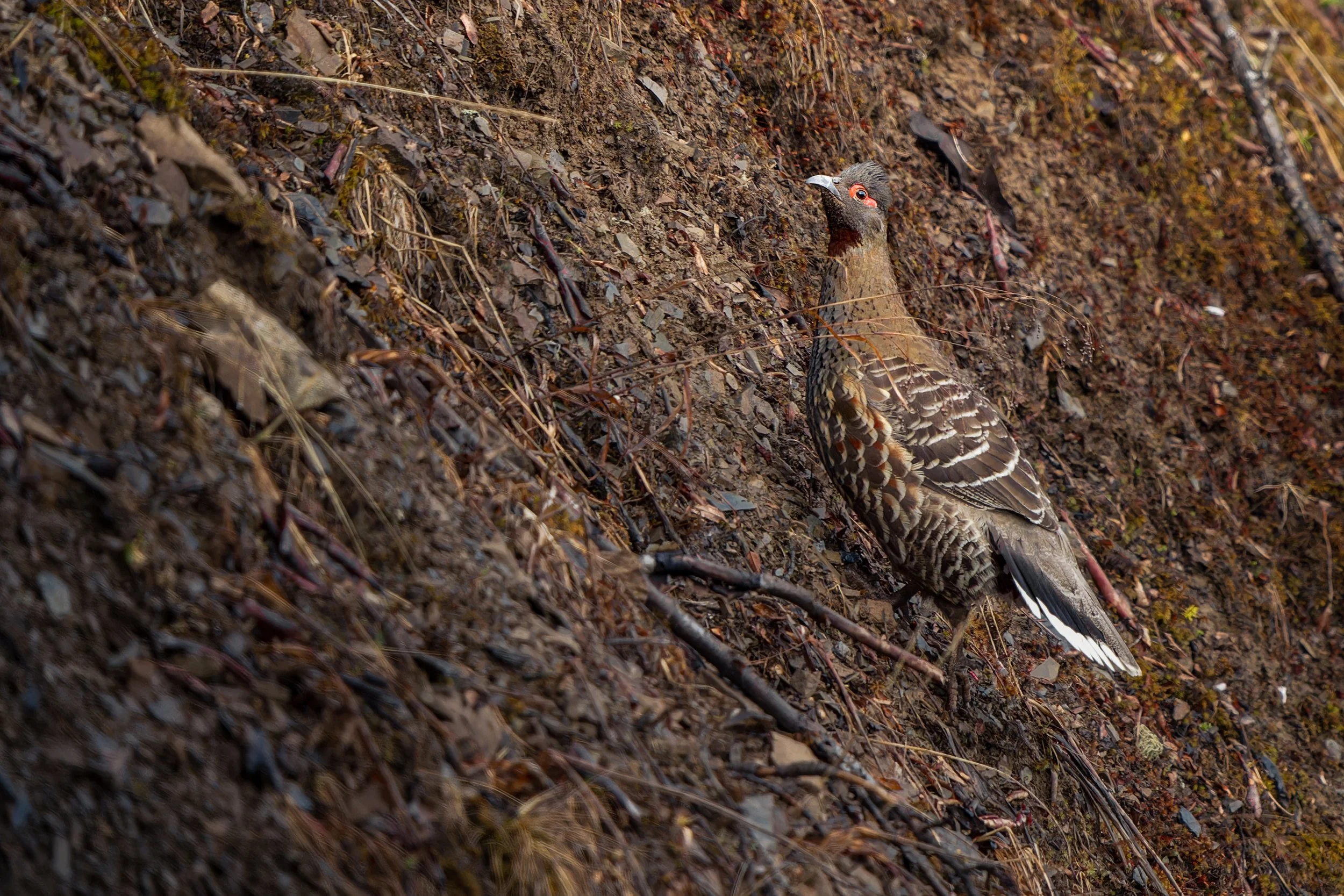
Chestnut-throated Monal-Partridge (Tetraophasis obscurus)
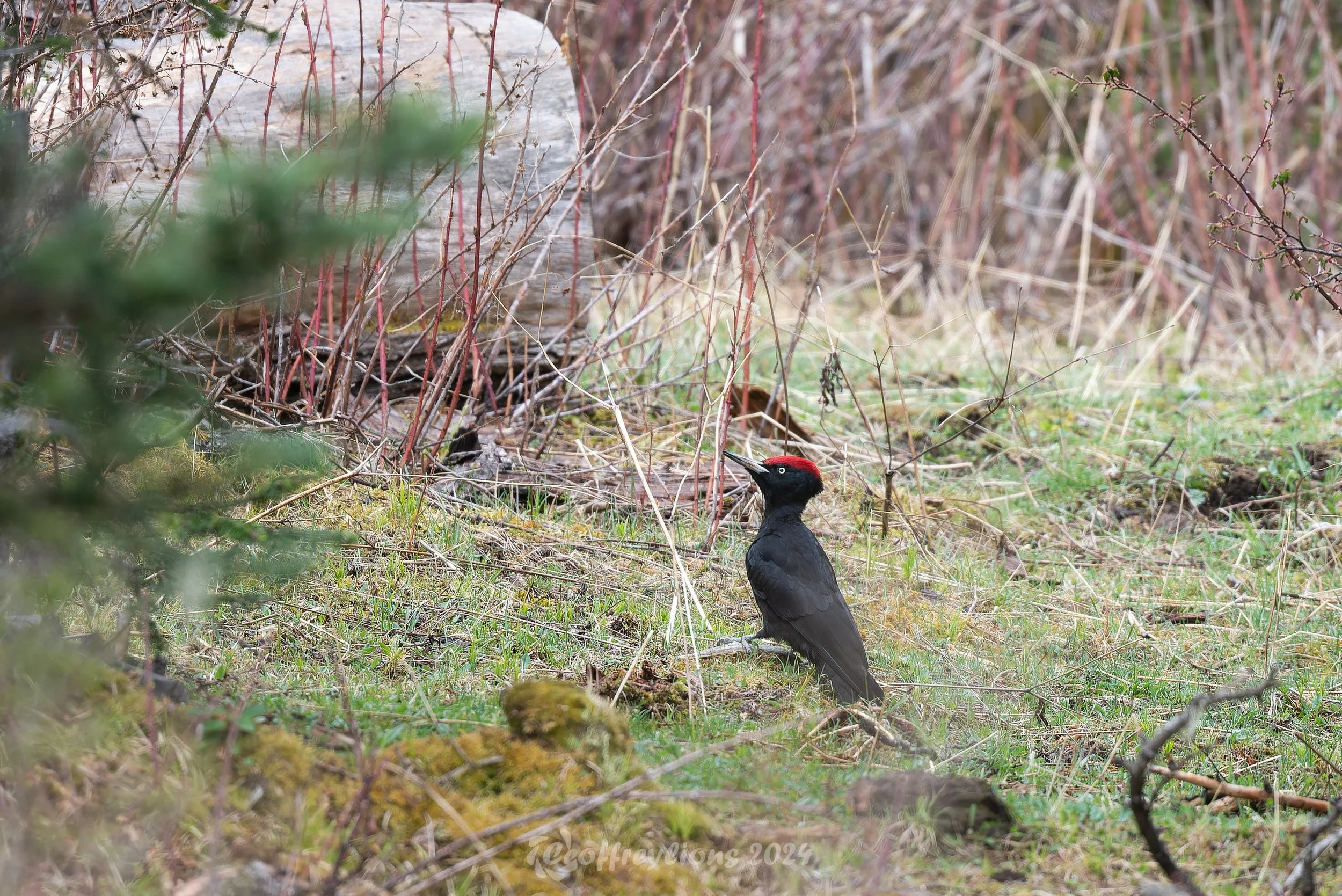
Black Woodpecker (Dryocopus martius khamensis), a subspecies restricted to southwestern China.
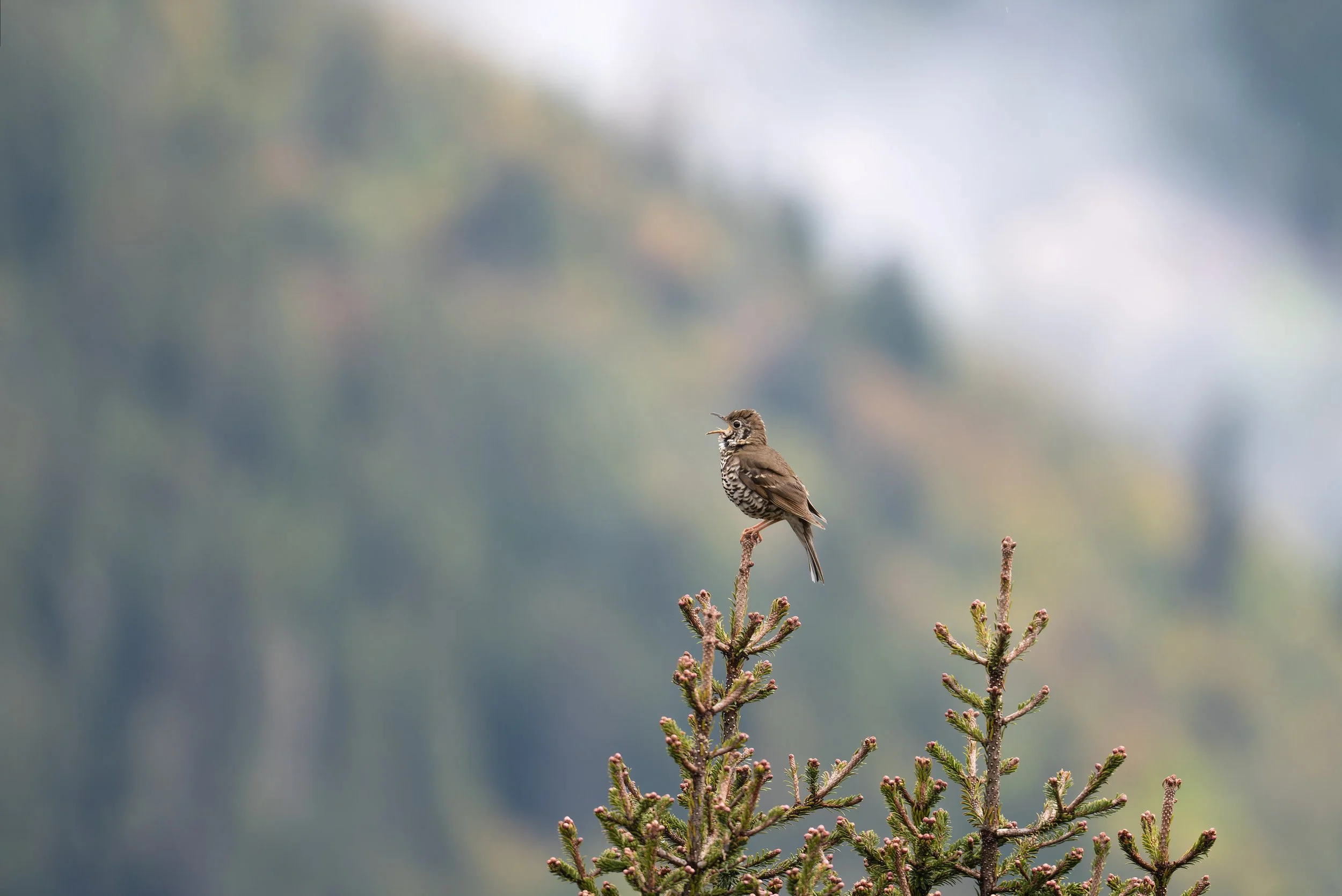
Sichuan Thrush (Zoothera griseiceps)
