
Qinghai Grand Loop, 2024/07
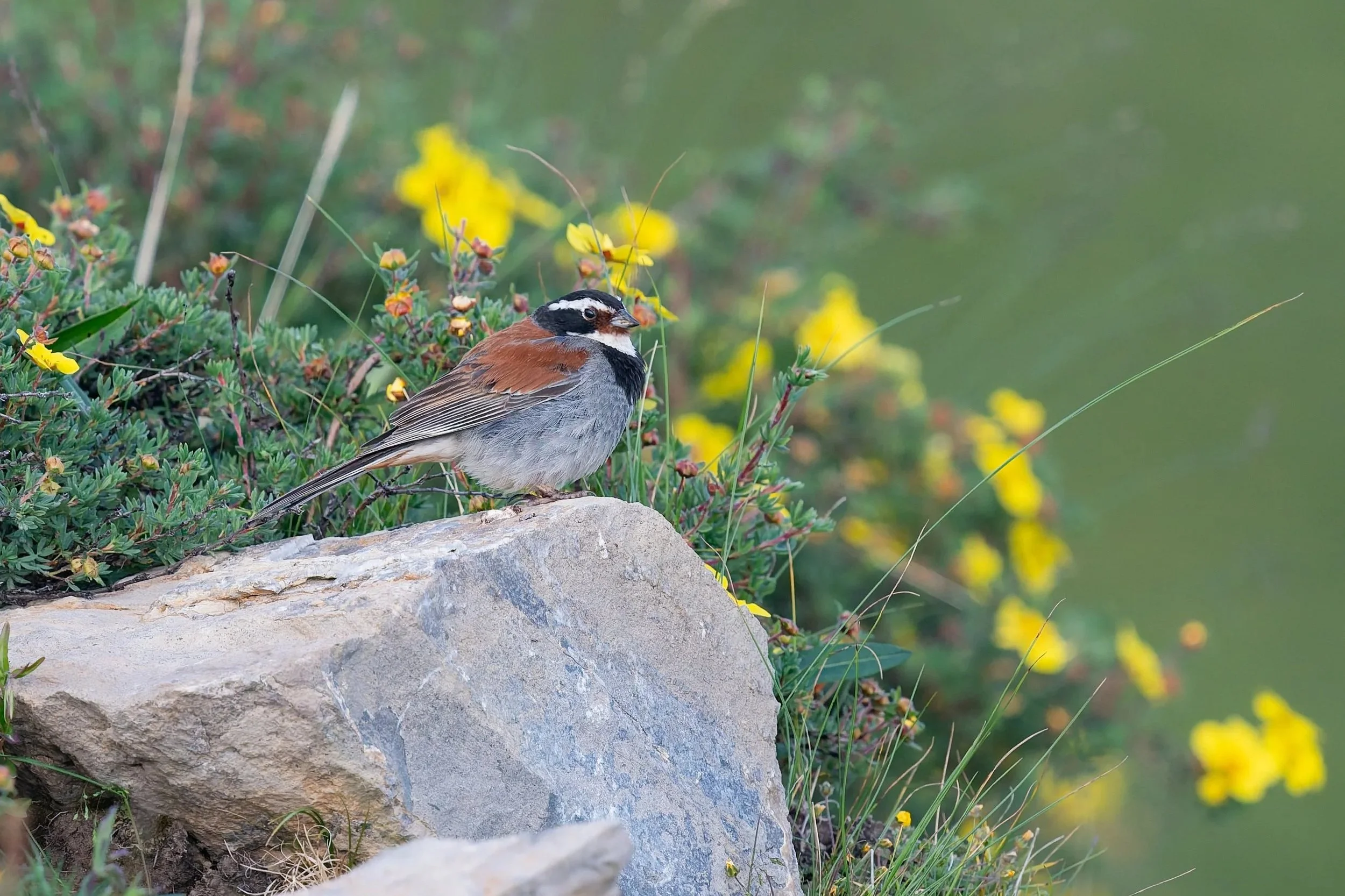
Tibetan Bunting (Emberiza koslowi)
Dates: 4 – 10 Jul 2024
Location: Qinghai Province
Introduction: Being part of the Qinghai-Xizang (Tibetan) Plateau, Qinghai is one of the most attractive destinations in China for natural observers worldwide. Besides numerous endemic bird species, Qinghai is also a delightful place to observe mammals. The classical Qinghai Grand Loop includes most typical habitats of Qinghai – from dark coniferous forests, Qinghai Lake, saline wetlands, flowery meadows, arid semi-deserts to alpine screes, every day provides novel experience.
Guide: Allen Xue, Xinchen Bu
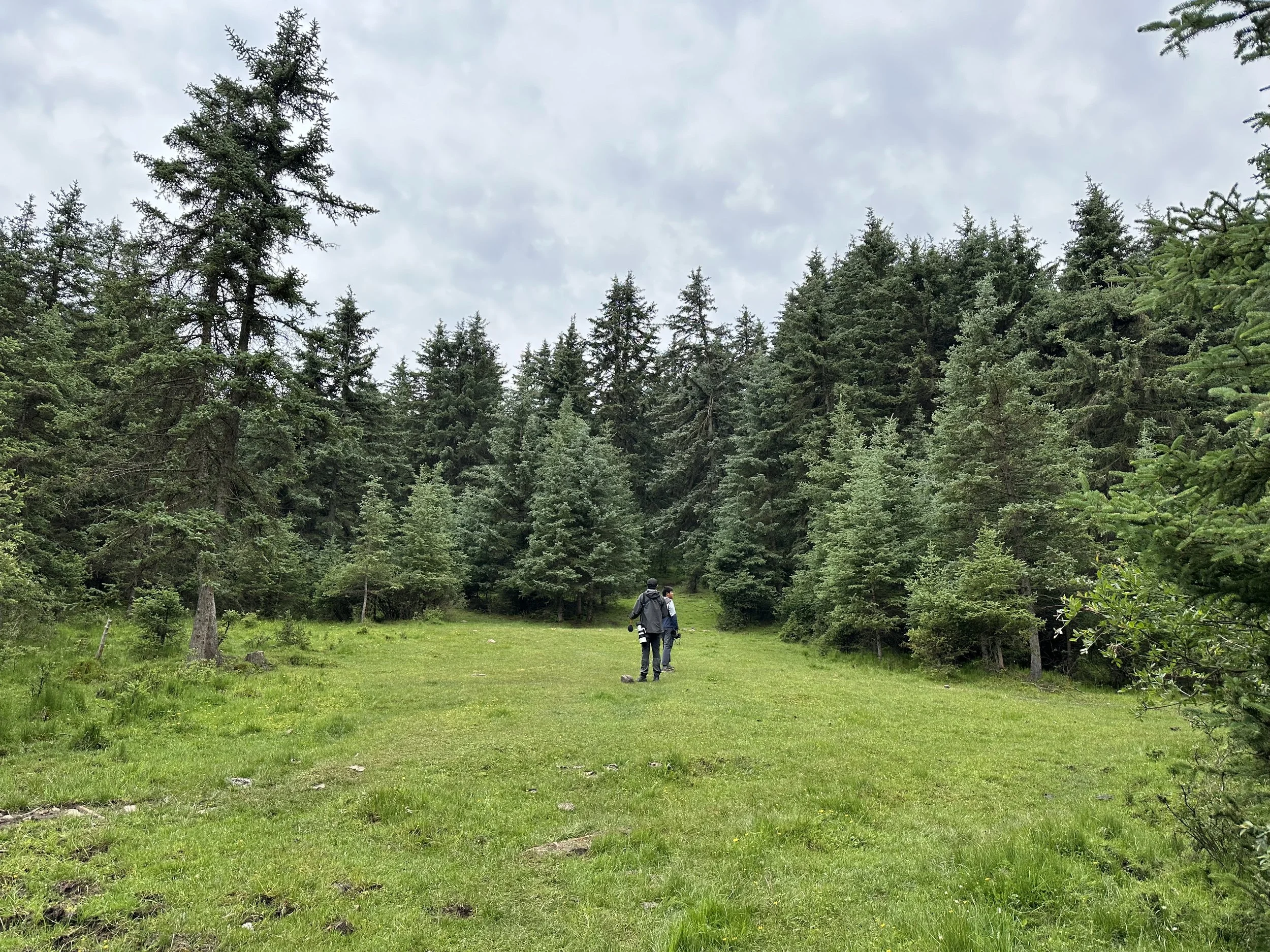
Habitat of Yaozigou Forest Park
Day 0: Arrive at Xining, the capital of the province, and stay overnight.
Day 1: We drove to Datong (45 min) and spend the morning birding at Yaozigou (Hawk Valley) Forest Park which locates at the foothill of Qilian Mountains. This is the main hotspot for birds living in the dark coniferous forest. Target species include: Przevalski’s Nuthatch, Crested Tit-Warbler, Qilian Bluetail, Chinese White-browed Rosefinch, Gansu Leaf Warbler, Yellow-Streaked Warbler, Buff-barred Warbler, Greenish Warbler, Rufous-vented Tit, Chestnut Thrush, Grey-headed Bullfinch, Siberian, Rubythroat, White-winged Grosbeak, etc.
In the afternoon, we drove to Menyuan (1 hr) for accommodation. Not far from the city center, the river and adjacent bushes are home to Ibisbill, Fork-tailed Swift, Plain Laughingthrush and other intriguing species. For those whose time is tight, another option is to drive farther and spend the afternoon looking for Przevalski’s Finch, White-browed Tit, and White-browed Tit-warbler in the cinquefoil bushes.
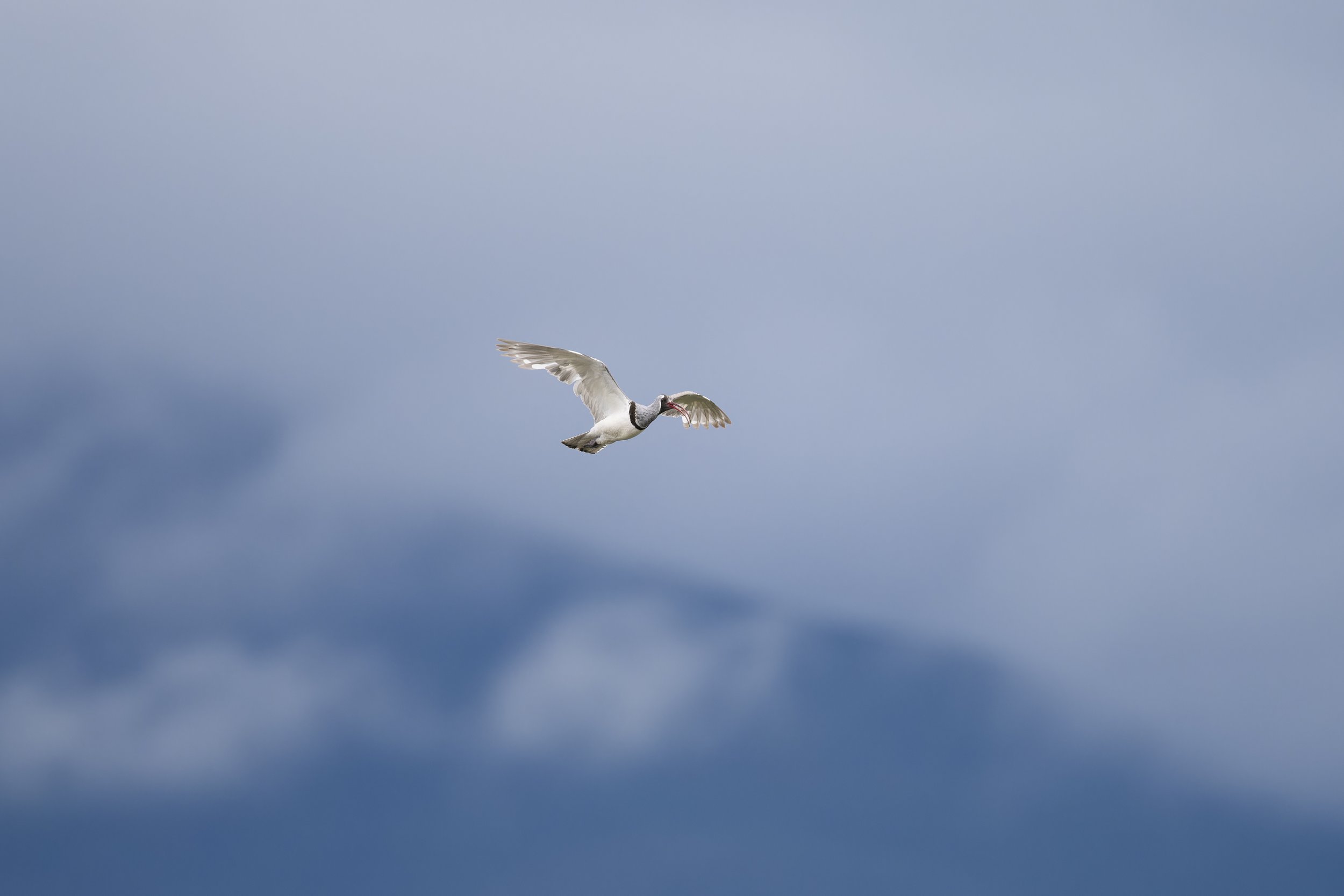
Ibisbill (Ibidorhyncha struthersii)
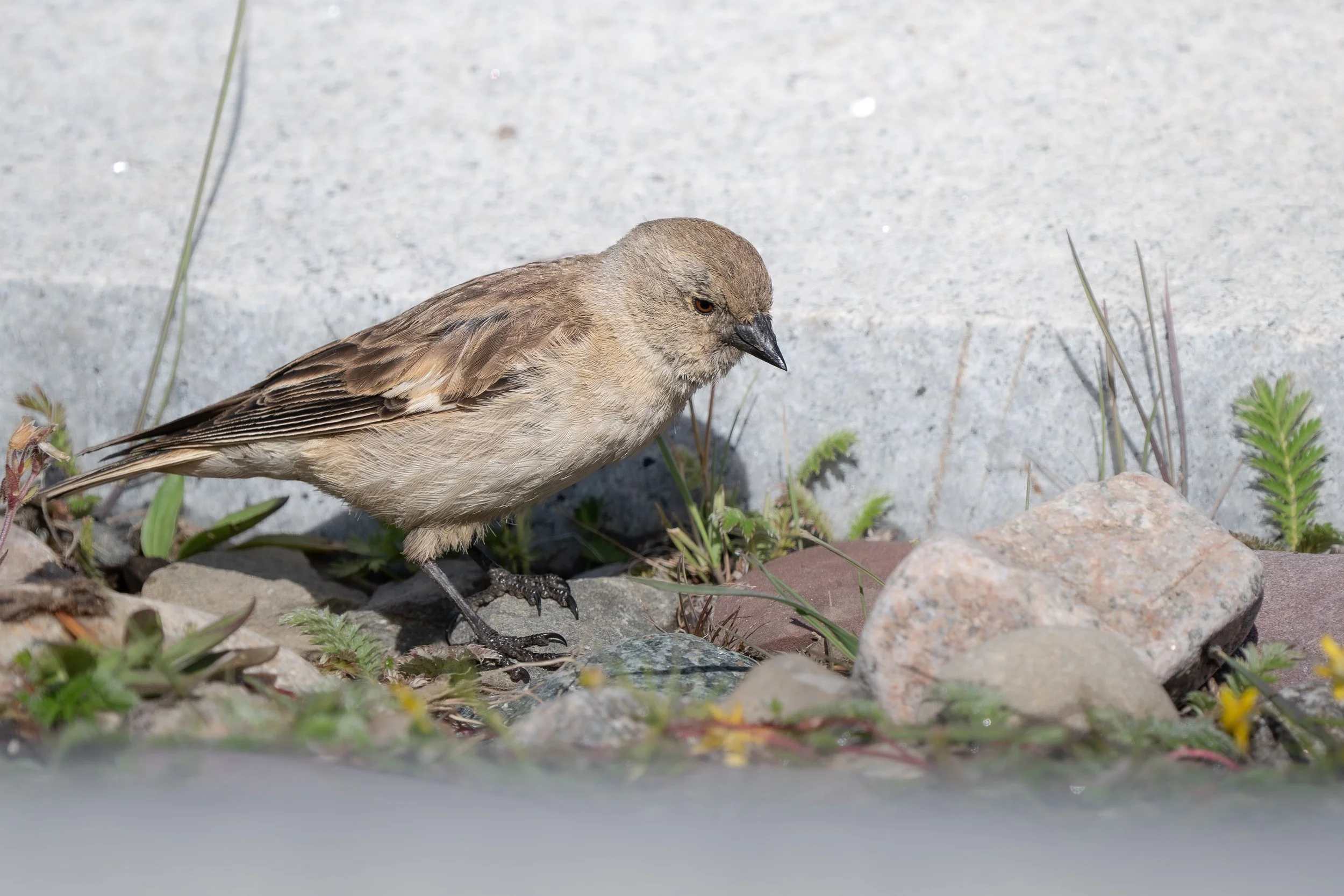
Black-winged Snowfinch (Montifringilla adamsi)
Day 2: Today we set out very early for Gangshka Snow Peak, which is the first high-elevation spot of the trip. After passing the checkpoint (which should now only allows official tourist buses), we drove to the highest parking lot amongst the screes for Grandala, Tibetan Snowcock and Red-fronted Rosefinch, and we searched the mid-altitude habitats for Smoky Warbler, Streaked Rosefinch, Black-winged Snowfinch, White-backed Thrush, and Wallcreeper. In the foothill scrubs, we also saw Przevalski’s Finch, Brandt’s Mountain Finch, Tibetan Partridge, and Rosy Pipit.
At noon we left Gangshka and drove towards Qinghai Lake (3 hr). For conservational purposes most parts of the lake were closed, and it was not very easy to get near the shore. Fortunately we managed to find an entrance, and saw Giant Grey Shrike, Mongolian Lark, Hume’s Short-toed Lark, Horned Lark, and Isabelline Wheatear. At night we stayed in Gangcha.
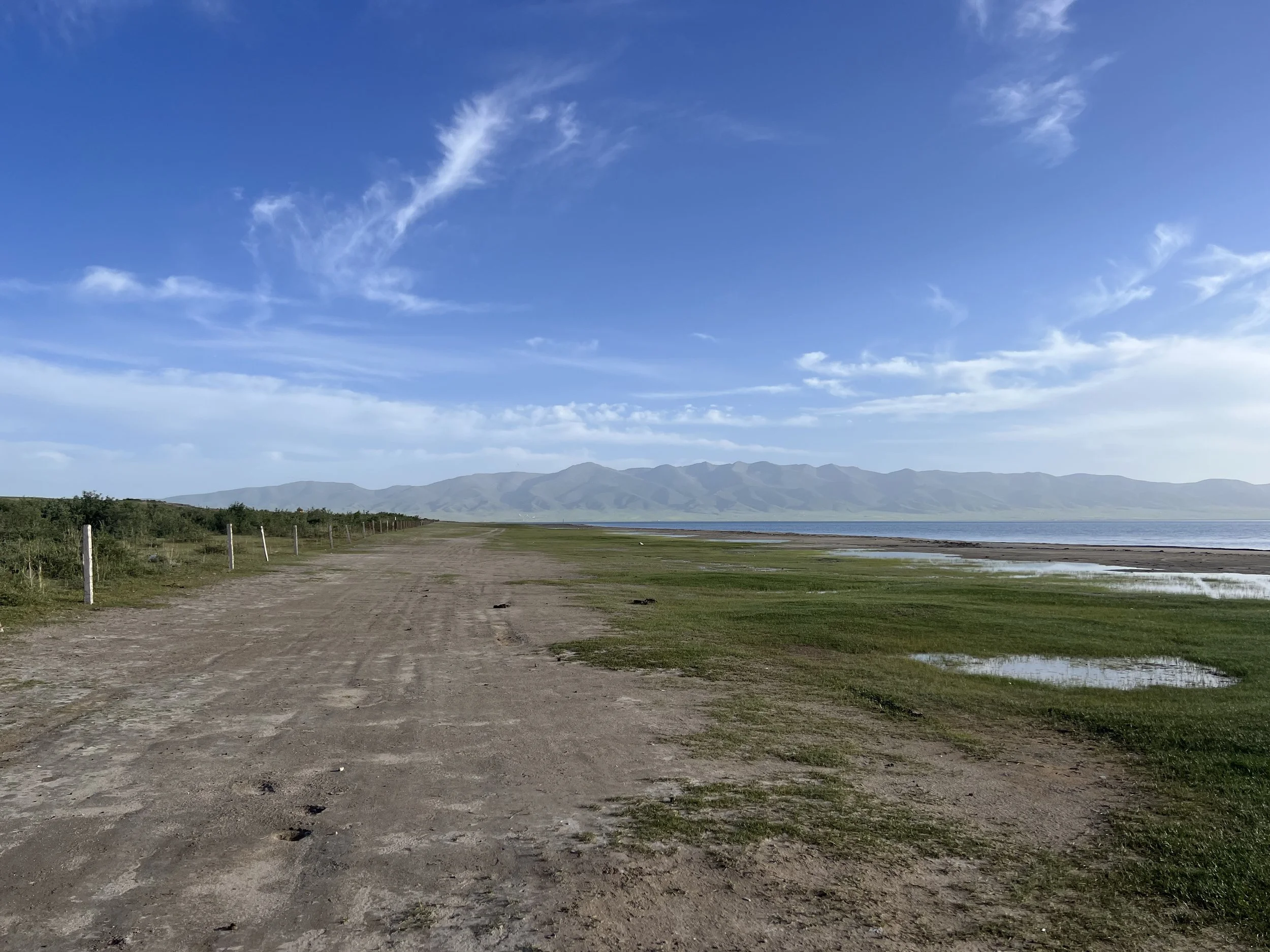
A typical habitat along Qinghai Lake, characterized by flat and moist short-grass meadows that support a variety of snowfinches.
Day 3: Today we drove along the northern and western shore of Qinghai Lake and do some birding along the way. Commonly seen species were Ground Tit, Black Redstart, Rufous-necked Snowfinch, and Oriental Skylark, while our main target was the uncommon Pere David’s Snowfinch. At the western shore, the must-go birding hotspot is Buha River Bridge, where hundreds of Brown-headed Gulls and Pallas’s Gulls dominate the area. In recent years this was the most readily accessible spot for the venerable Pallas’s Fish Eagle, but we didn’t have enough luck to see it.
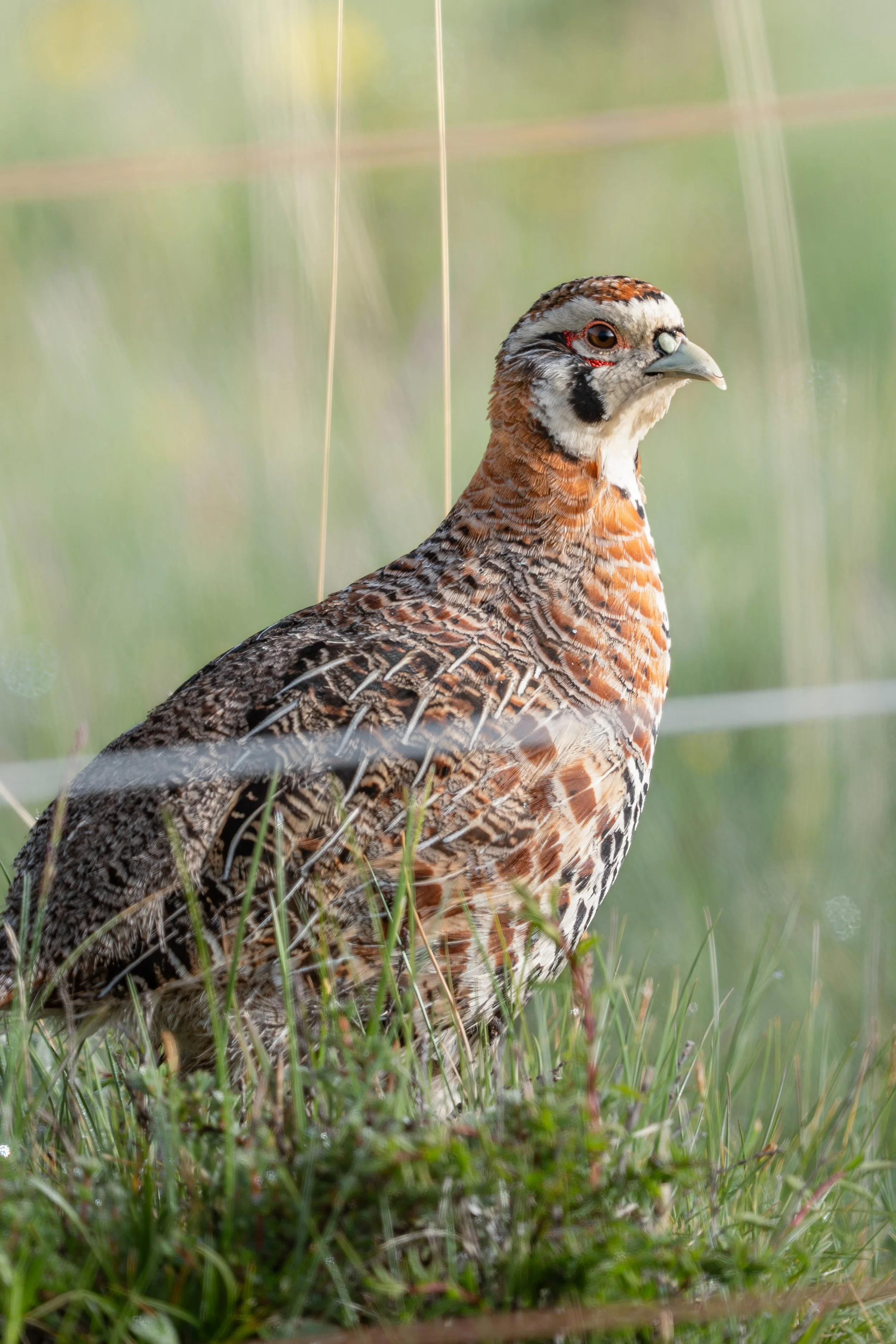
Tibetan Partridge (Perdix hodgsoniae)
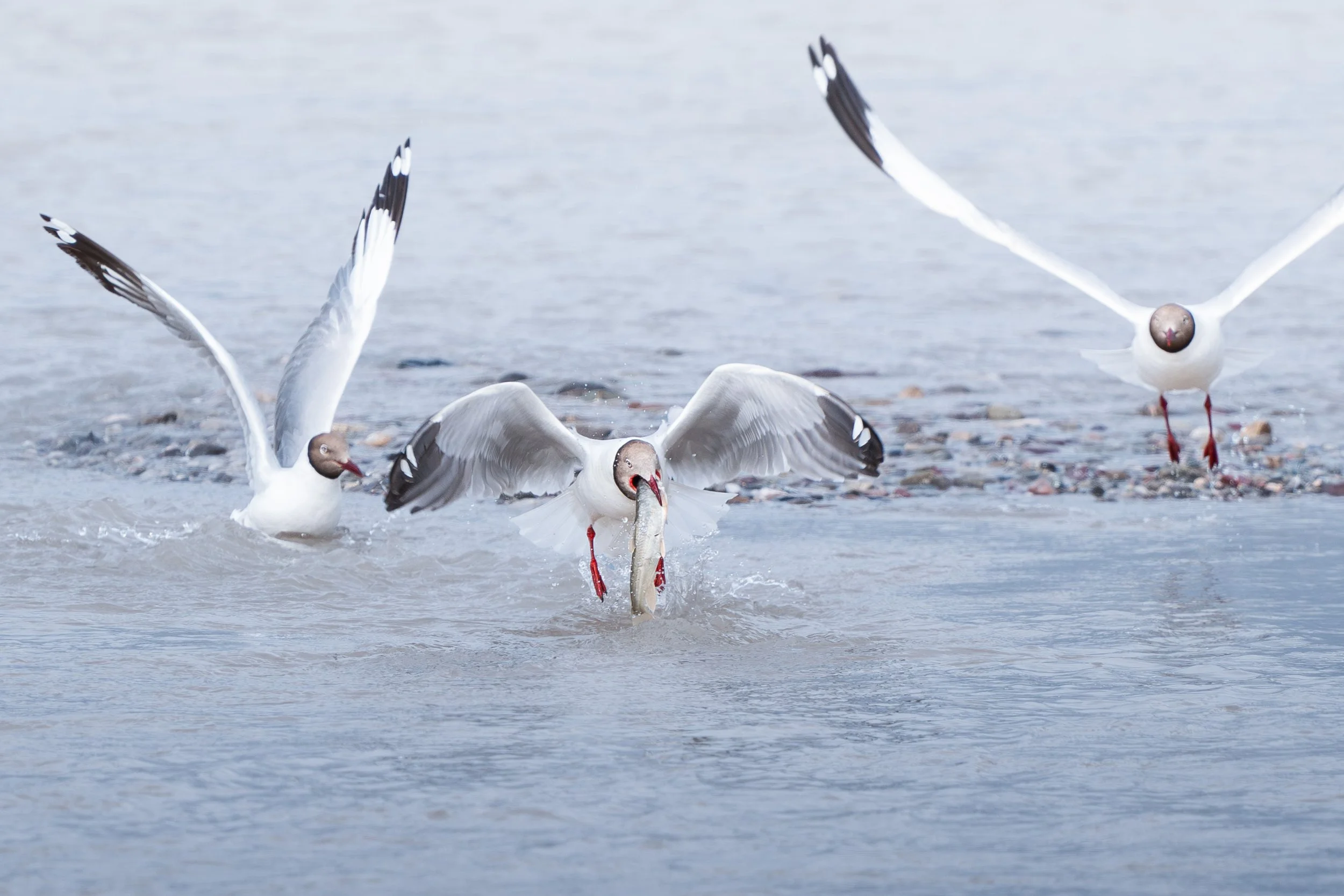
Brown-headed Gull (Chroicocephalus brunnicephalus) foraging on a naked carp (Gymnocypris przewalskii), an iconic fish species endemic to Qinghai Lake.
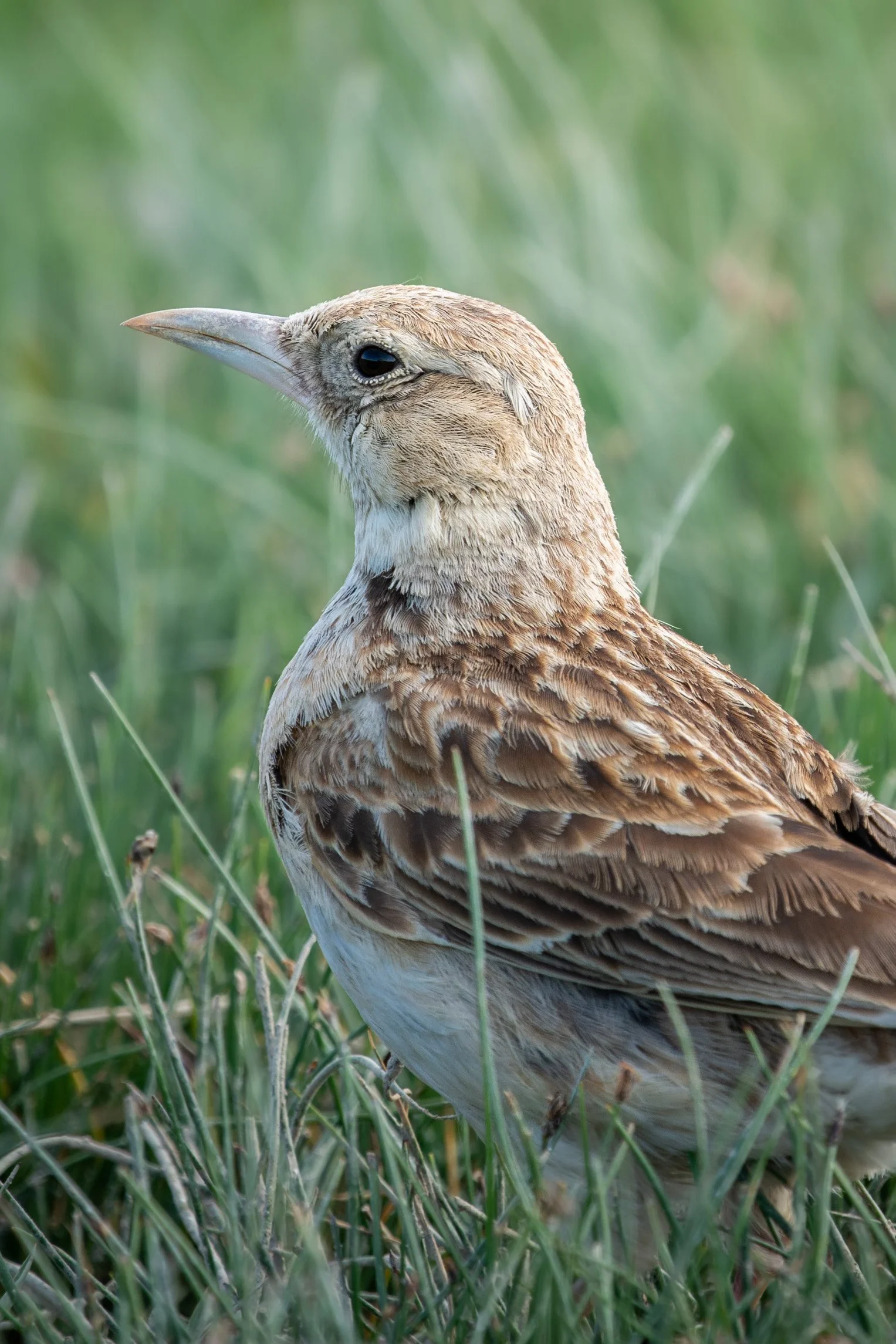
Tibetan Lark (Melanocorypha maxima)
At noon we drove to Wulan (2 hr) to pay Dulan Lake a visit. This was one of our favorite birding hotspots of the whole trip. Lakeside vegetation varied from grasses to dense thorns, making it attractive to many bird species, including Black-necked Crane, Tibetan Lark, Tarim Babbler, Mongolian Ground Jay and Isabelline Shrike. Later in the afternoon, we drove along S213 Provincial Highway to look for some birds of dry habitat, especially the Daurian Partridge. Although we missed the main target, we saw Mongolian Finch and Desert Wheatear. Night at Wulan.
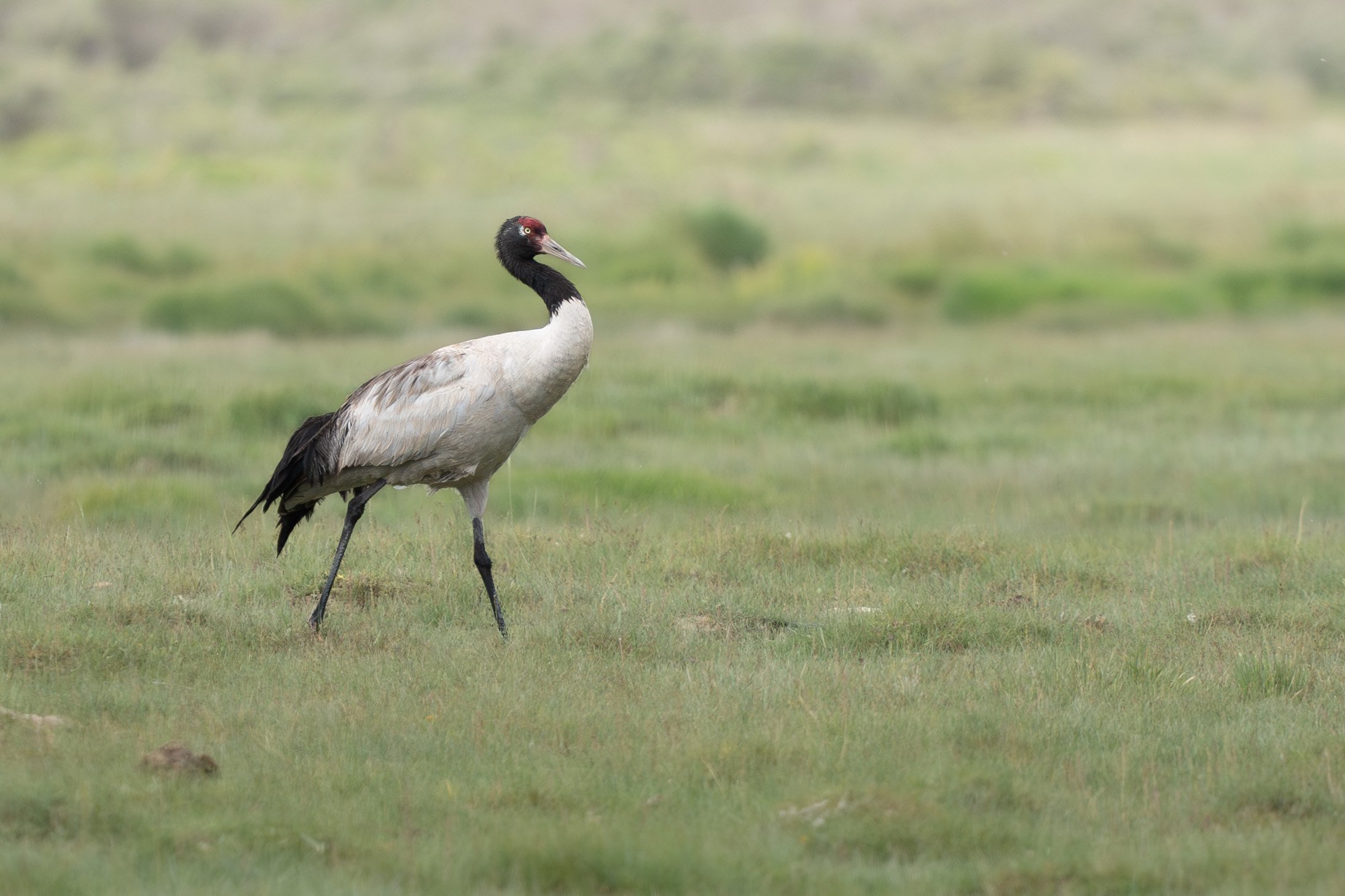
Black-necked Crane (Grus nigricollis)
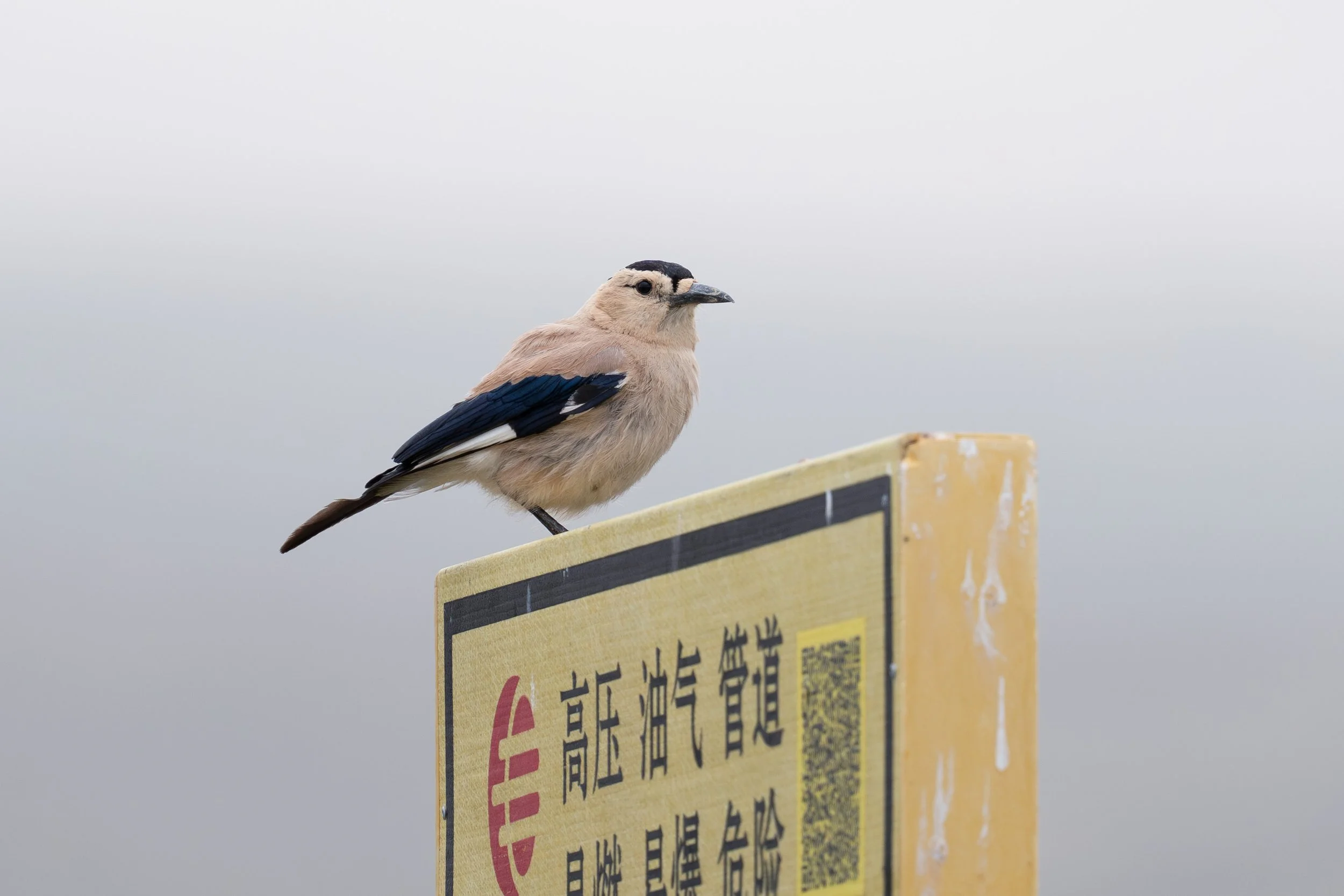
Mongolian Ground-Jay (Podoces hendersoni)
Day 4: This morning we looked for Przevalski’s Partridge and Przevalski’s (Ala Shan) Redstart. The partridges liked to call on top of rocky hills, so seeing them were easy. What was really impressive was the redstart: we went from arid semi-deserts into a narrow valley, and as we proceed there suddenly appeared cypress trees on which the redstart was singing. Other birds worthy of note were Black-rumped Magpie and Little Owl.
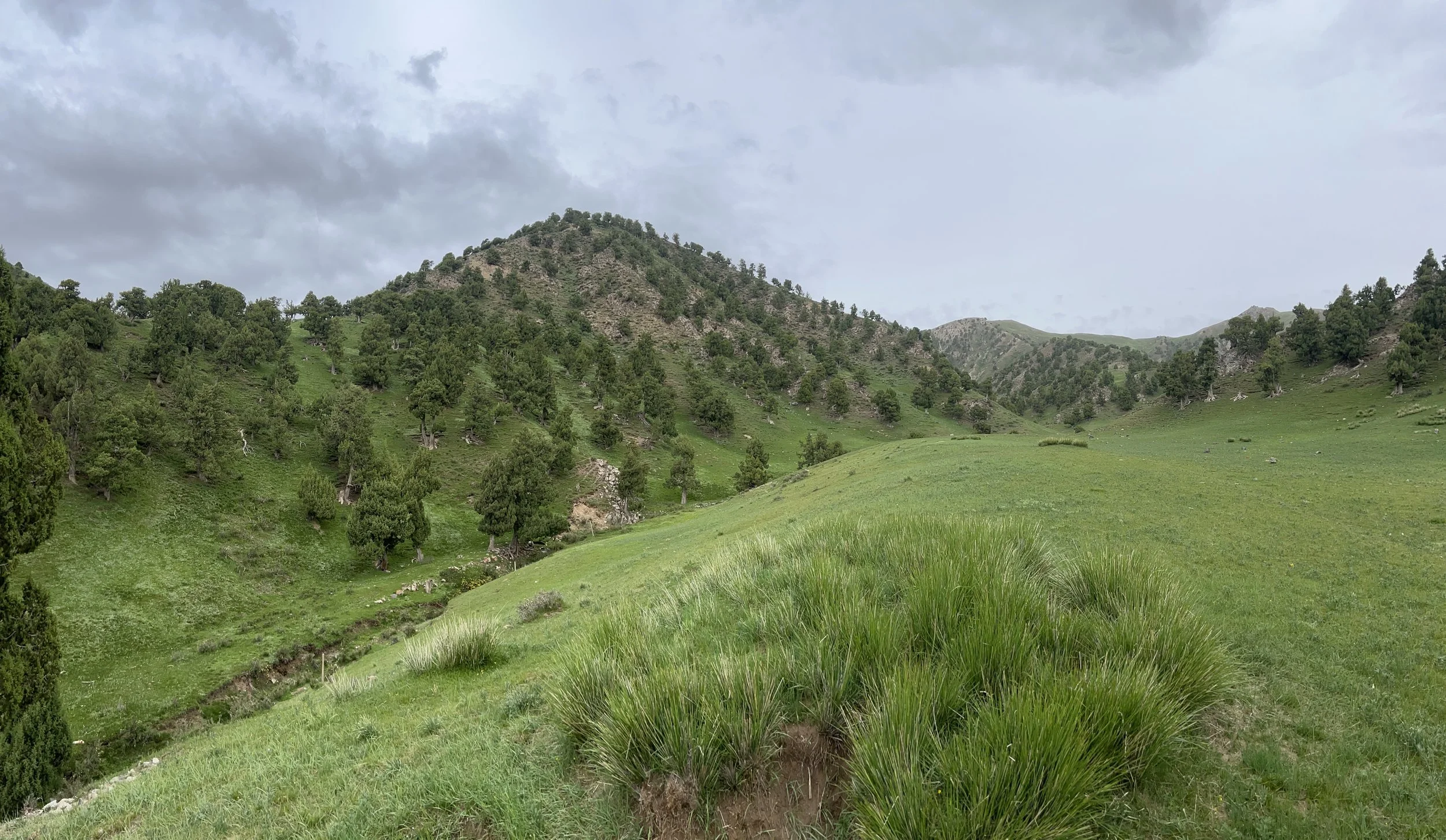
Surrounded by dry loess hills, the valley supports a narrow strip of grassland and conifer woodland along the riverbed. This is typical habitat for Ala Shan Redstart.
Then we drove to Longyangxia (3.5 hr) in the hope of finding other unique birds of dry habitats, especially Pale Rosefinch, Desert Finch, Lesser Whitethroat, and White-backed Rock Thrush, but we only saw the latter. For accommodation we drove to Xinghai (2.5 hr).
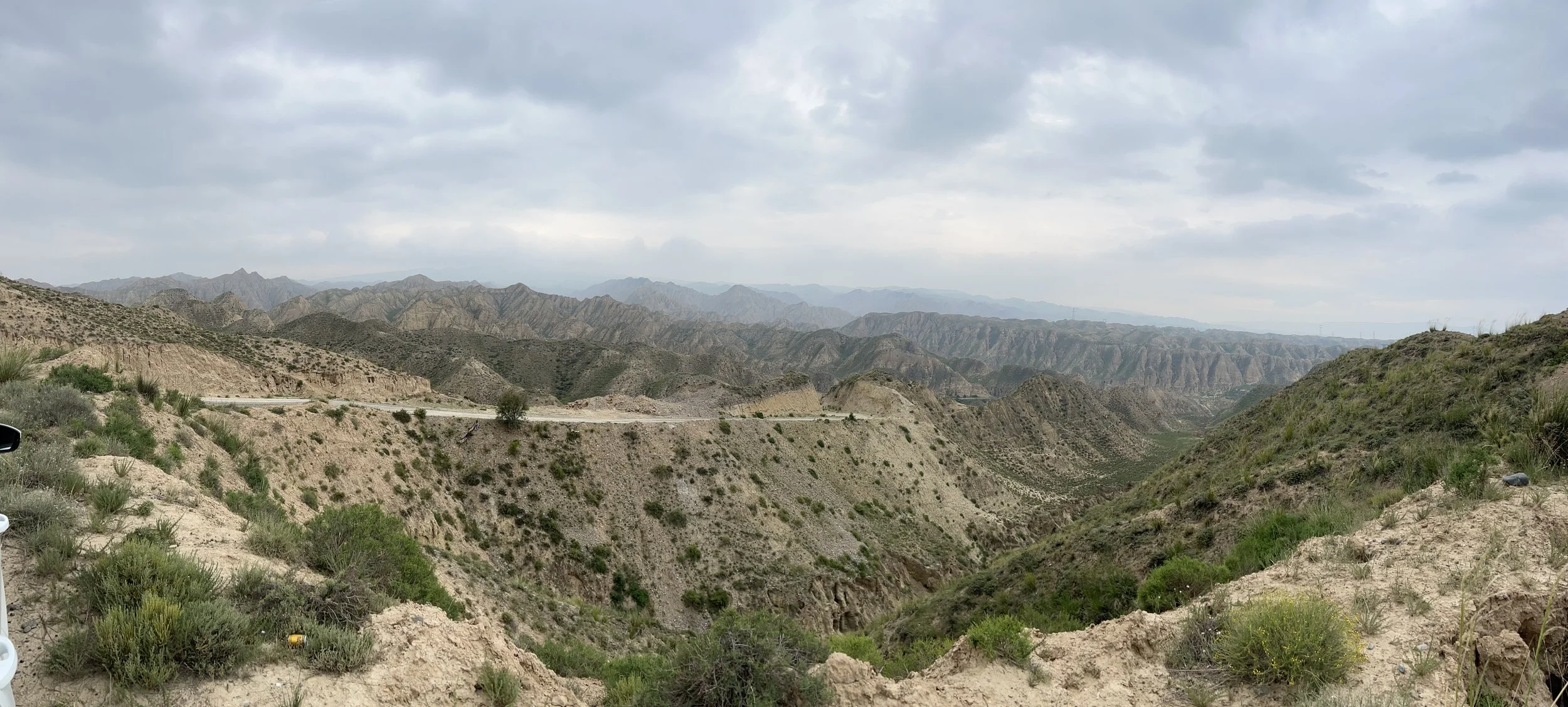
Longyangxia on the Yellow River. The surrounding loess hills are deeply carved by erosion, creating a spectacular maze of ridges, ravines, and gullies.
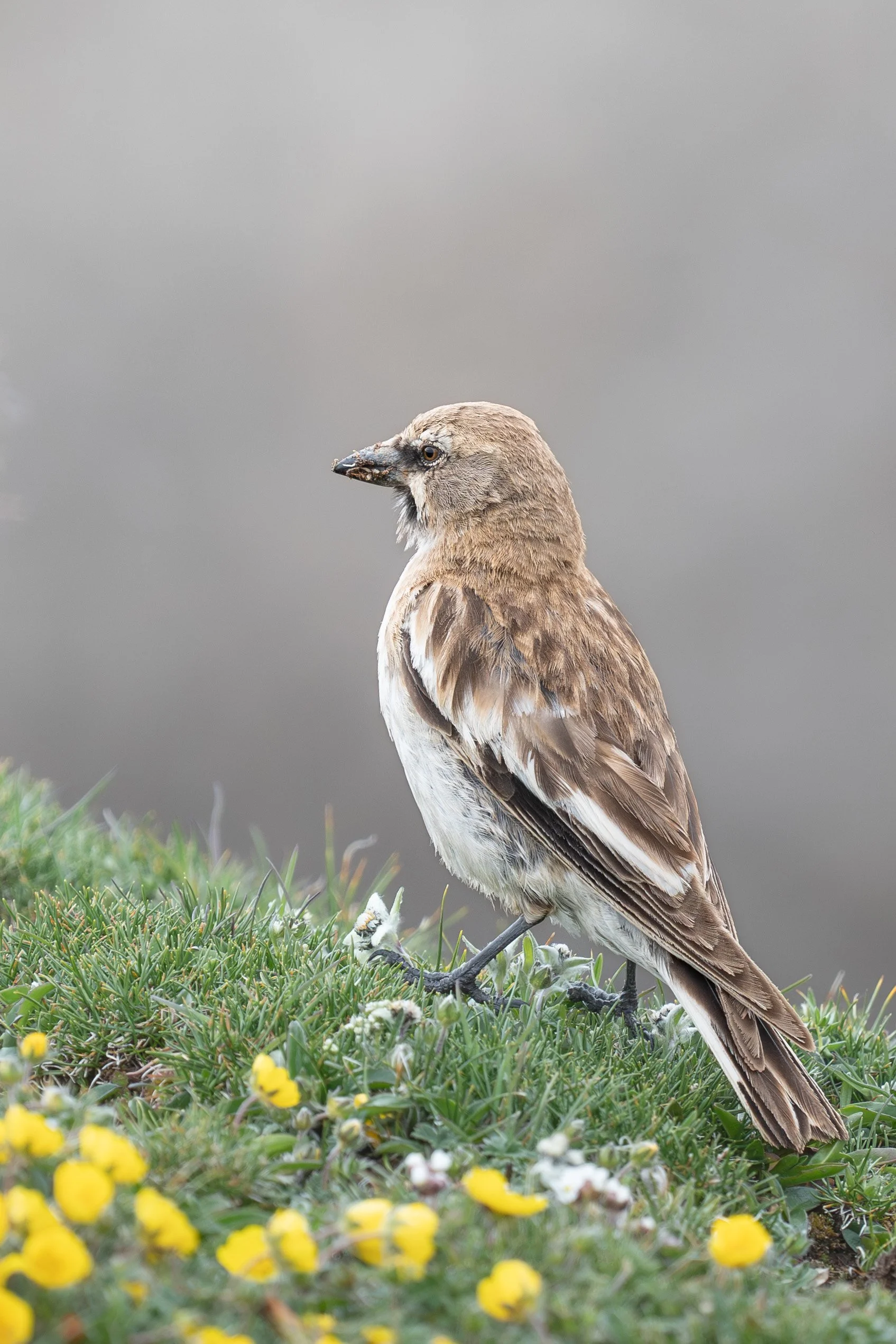
Tibetan Snowfinch (Montifringilla henrici)
Day 5: This day we came to the second high-elevation birding spot at 4800m, namely the Elashan Pass (1.5 hr). Being the only birding spot of this day, Elashan Pass was covered with alpine screes, where Tibetan Rosefinches and Tibetan Snowfinches dwelled. We had to climb up quite a little bit in order to find them, and it was no easy task if altitude was taken into consideration. The rest of the day was dedicated to the sole mission of arriving at Yushu City and stay overnight.
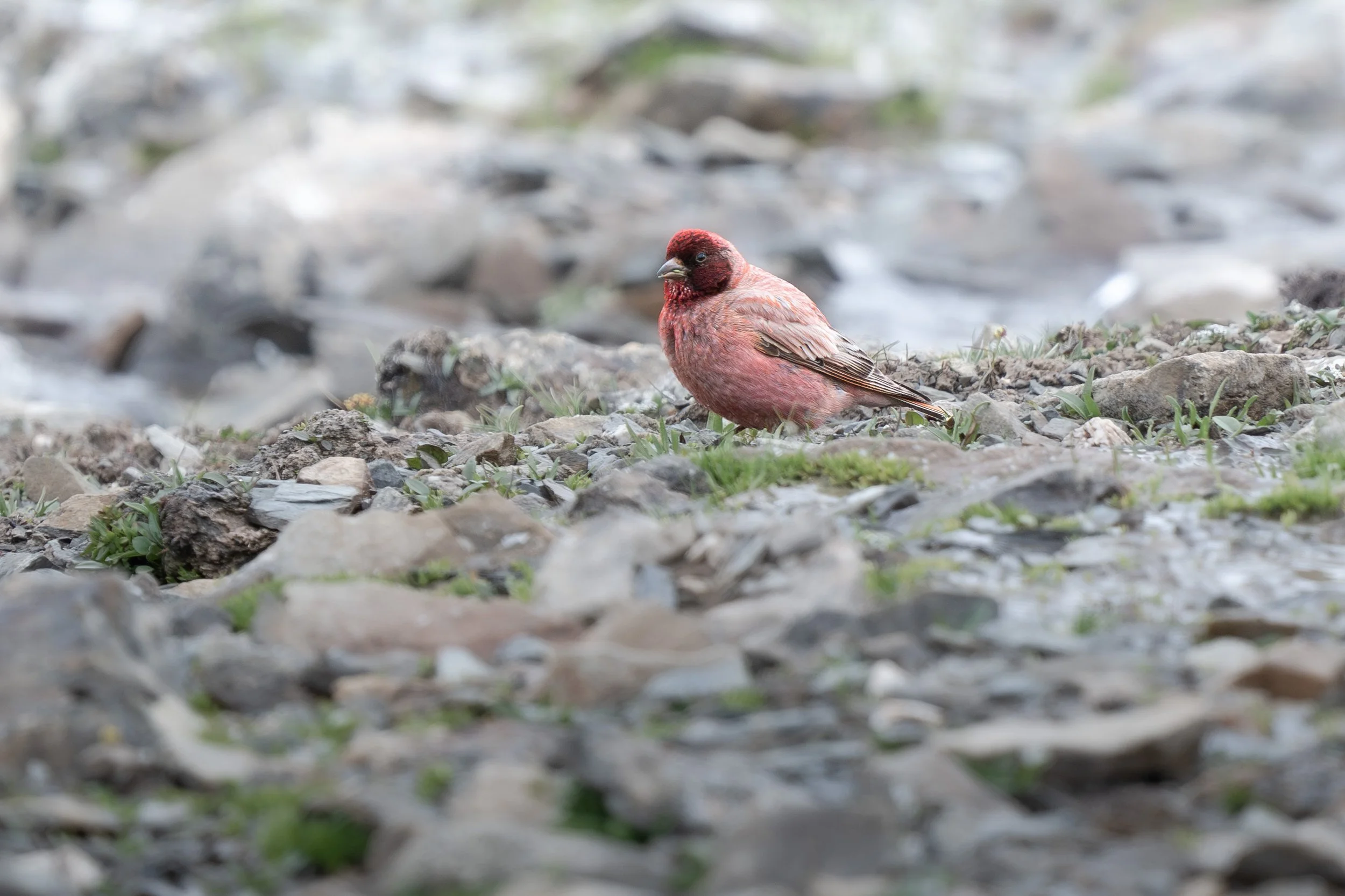
Tibetan Rosefinch (Carpodacus roborowskii)
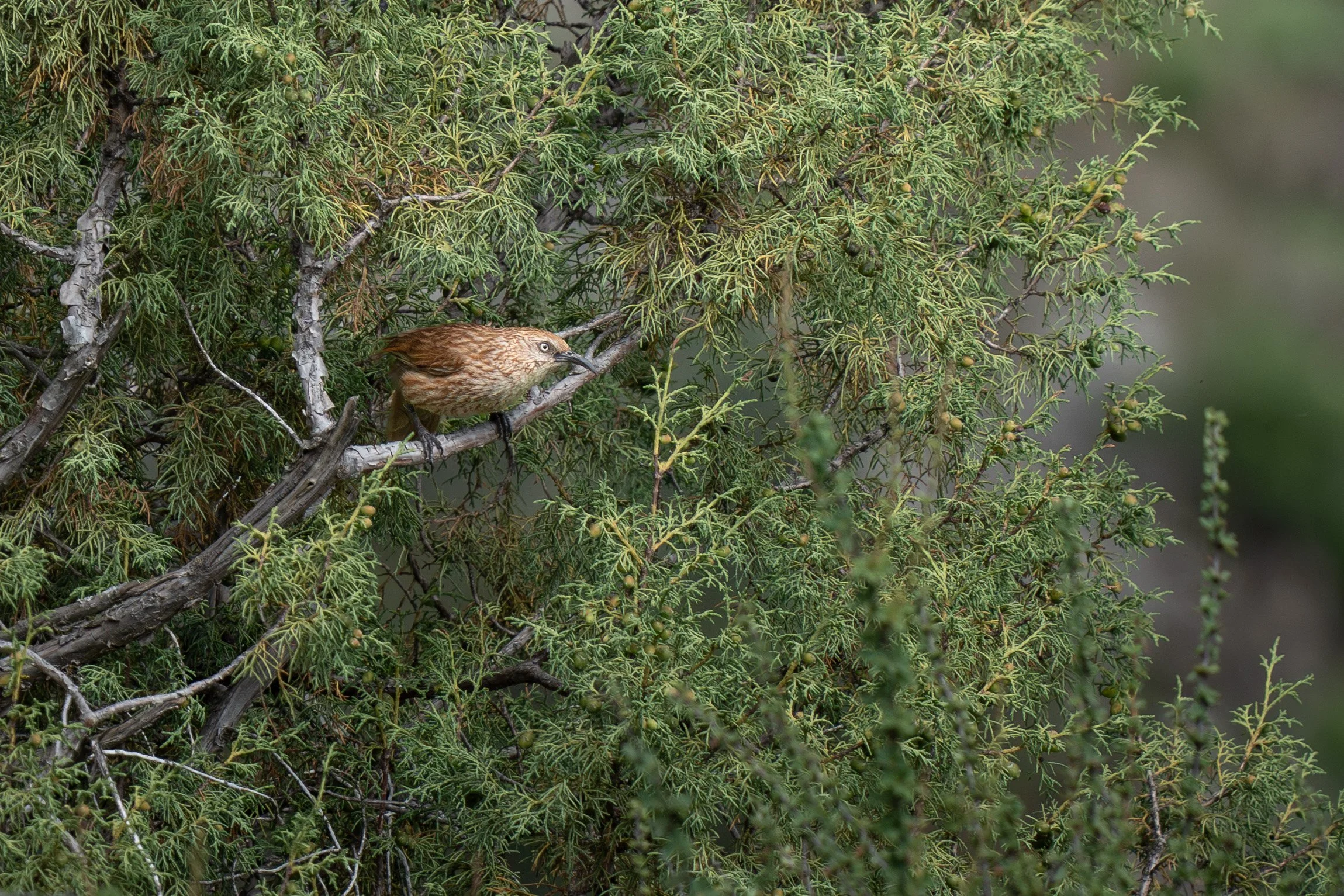
Tibetan Babax (Pterorhinus koslowi)
Day 6: After we picked up another member of our trip at the airport, we went to Temple of Princess Wencheng (Vairocana Temple) for some morning birding. As we drove up there were Fork-tailed Swift, Little Owl, Northern Raven, and Saker Falcon along the way, and in the scrubs and bare rocks there were Chinese Rubythroat, Red-fronted Rosefinch and Rufous-breasted Accentor. We tried again for White-browed Tit and White-browed Tit-Warbler, but with no result. White-throated Dipper was also absent in the list.
In the afternoon we drove nonstop (2.5h) to Nangqian (Ngangqen) for two of the trip’s top targets: Tibetan Babax and Tibetan Bunting. Both species can be seen at Kandashan. We arrived there at ca. 16:00 (which is not early), and immediately went to a mountainside temple for the babax. Then we drove up until we reached 4500m in elevation at almost 18:00, when the sun began to set. Fortunately the bunting was there singing as always, and when we finally get down the mountain it was already dark outside. We stayed at Nangqian for the night.
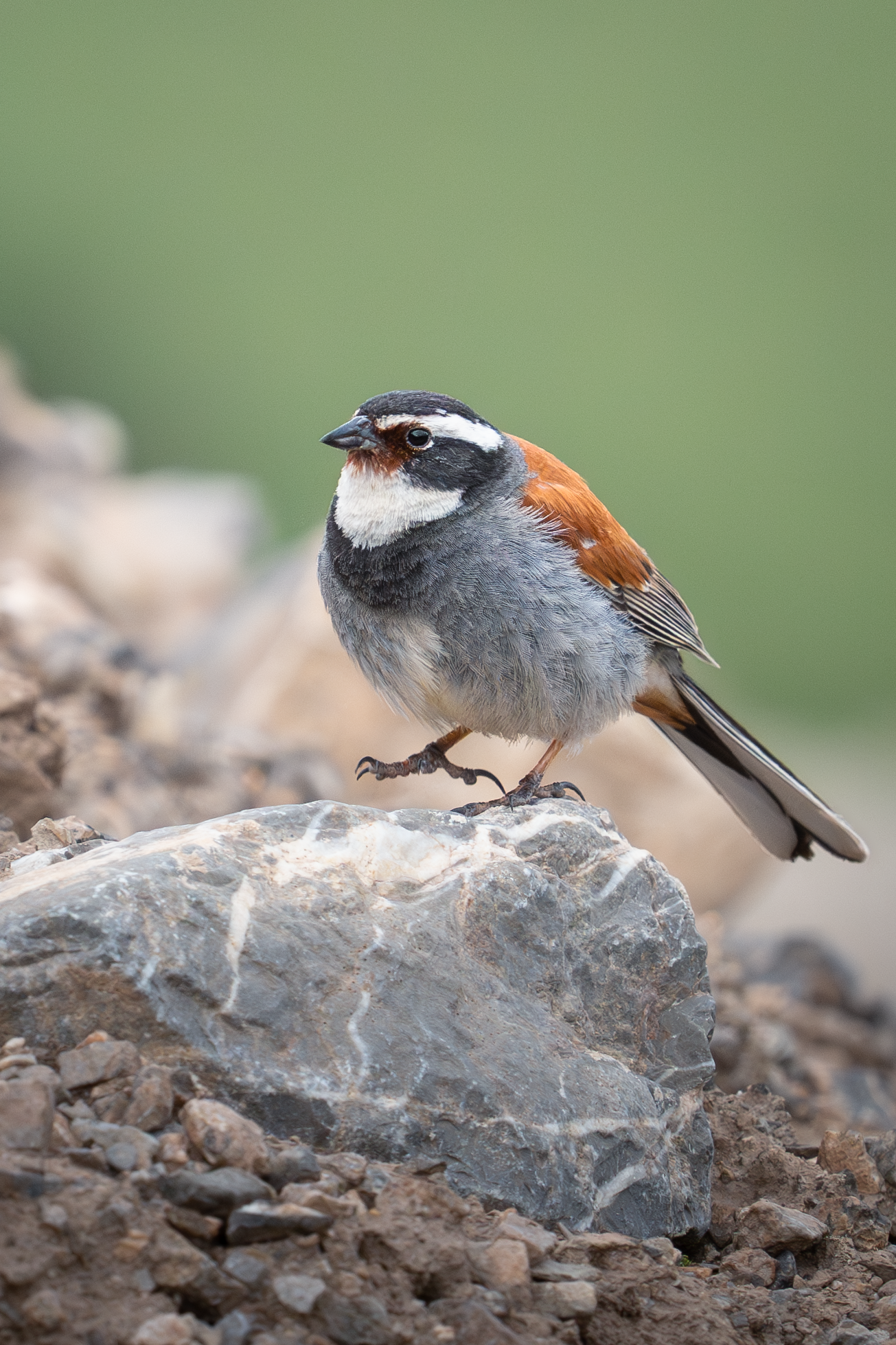
Tibetan Bunting (Emberiza koslowi)
Day 7: Today we drove to the southernmost tip of Qinghai, Baizha Forest (2 h), where cypresses and fir trees grow on rocky cliffs. Deep in the mountains was the resplendent Ga’er Lamastery, a symbol of Tibetan religious culture and sanctuary for wildlife. This was another highlight of the trip, with target species such as Buff-throated Monal Partridge, White Eared Pheasant, Blood Pheasant, Daurian Jackdaw, Black-rumped Magpie, Bearded Vulture, Golden Eagle, Himalayan Beautiful Rosefinch, Sichuan Tit, White-bellied Redstart, Tickell’s Leaf Warbler, Snow Pigeon, and Black Woodpecker. Night at Nangqian or Yushu.
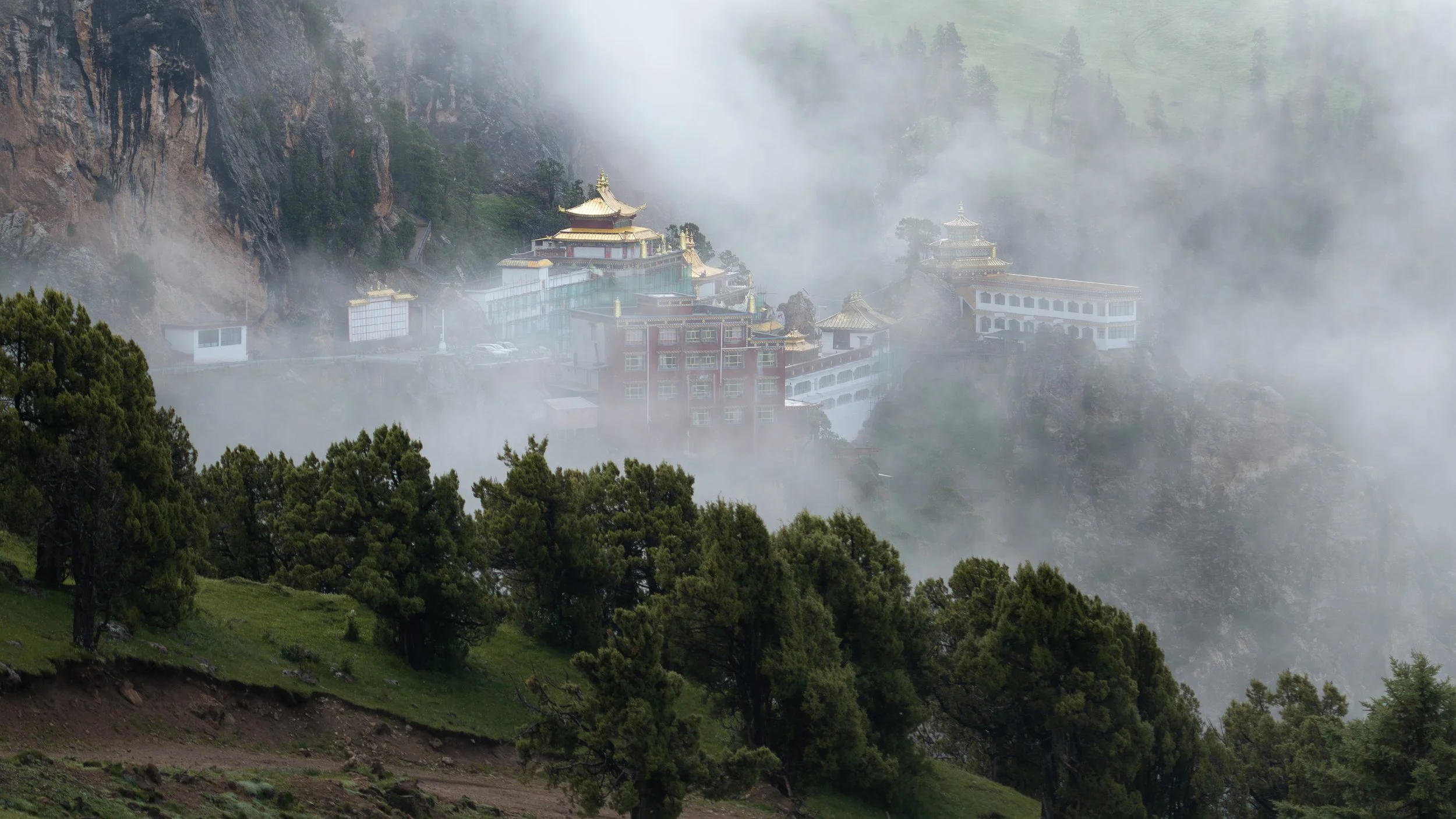
Ga’er Lamastery is one of the largest Gelug monasteries still in existence. Nearby, the Baizha Forest provides excellent birding habitat, combining beautiful alpine scenery with a rich diversity of montane species.
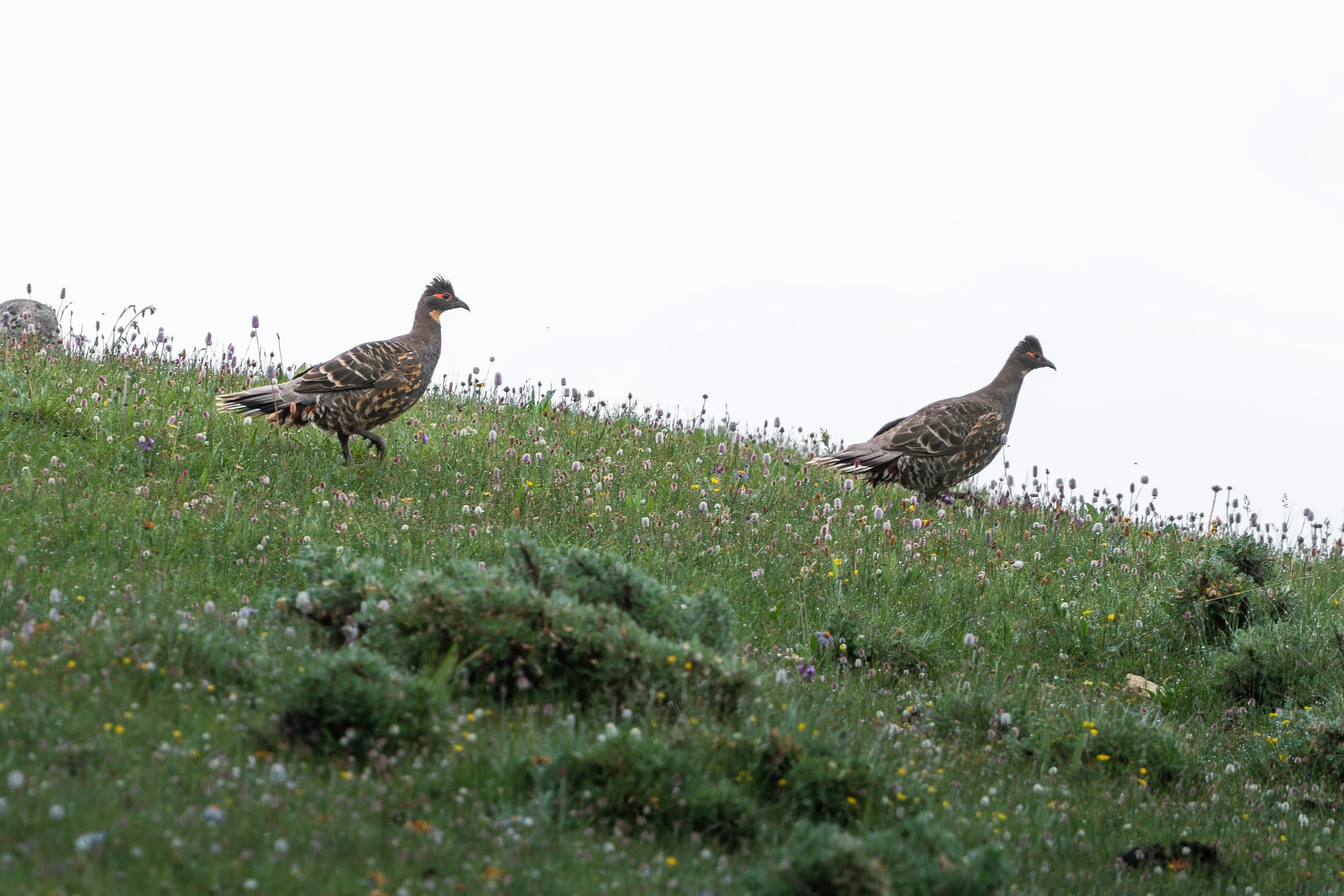
Buff-throated Monal-Partridge (Tetraophasis szechenyii)
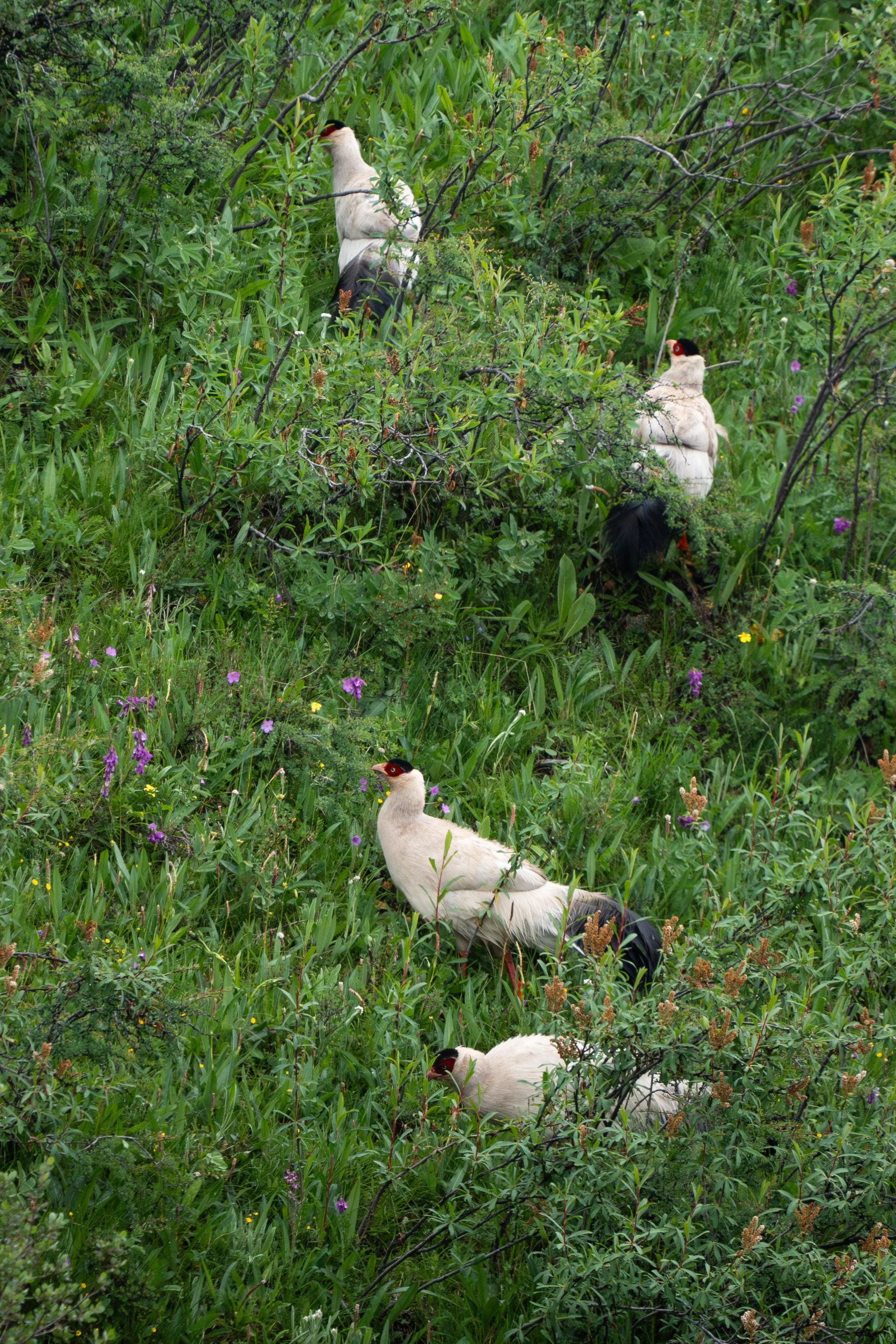
White Eared-Pheasant (Crossoptilon crossoptilon) is frequently encountered in this area.
Day 8: This morning we decided to give Temple of Princess Wencheng another try, but nothing new. For the rest of the day we drove along National Highway G215 to Qumalai (Chumarleb) which took almost 3.5 hours, and did some birding whenever we got tired. Halfway between Yushu and Qumalai, Longbao NNR was a great option with Black-necked Cranes. Night at Qumalai.
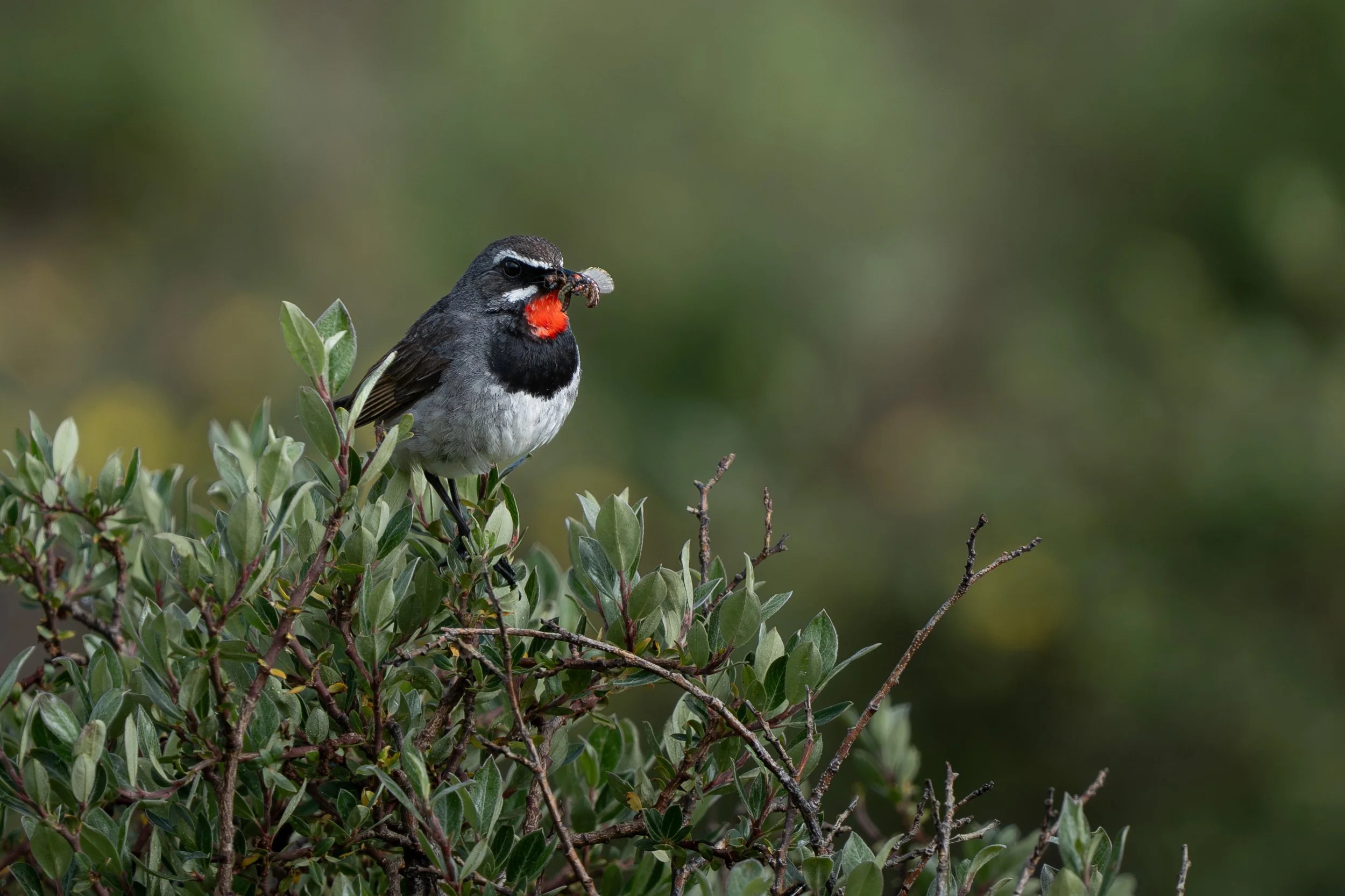
Chinese Rubythroat (Calliope tschebaiewi)
Day 9: Today we undertook the formidable journey driving from Qumalai through Kekexili (Hoh Xil) NNR all the way to Ge’ermu (Golmud). During the drive we added Blanford’s Snowfinch, Tibetan Sand Plover and Osprey to our trip list. This was also one of the most pleasing site to watch mammals such as Kiang, Chiru, Tibetan Gazelle, Red Fox, Tibetan Fox, Steppe Polecat and Altai Mountain Weasel. There was said to be Tibetan Sandgrouse in the sandy habitats along the way, but we found none of them.
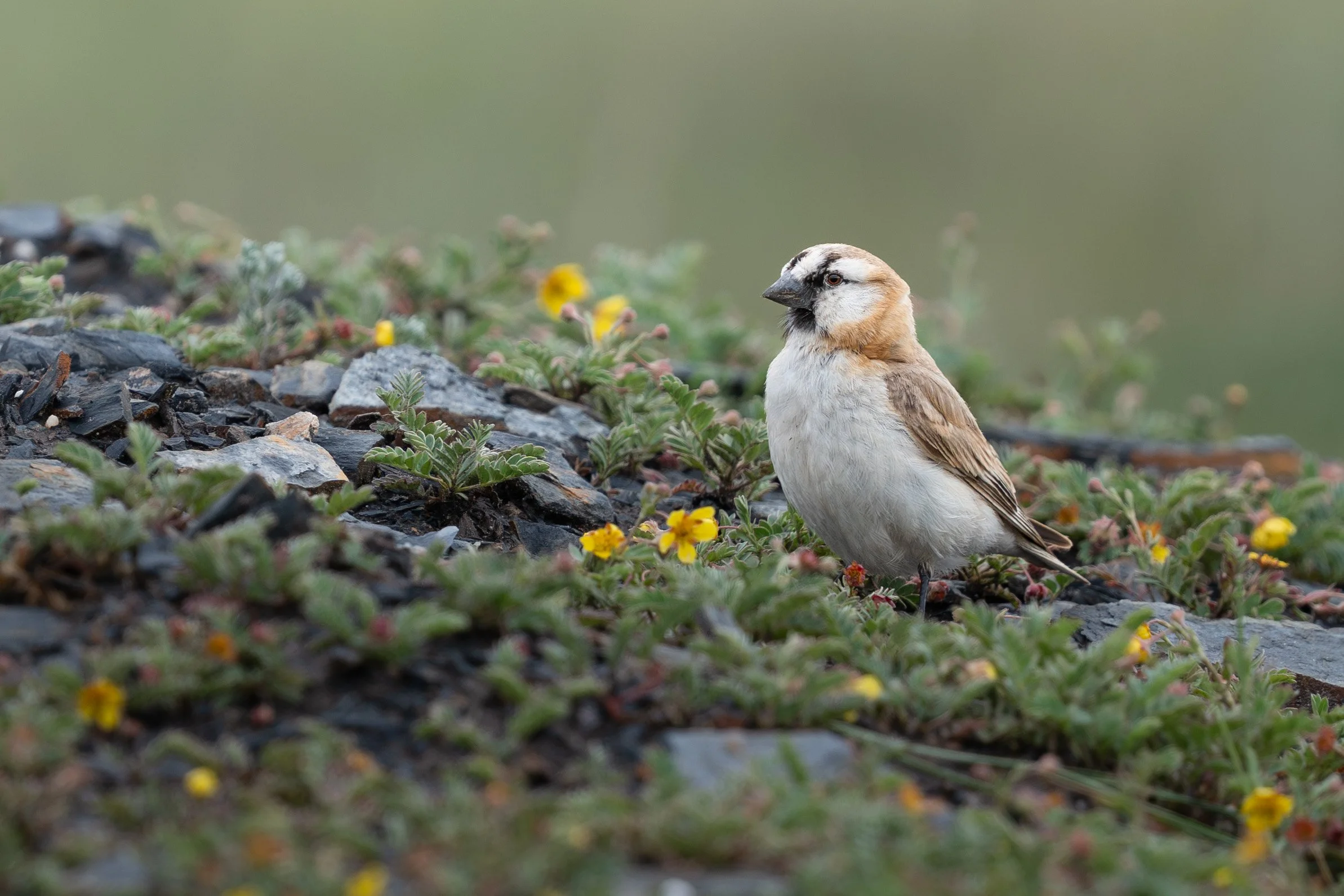
Blanford's Snowfinch (Pyrgilauda blanfordi)
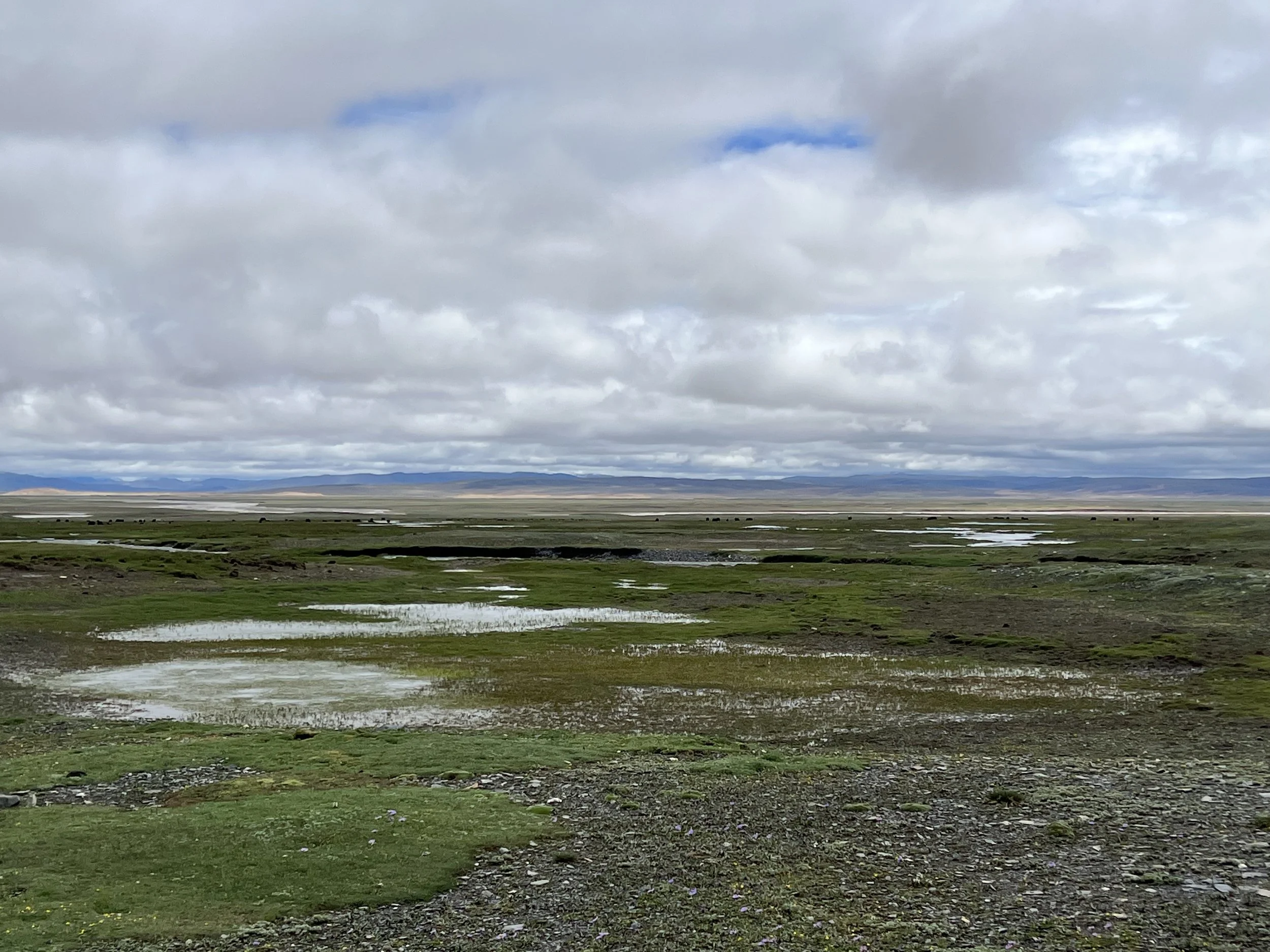
Moist alpine meadows above 4,000 m provide ideal breeding habitat for Tibetan Sand Plover (Anarhynchus atrifrons).
Located near the grand Kunlun Mountains, Ge’ermu was the largest city in western Qinghai. Apart from the world-renowned Wild Yak Gorge for Sillem’s Rosefinch, the Endless Loong & Fenghuang Taoist Temple was also a birding hotspot to easily observe Great Rosefinch. There was even a Pizza Hut in the city center and we did not hesitate to have dinner there. Night at Ge’ermu.
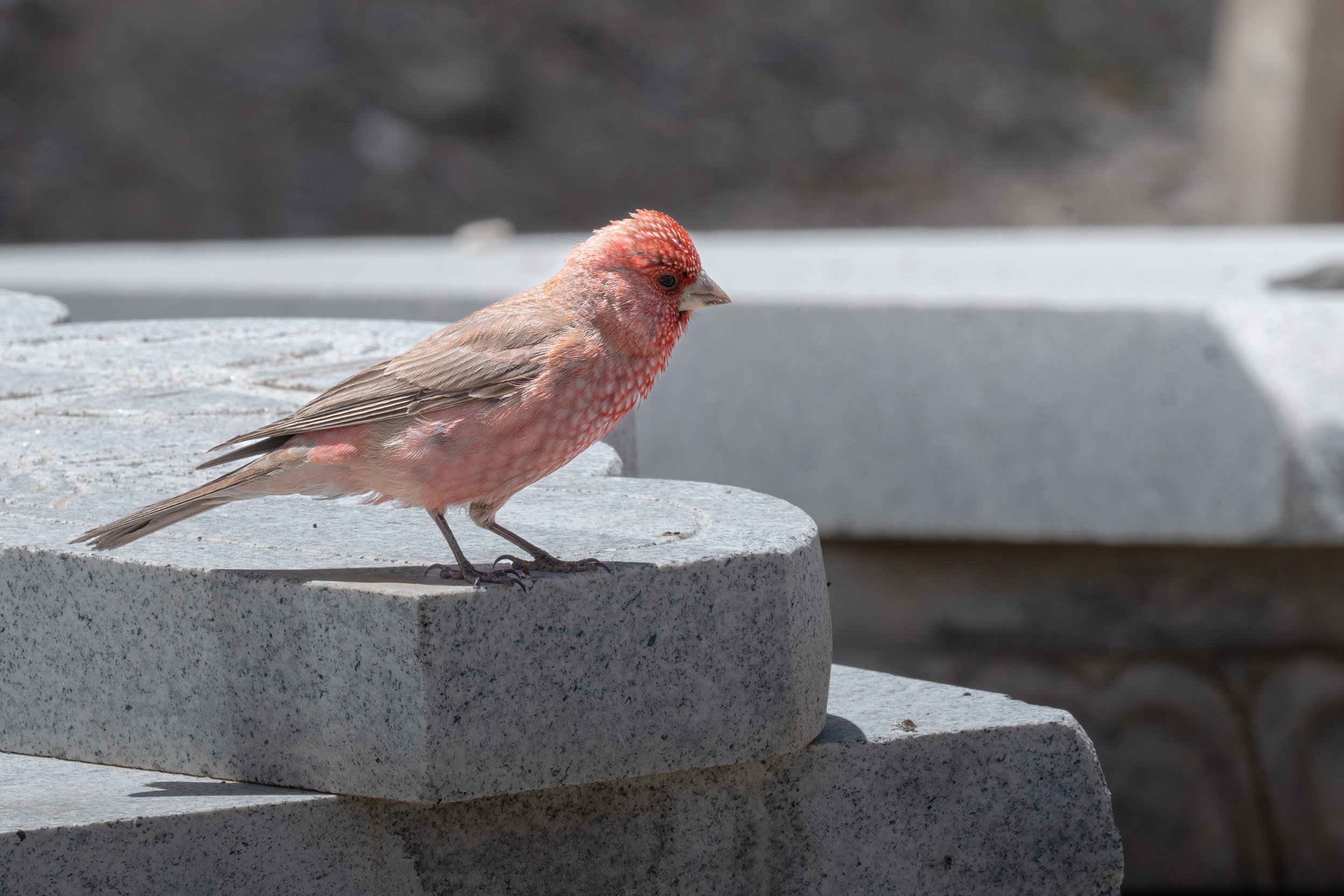
The parking lot of Endless Loong & Fenghuang Taoist Temple (Wujilongfenggong) is home to a flock of Great Rosefinches (Carpodacus rubicilla). The birds are surprisingly tame and often forage on food scraps left behind by visitors.
Day 10: Today we drove back to Wulan (6 hr) to pay Xiligou Lake another visit. Later in the afternoon we drove to Longyangxia (4.5 hr) to give Pale Rosefinch another try and failed yet again. Night at Gonghe.
Day 11: The last day of our trip was dedicated ourselves to Longyangxia. This time we arrived very early before any other tourists, and finally saw the roadside Pale Rosefinch. In the afternoon we drove back to Xining (2.5 hr) and that was the end of the Grand Loop.
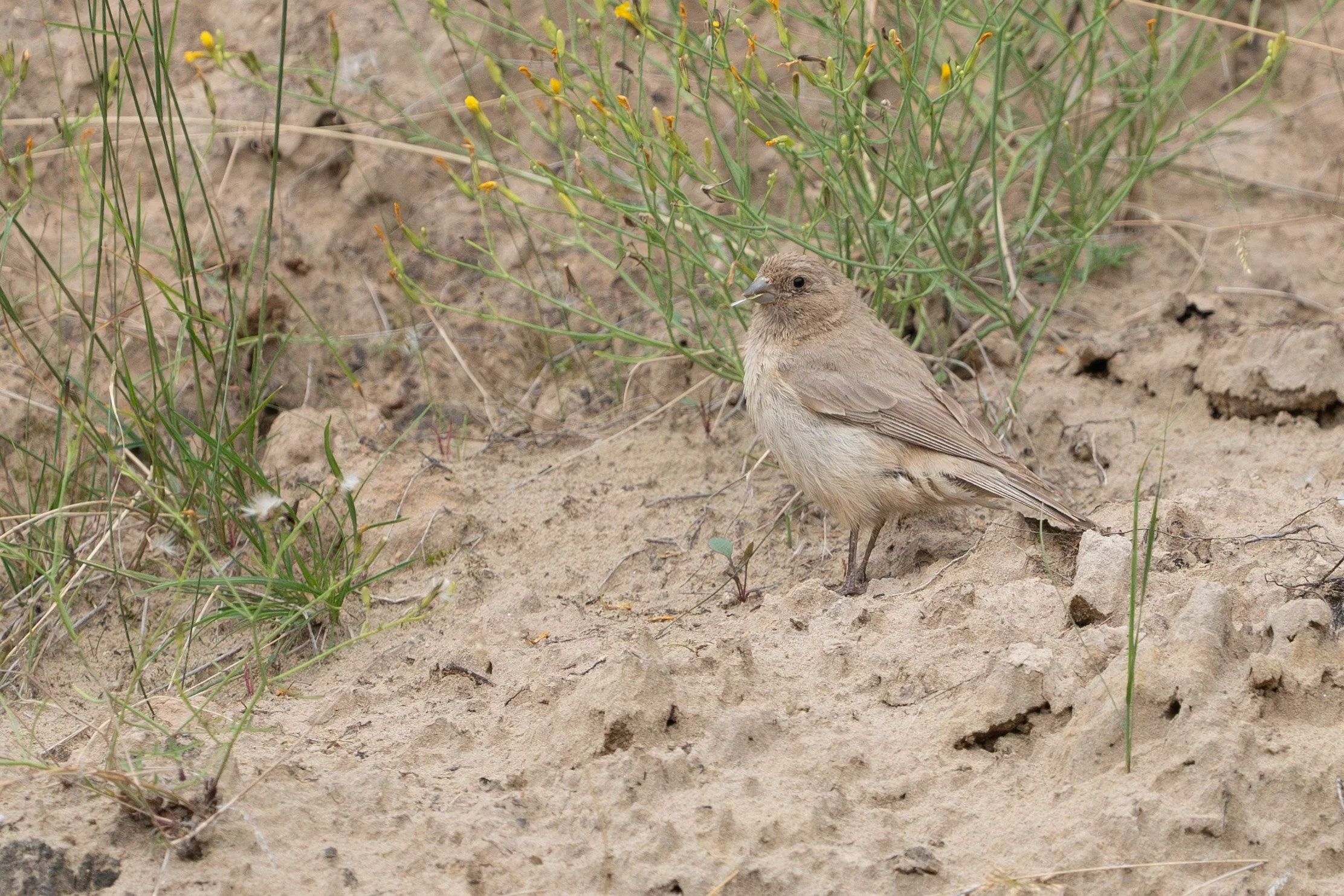
Finally, after three separate attempts, we found it—the Pale Rosefinch (Carpodacus stoliczkae). True to its name, the female is remarkably pale and inconspicuous, blending almost perfectly into the sandy landscape. It proved surprisingly difficult to detect, even when nearby. In the end, we learned that the heavy daytime visitor traffic at Longyang Gorge tends to push the birds away from the main roads, making the early morning by far the best time to search for this elusive species.
With the Pale Rosefinch finally in hand, our Qinghai Grand Loop came to a perfect conclusion.
