
Hainan Island Loop, 2024/12
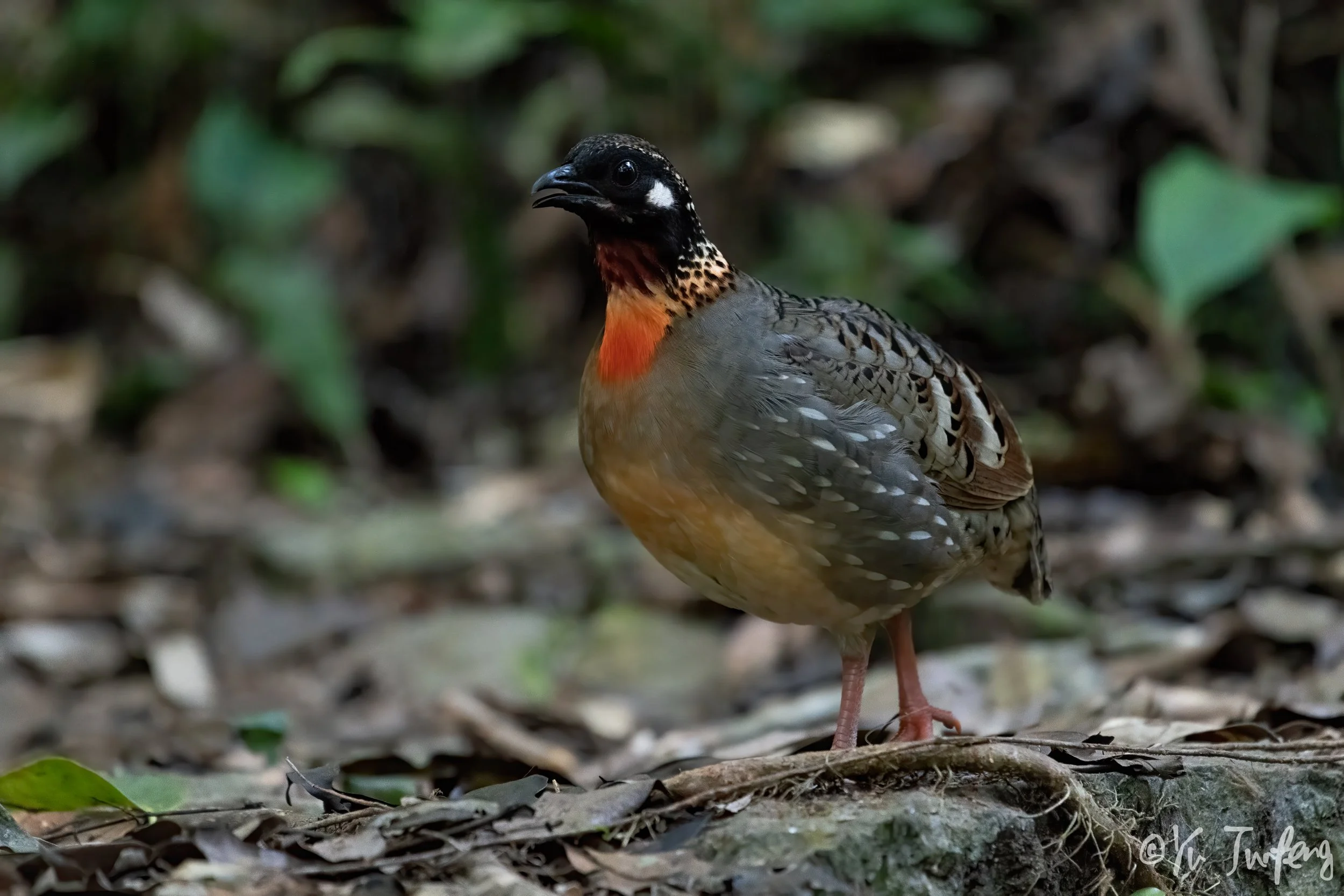
Hainan Partridge (Arborophila ardens)
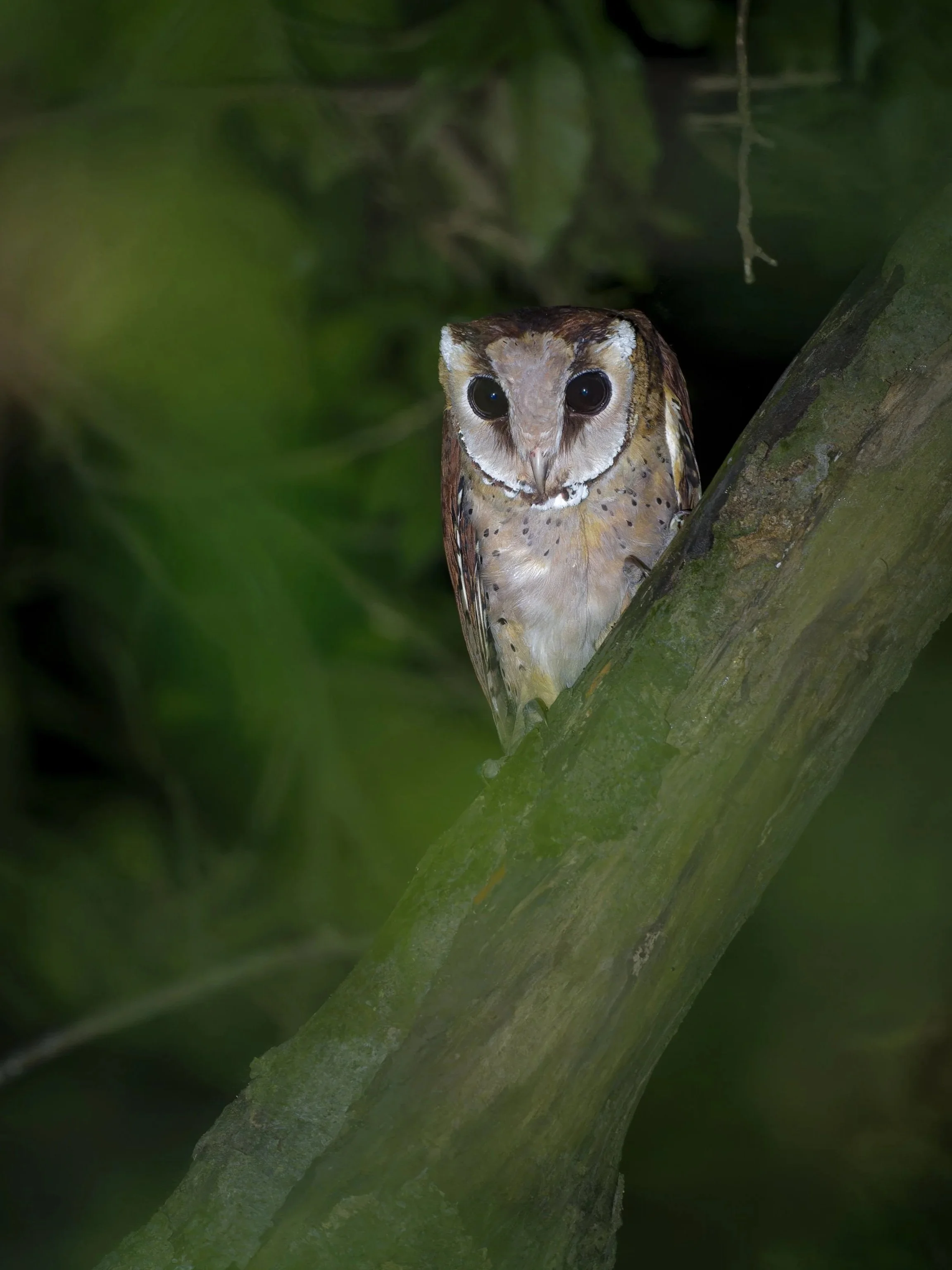
Oriental Bay-Owl (Phodilus badius)
Time: December 4–9, 2024
Location: Danzhou City, Ledong County, Dongfang City, and other areas in Hainan Province
Introduction: Hainan is the second-largest island in China. Lying south of the Tropic of Cancer, it is the southernmost province of China. The climate of Hainan is predominantly tropical monsoon, characterized by hot, humid conditions and a pronounced rainy season. The island is elevated in the center and slopes downward to the periphery, resulting in significant altitudinal variations in climate and biota. Generally, winter is the best season for birdwatching in Hainan Province, as it allows one to avoid the hot weather.
This trip to Hainan was not an intensely dedicated birding tour, but it was still quite rewarding.For example, Jianfengling is well worth exploring for more than two days, as are the other wetlands and forests.
Guide: KJ Zhu
Day 1: In the afternoon, we departed from Haikou and arrived at a village near Danzhou Bay in the evening. The goal was to observe Blue-breasted Quail, Barred Buttonquail, and Oriental Bay-Owl at night. First, we came to a wide expanse of grassy wasteland, which is the typical habitat for the Blue-breasted Quail and Barred Buttonquail. This area is also famous for Australasian Grass-Owl, but December is not a good season for that species. Using a thermal imaging device, we quickly located Blue-breasted Quail and Barred Buttonquail. The former would move quickly under the light, while the latter remained motionless. In addition to them, we also saw many sleeping Zitting Cisticola and Lanceolated Warbler.
Wanting to minimize disturbance to nocturnal birds, we soon left for the habitat of the Oriental Bay-Owl —large rubber tree forests near the village. This is a purely commercial plantation, yet it unexpectedly attracts the Oriental Bay-Owl, perhaps because the cleared understory makes hunting easier. The Oriental Bay-Owls were not very active that day and kept silent, making it hard to locate them. While waiting, we spent a bit of time watching several Large-tailed Nightjar in nearby rice paddies.
It was nearly midnight before we spotted a female Oriental Bay-Owl through a gap in the rubber trees—she was silent and also bolder than the males. After quickly taking some record photos, we left.
Day 2: The plan for this day was to search for Spoon-billed Sandpiper —a Critically Endangered small sandpiper—on the mudflats of Danzhou Bay. Because of the tidal schedule and recovering from the late night before, we only needed to go to the mudflats in the late afternoon, close to sunset, which made for a relaxed schedule. However, searching for waterbirds the size of sparrows across mudflats several kilometers wide was far from easy.
The mudflats were teeming with waterbirds, including various Sand Plovers,Pacific Golden Plover , Grey Plover, as well as the more difficult to distinguish Kentish Plover and White-faced Plover. When we spotted stints, we had to pay close attention. Sure enough, after searching for over an hour, we found a Spoon-billed Sandpiper together with several Red Knots, as it was catching small shrimps in tidal pools. I hope it can survive the winter safely and return to its breeding grounds to revitalize its population.
We left Danzhou Bay Wetlands in the evening and headed for the interior of Hainan Province, to Panjia (Panjia PNR).
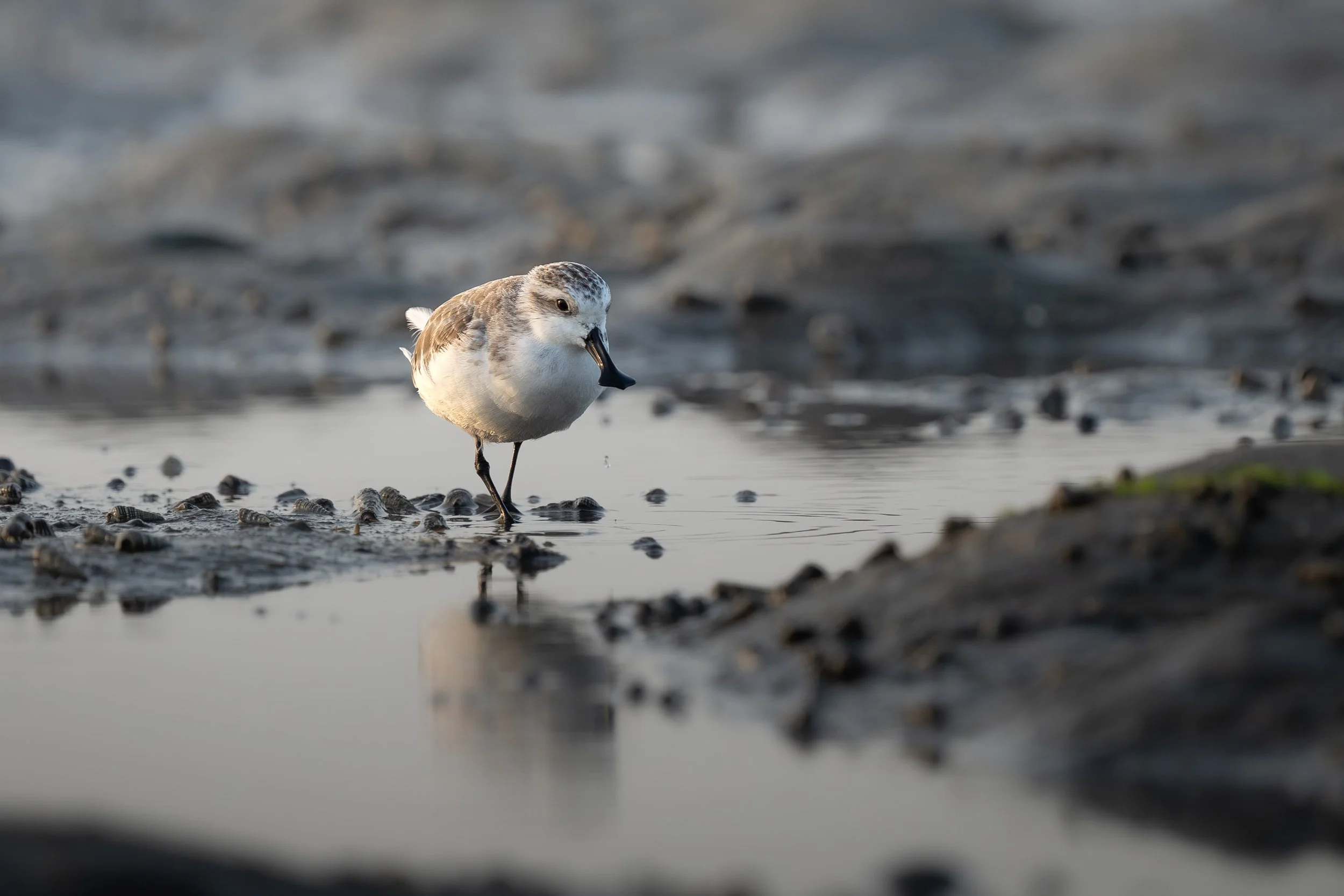
Spoon-billed Sandpiper (Calidris pygmaea)
Day 3: Birders come to Panjia almost exclusively for one species—a bird that had not been seen in China for a long time, until a population suddenly appeared here a few years ago. That bird is the Pale-capped Pigeon. Getting into Panjia is a bit complicated. You need to make an online reservation for a specific date, after which an administrator assigns a guide (i.e., a local forest ranger) to you. Finally, you have to coordinate the viewing time with your guide and pay a fee.
I arrived at Panjia very early (before 6:00 AM), because Pale-capped Pigeons only appear in a relatively fixed area for a short period after sunrise. For the rest of the day, encountering them is almost impossible. Luckily, after about 20 minutes, I spotted a pigeon. It stayed for quite a while at a spot that wasn't too far away and in good light.
In fact, we could have seen many other birds in Panjia, including several pigeon species: Thick-billed Green-Pigeon, Orange-breasted Green-Pigeon, White-bellied Green-Pigeon, Asian Emerald Dove and Barred Cuckoo-Dove. But since I had seen these elsewhere, I did not spend more time looking for them.
Instead, we headed to the local bird blind to look for Rufous-cheeked Laughingthrush, which was once considered a subspecies of Grey Laughingthrush. In the same blind, several Dusky Fulvettas appeared at the same time. Some Chinese Barbets were active in the nearby areca palm groves. On the way out of Panjia, I saw a wintering Blue Rock Thrush. In the afternoon, we headed to Wuzhishan (Five Finger Mountain).
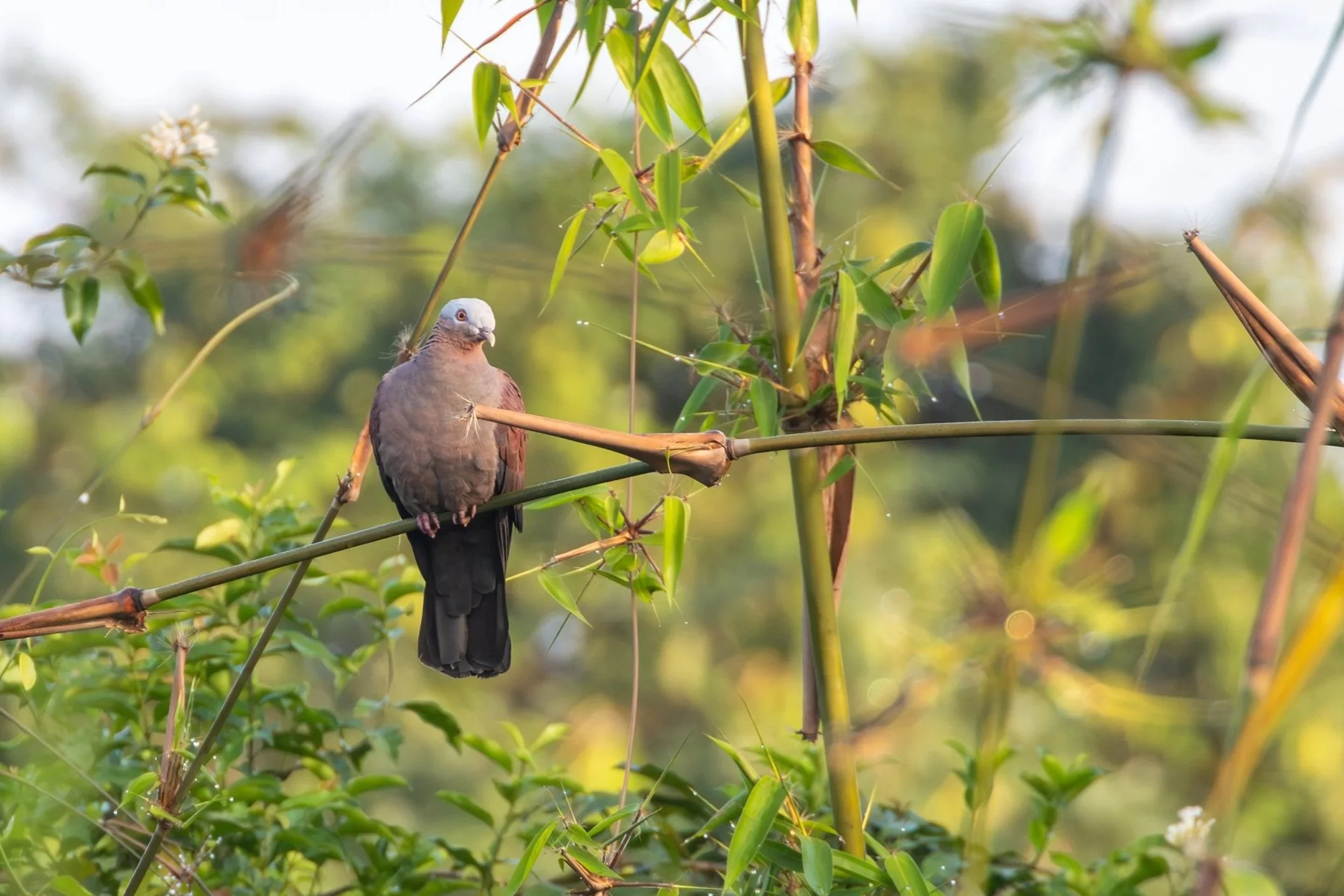
Pale-capped Pigeon (Columba punicea)
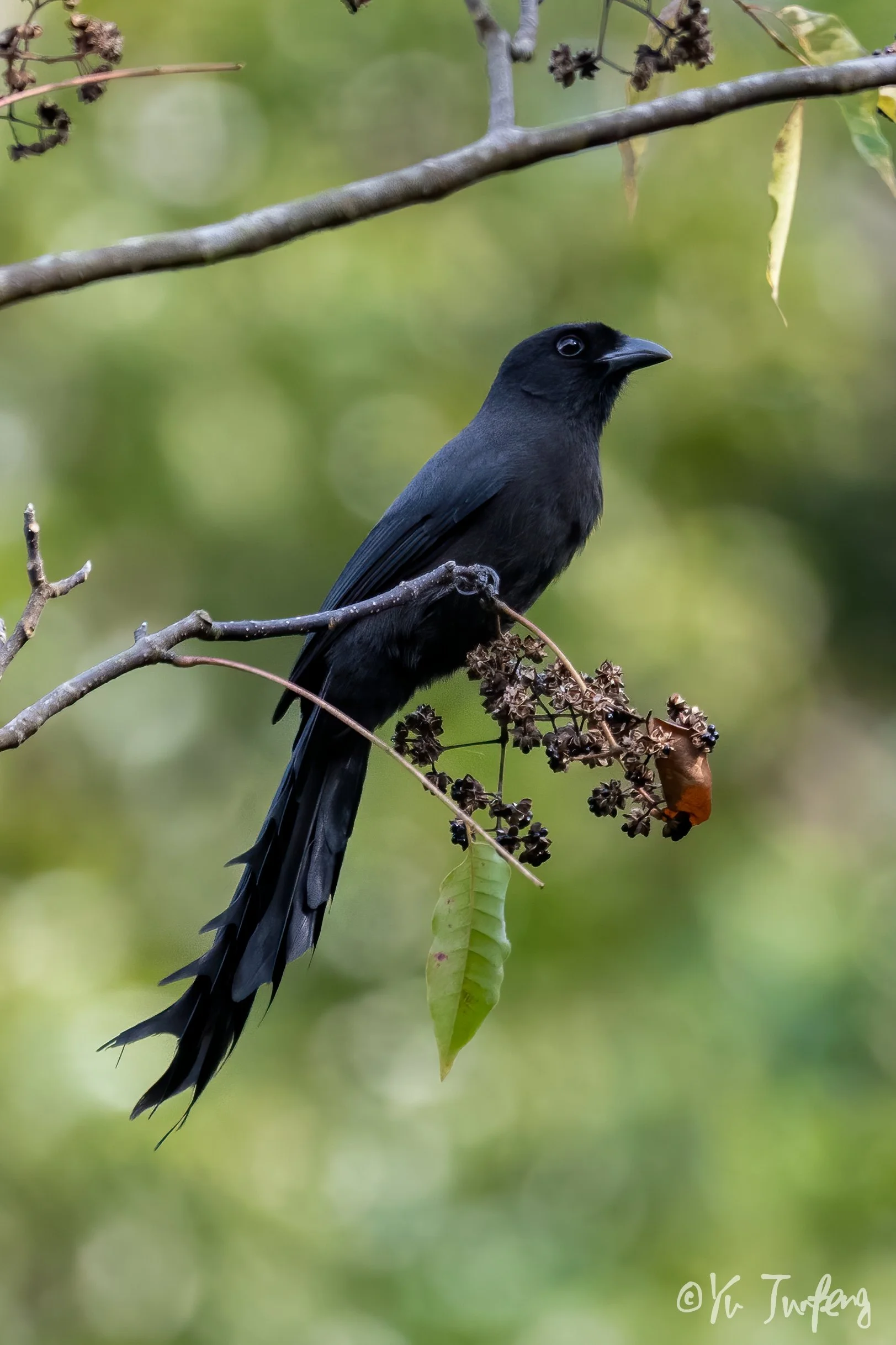
Ratchet-tailed Treepie (Temnurus temnurus)
Day 4: In the morning, we started climbing Wuzhishan. This day was not for birding, but we still easily saw Hainan Leaf Warbler, Yellow-billed Nuthatch, and Sultan Tit.
Day 5: The previous night, we arrived at Jianfengling—one of the most famous birding locations in Hainan, home to two "Hainan"‑named Galliformes species.
In the morning, we went to the Mingfeng Valley boardwalk. The boardwalk was in a state of disrepair and maintenance work had just begun—which caused us considerable trouble. We walked along the boardwalk, a forest-shrouded loop trail, where some open platforms and gaps in the canopy offered the best spots for observing birds.
At every observation window, we saw many White-bellied Erpornis. We also encountered Silver-breasted Broadbill and Lesser Yellow-naped Woodpecker, and I think I saw a phantom of Eyebrowed Wren-Babbler. But the most rewarding sight was getting clear photos of the Spot-necked Babbler—a small bird that always moves quickly in dark undergrowth.
Had we arrived earlier than we did, we might have been more likely to see Mountain Imperial Pigeon and Ratchet-tailed Treepie in the early morning.
In the afternoon, we decided to enter a local bird hide to wait for Hainan Peacock-Pheasant and Hainan Partridge. The former is almost impossible to see on a wild trail, and even seeing the latter requires considerable luck. There are several hides in Jianfengling where one can see both Galliformes, but some hide owners have a notorious reputation—they are unfriendly, treacherous, and solely profit‑driven, treating the birds as commercial tools and even trying to imprison them. Many birders have left Jianfengling disappointed—but not us.
After seeing the Hainan Peacock-Pheasant and Hainan Partridge, we left Jianfengling for Dongfang City, targeting a wetland there.
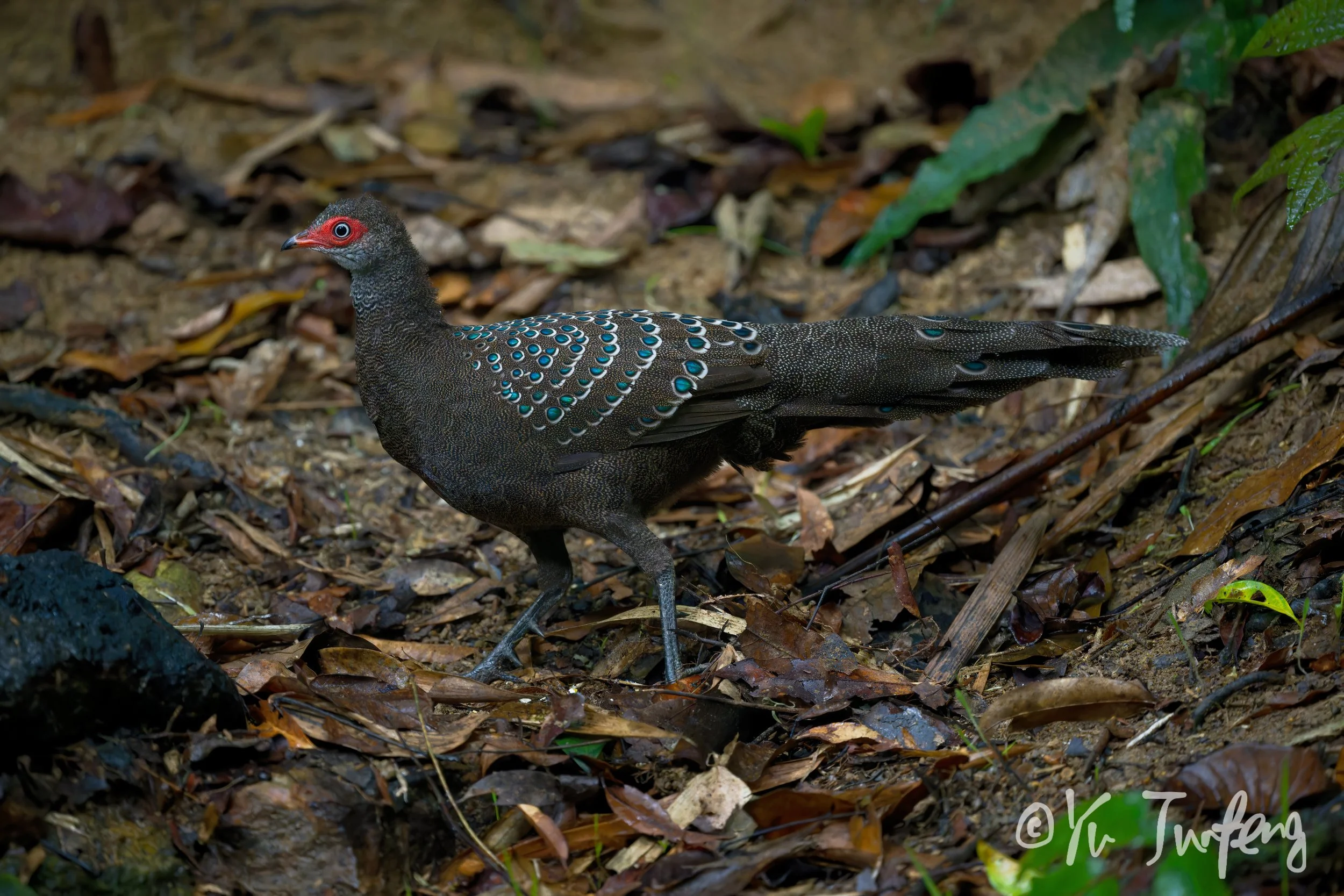
Hainan Peacock-Pheasant (Polyplectron katsumatae)
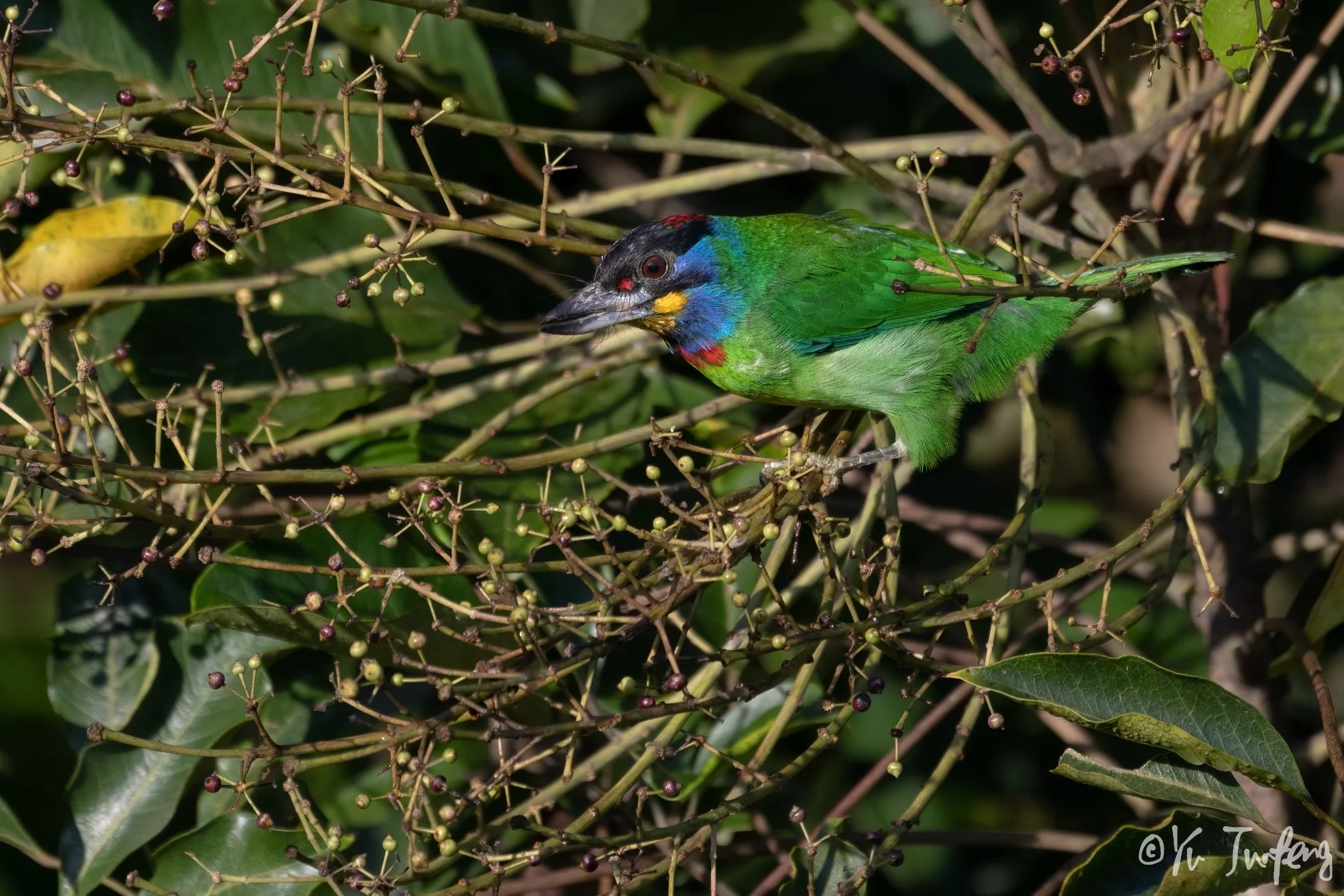
Chinese Barbet (Psilopogon faber), a species endemic to China, affectionately known in Chinese as the "Five-colored Bird" (五色鸟).
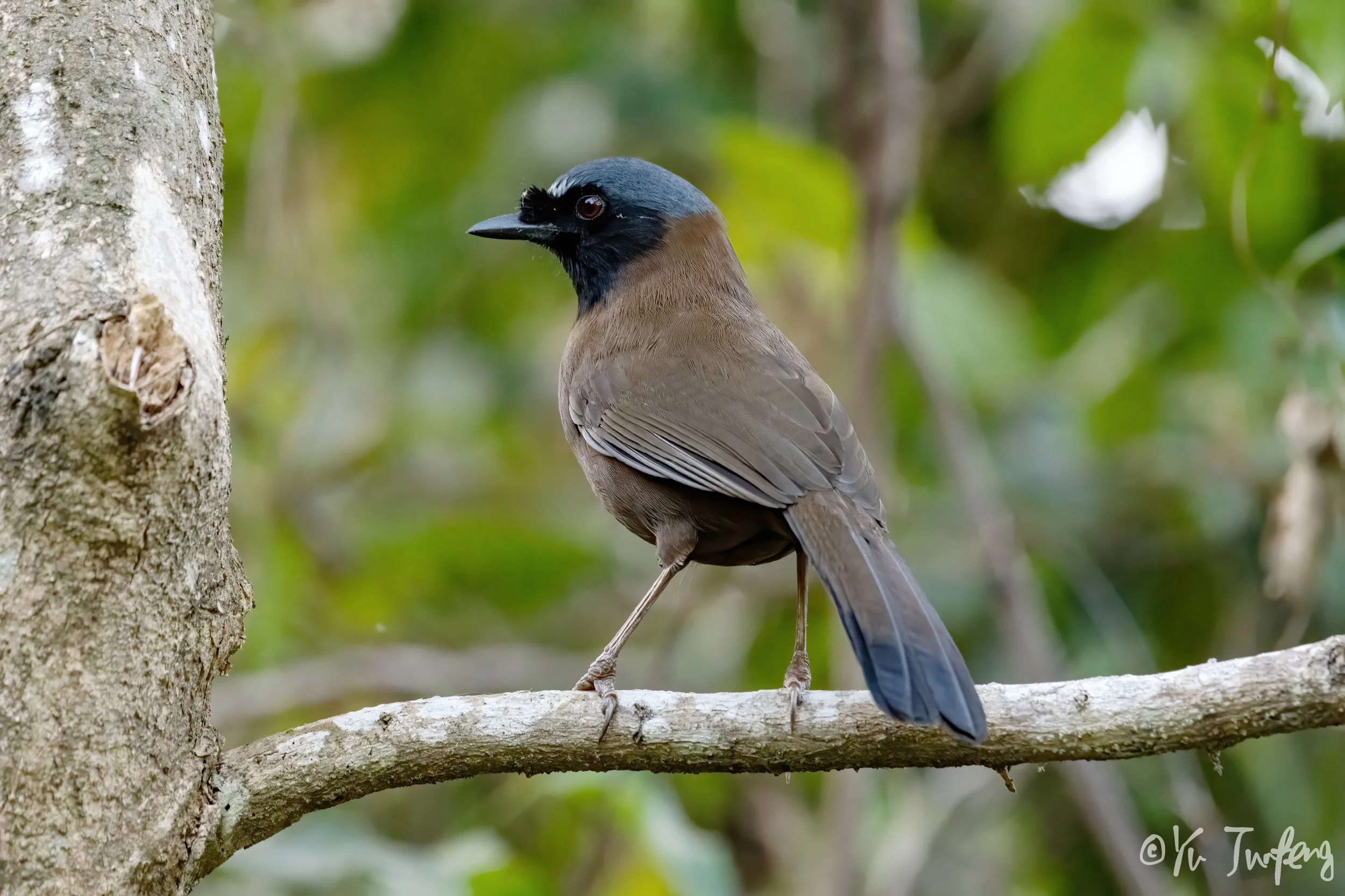
Black-throated Laughingthrush (Pterorhinus chinensis monachus), an endemic subspecies restricted to Hainan Island and often known as the Hainan Laughingthrush. Although Hainan has only three endemic bird species, the island is home to many unique endemic subspecies.
Day 6: This wetland in Dongfang City has no name. It lies sandwiched between a railway and farmland. Because it is near Fengshou Road, people call it Fengshou Road Wetland.
We arrived at the wetland around 8:00 AM, not particularly early. We got out of the car, walked through the farmland, and then followed the railway tracks for a short distance to reach the wetland.
The wetland is not large. All we had to do was watch the densely vegetated water's edge to find our target. There were several Grey-headed Swamphens, once stars in Chinese birding circles but now out of fashion and not our target. The smaller White-browed Crake was what we were looking for. It stayed cautiously exposed outside the vegetation for a few minutes before retreating to its secret world—that was enough; we could already head back.
Unexpectedly, another reclusive bird appeared right after: a Ruddy-breasted Crake. It was a pleasant surprise—another highlight of Fengshou Road Wetland. As the weather grew hot, we left this high-value birding spot, which can be fully explored in just half a day.
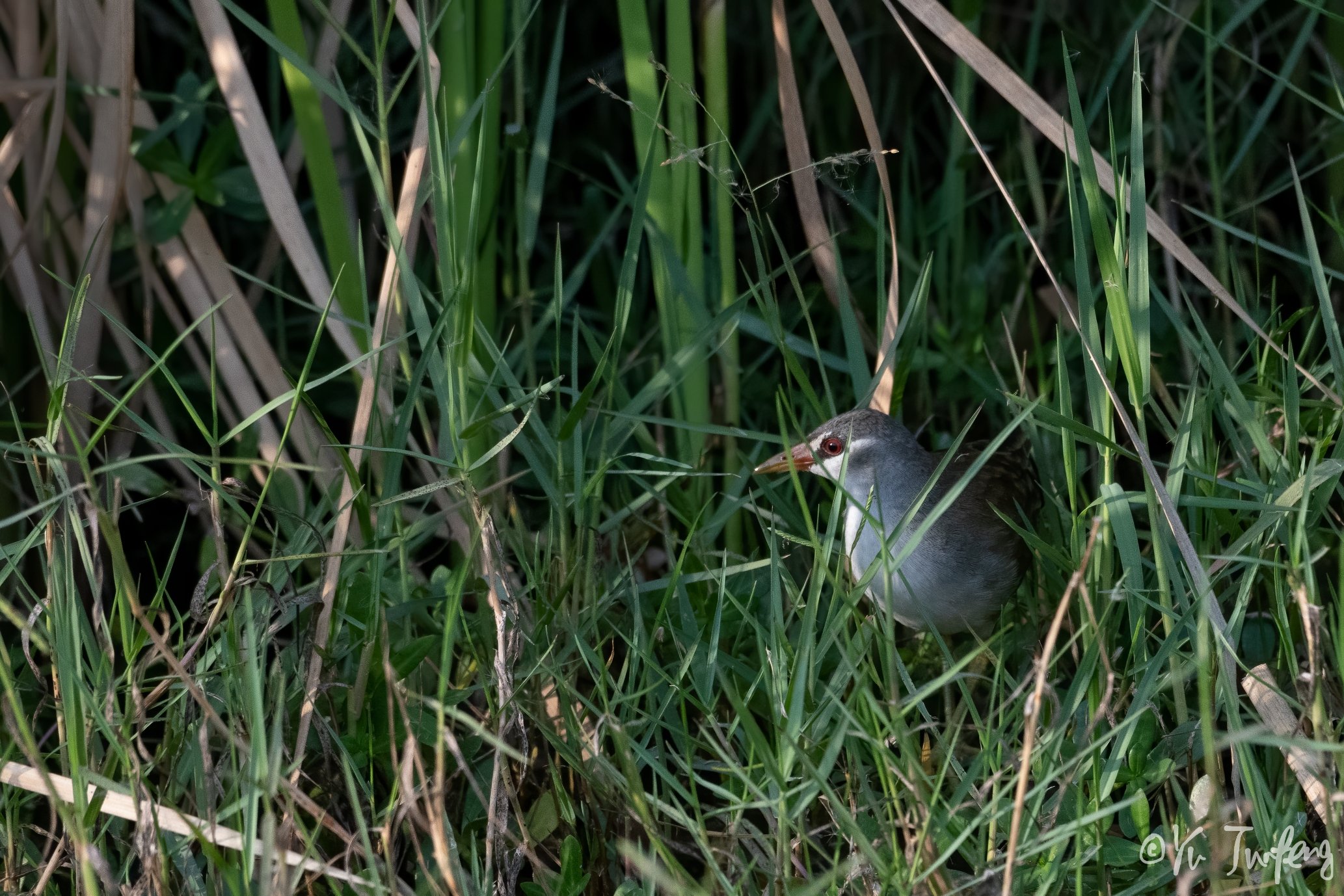
White-browed Crake (Poliolimnas cinereus)
