
A Quest for Sillem's Rosefinch, Qinghai, 2025/07
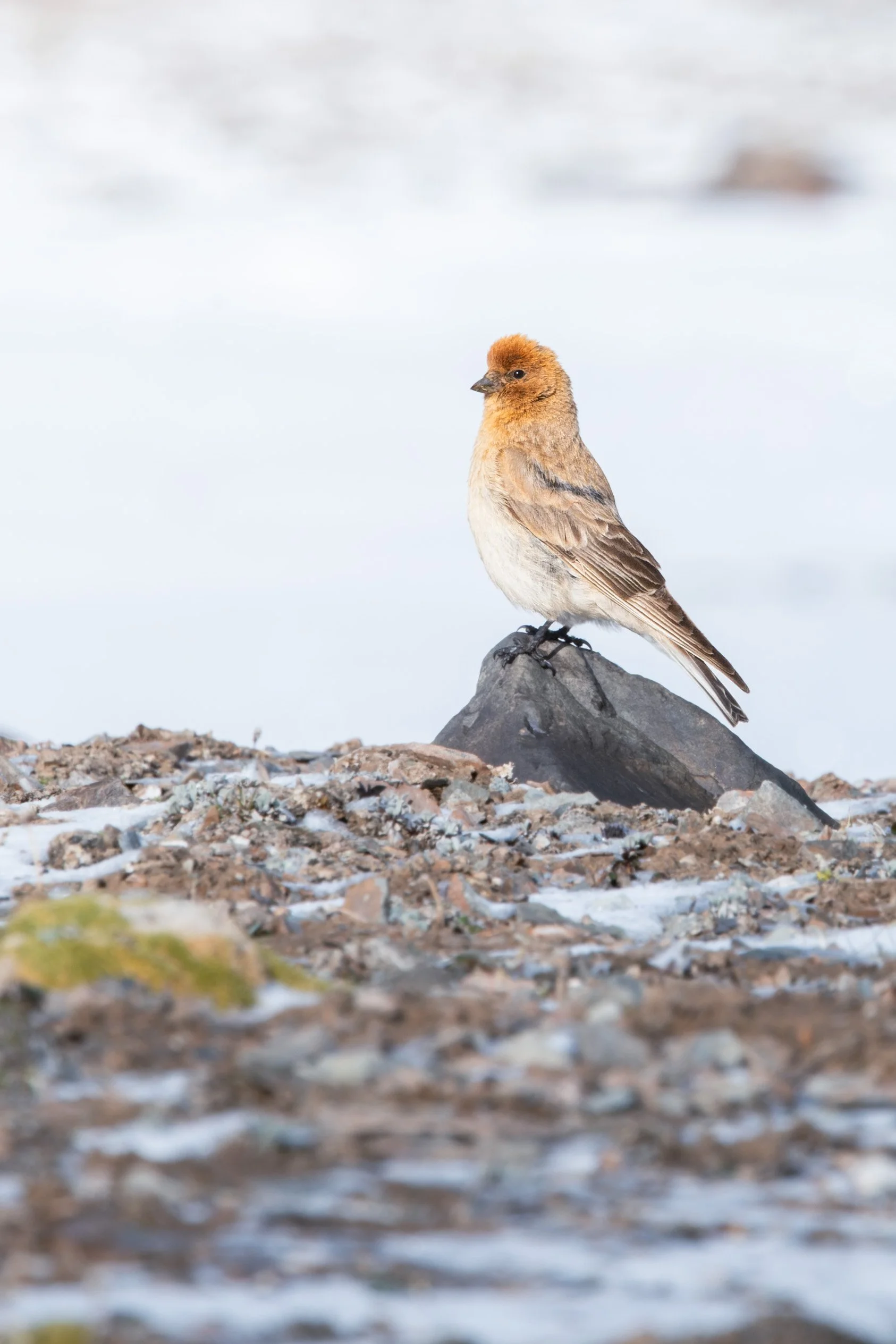
Sillem's Rosefinch (Carpodacus sillemi)
Dates: 5–9 July 2025
Location: Golmud and eastward to Xining, Qinghai, China
eBird Trip Report: https://ebird.org/tripreport/531950?view=checklists
Guide: Allen Xue
Introduction: Sillem’s Rosefinch was once among the most mysterious birds in China. After its discovery in 1929, when the Dutch ornithologist J. A. Sillem collected two specimens near the Karakoram Pass, it vanished from the record for almost a century. The specimens were not recognized as a distinct species until 1992 (then as a “mountain finch”), and the bird was not documented alive in the wild again until 2012, when it was rediscovered at Yeniugou in western Qinghai; only in the last decade has a reliably watchable site emerged. A 2016 study later reassigned it from the mountain finches to the rosefinches, making it the sister species of Tibetan Rosefinch. Even so, it lives year-round on barren scree at nearly 5,000 m, in country almost untouched by people, and the annual viewing window is very short — so still only a fortunate few ever lay eyes on it. In the summer of 2025 we set out for Yeniugou (“Wild Yak Valley”) near Golmud, Qinghai, in search of this high-altitude enigma — a journey that would prove a serious test of our stamina.
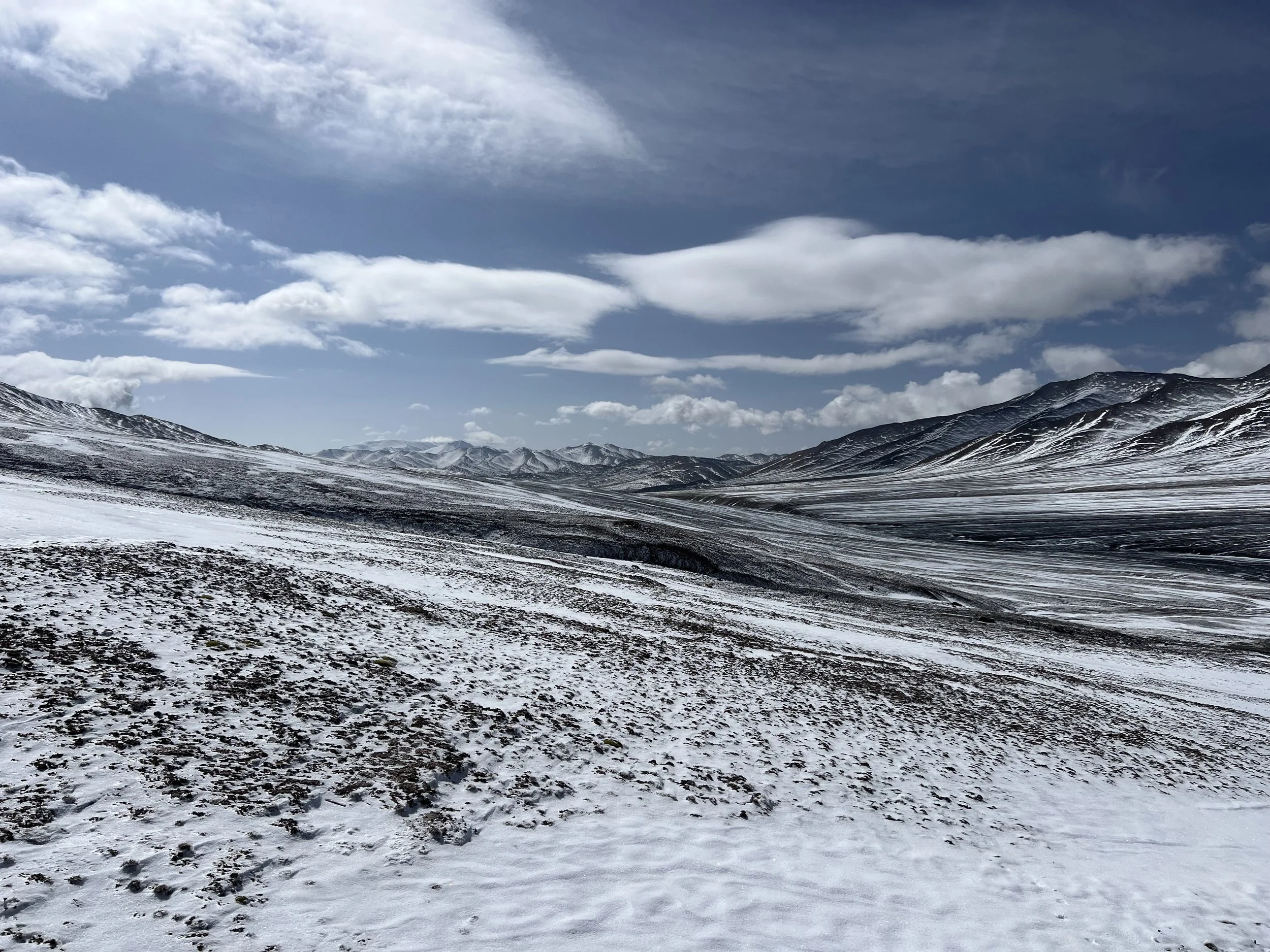
The barren scree of the Wild Yak Valley, situated at nearly 5,000 m elevation. Even in mid-summer, snow can still be found here. The landscape is almost devoid of vegetation, except for scattered cushion plants adapted to the extreme alpine conditions.
Day 1: Our group numbered eight birders. Because the tracks in Yeniugou are wide, braided, and confusing, a local guide had to drive us in; without a guide, a satellite phone, and an off-road vehicle it is easy to come to grief in there, and two vehicles must always travel together. We gathered the day before and turned in early, then at 3 a.m. both carloads set off from Golmud toward Yeniugou.
With roadworks on the national highway, the drive from Golmud took nearly four hours. Once we passed into the Xiwangmu Yaochi (Queen Mother of the West’s Jade Pool) area, almost all trace of human activity fell away, leaving only the boundless plateau and an arrow-straight road. Birds and mammals appeared all along the way — Steppe Eagle, Saker Falcon, Tibetan Antelope, Tibetan Fox, and Tibetan Wild Ass among them — and the lead car was lucky enough to see a Brown Bear and the seldom-seen Tibetan Sandgrouse.
Driving on, the paved road gave out entirely. The vehicles followed the valley a while longer, picking through the scree, until we reached the realm of Sillem’s Rosefinch. At 4,800 m we all climbed out, spread into a single line, radios in hand, and advanced together. At this altitude, even braced for it, a couple of steps still left us dizzy. The area held many Tibetan Rosefinches, whose females are extremely hard to tell from Sillem’s. As luck would have it, we had searched less than half an hour when a teammate suddenly shouted over the radio: found it! Heedless of the altitude, we all hurried toward him as fast as we could.
There it was — a brown, seemingly unremarkable little bird hopping among the rocks, feeding on the flowers of low-growing plants: our quarry, a male Sillem’s Rosefinch. Better still, it flew a short way downslope to join an even plainer bird — on a closer look, a female. The two foraged together, and then the female suddenly cocked her tail and began to quiver her wings while the male stepped onto her back. How fortunate we were, to witness the mating behavior of so secretive a species — and I had the privilege of becoming the first person ever to record video of Sillem’s Rosefinch copulating.
Because finding the Sillem’s had gone so smoothly, we started back early, and at Wuji Longfeng Palace we turned up a Great Rosefinch foraging in the parking lot.
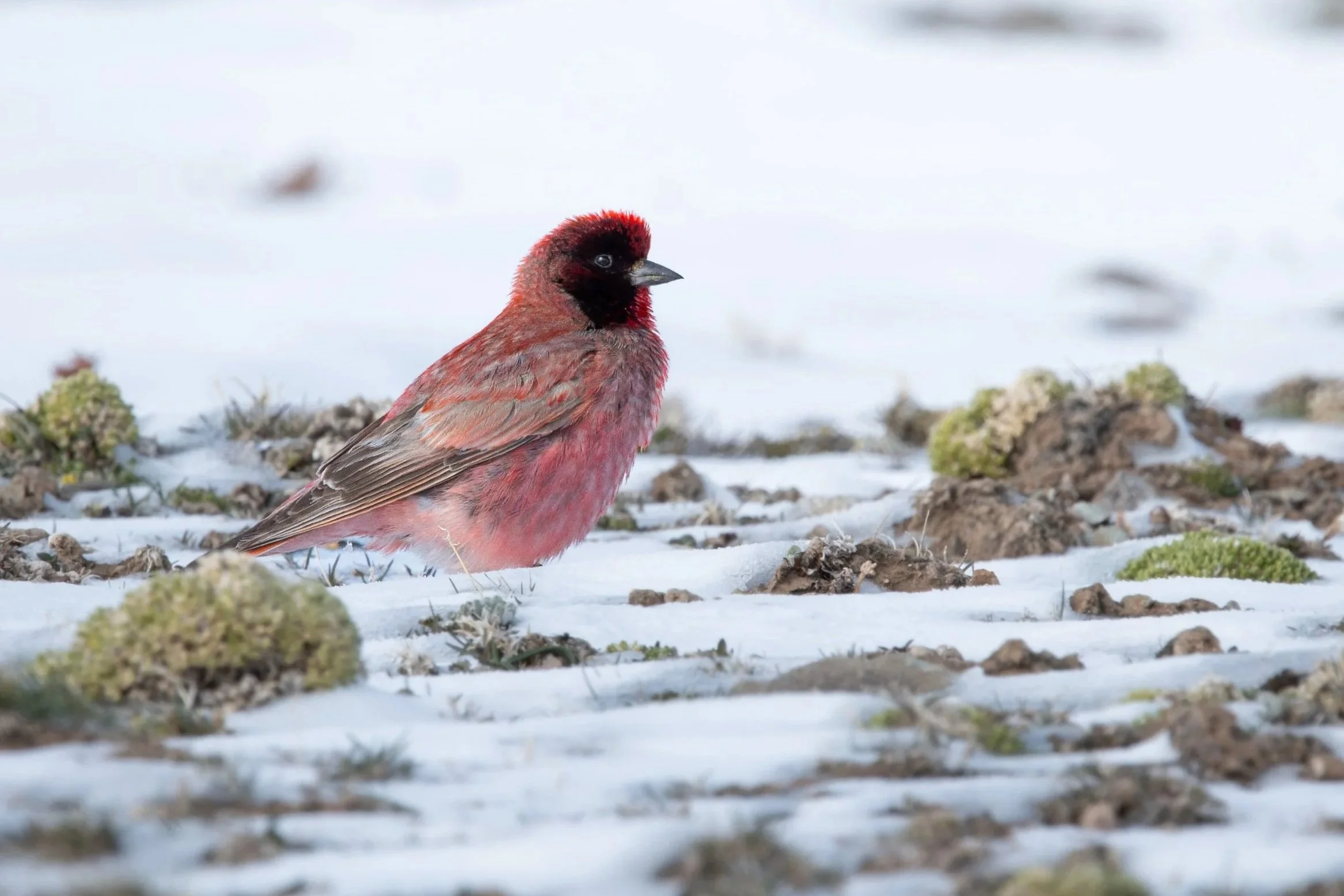
Tibetan Rosefinch (Carpodacus roborowskii)
Day 2: Leaving Golmud, we decided to use our spare days to fill gaps on the way back toward Xining. After reaching the Dulan area, we headed for a reliable site for Ala Shan Redstart (Przevalski’s Redstart). From the outside it looks like a range of bare loess hills, but walk into the valley between them and you find dense conifers and unbroken green meadow. We quickly found our target Ala Shan Redstart, along with Przevalski’s Partridge, which is fairly common in this area.
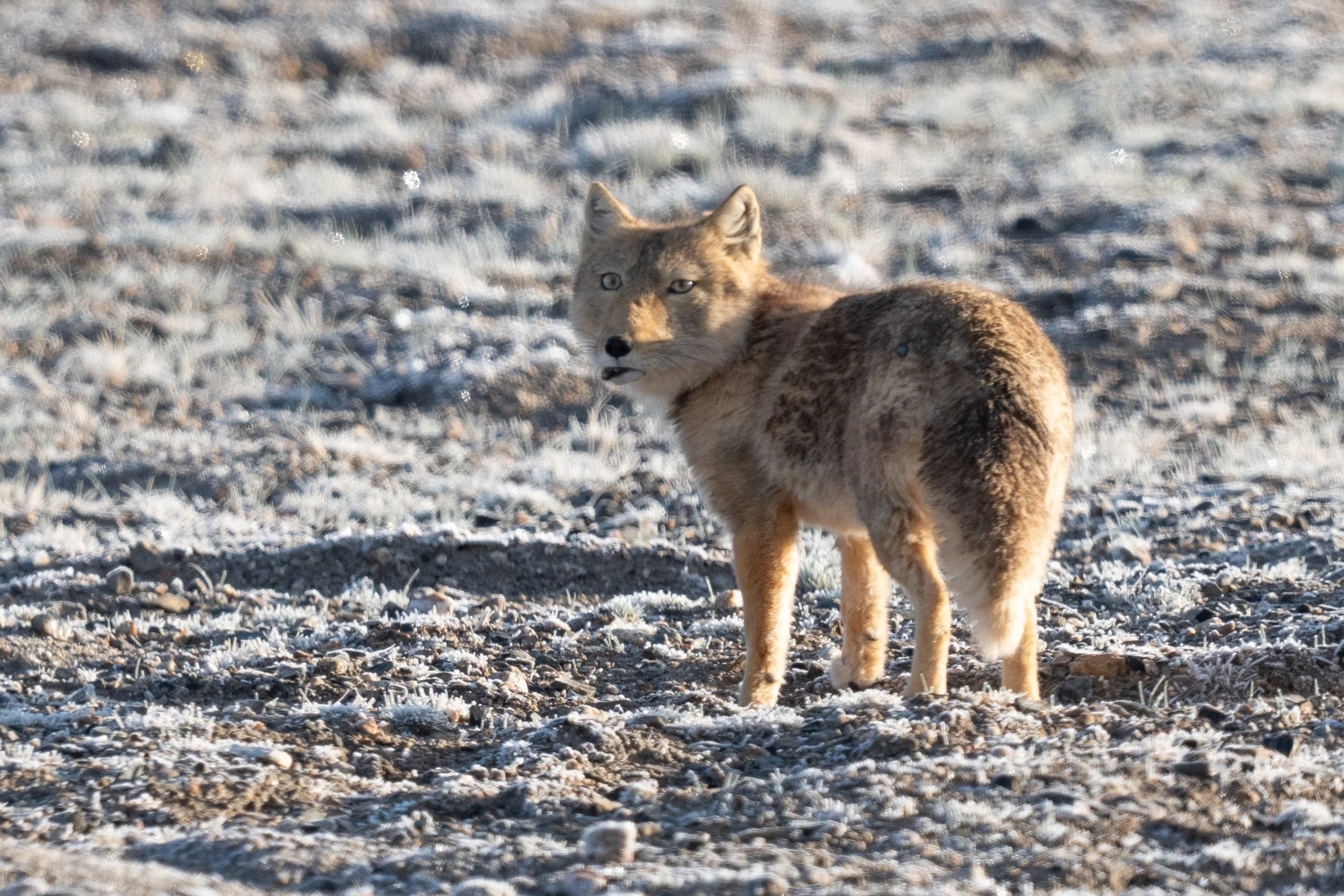
Tibetan fox (Vulpes ferrilata)
In the evening we gave the last of our daylight to Xiligou Lake. On the riverside flats not far from the lake one can reliably find Mongolian Ground Jay, Isabelline Shrike, and Tarim Babbler, all keeping to the saxaul scrub; we saw them easily. On the wetter, partly flooded grassland we found many shorebirds and large numbers of Tibetan Lark. We spent the night in the town of Wulan.
Day 3: Continuing east, we first tried a site for Pallas’s Fish Eagle near Qinghai Lake — the Buha River — but to no avail, finding only thousands upon thousands of Brown-headed Gulls and Bar-headed Geese. We then moved to the grassland around Qinghai Lake to look for Pere David’s Snowfinch. After drawing a blank at site after site, we finally tracked it down in the afternoon around a Przewalski’s Gazelle reserve, in the company of Tibetan Sand Plover.
That evening, on the road toward Datong, we passed Fengxiakou (Wind Gorge), a spot where Przevalski’s Finch had been seen recently. Using the very last of the light, we found several individuals without much trouble among the shrubby cinquefoil (Potentilla).
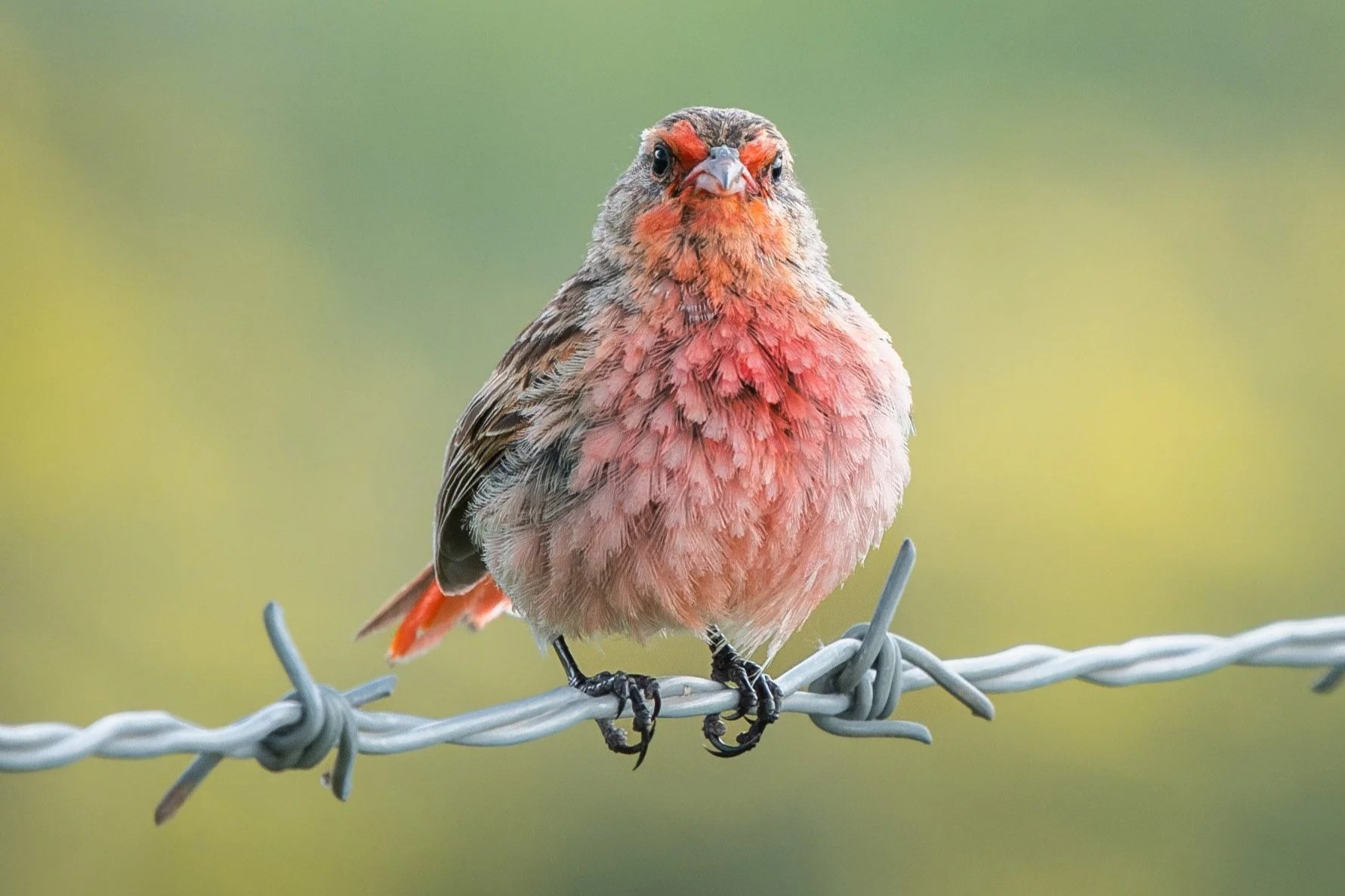
Przevalski's Pinktail (Urocynchramus pylzowi)
Day 4: Setting out from Datong, we planned to look for woodland species such as Crested Tit-Warbler and Qilian Bluetail in the Yaozigou Scenic Area. The weather was poor, however, with steady rain, and things did not go smoothly. In the afternoon we made our way to a site near the town of Qingshizui to look for White-browed Tit; walking a stretch of river valley, we found an individual with an insect in its bill in the cinquefoil scrub on the hillside.
Day 5: On our final morning we set out for Shi’erpan Slope in hopes of Blue Eared Pheasant. After a long stakeout, though, we heard only a few scattered calls. In the afternoon we returned to Xining, bringing the journey to a close.
