
North Western Sichuan Loop, 2026/05
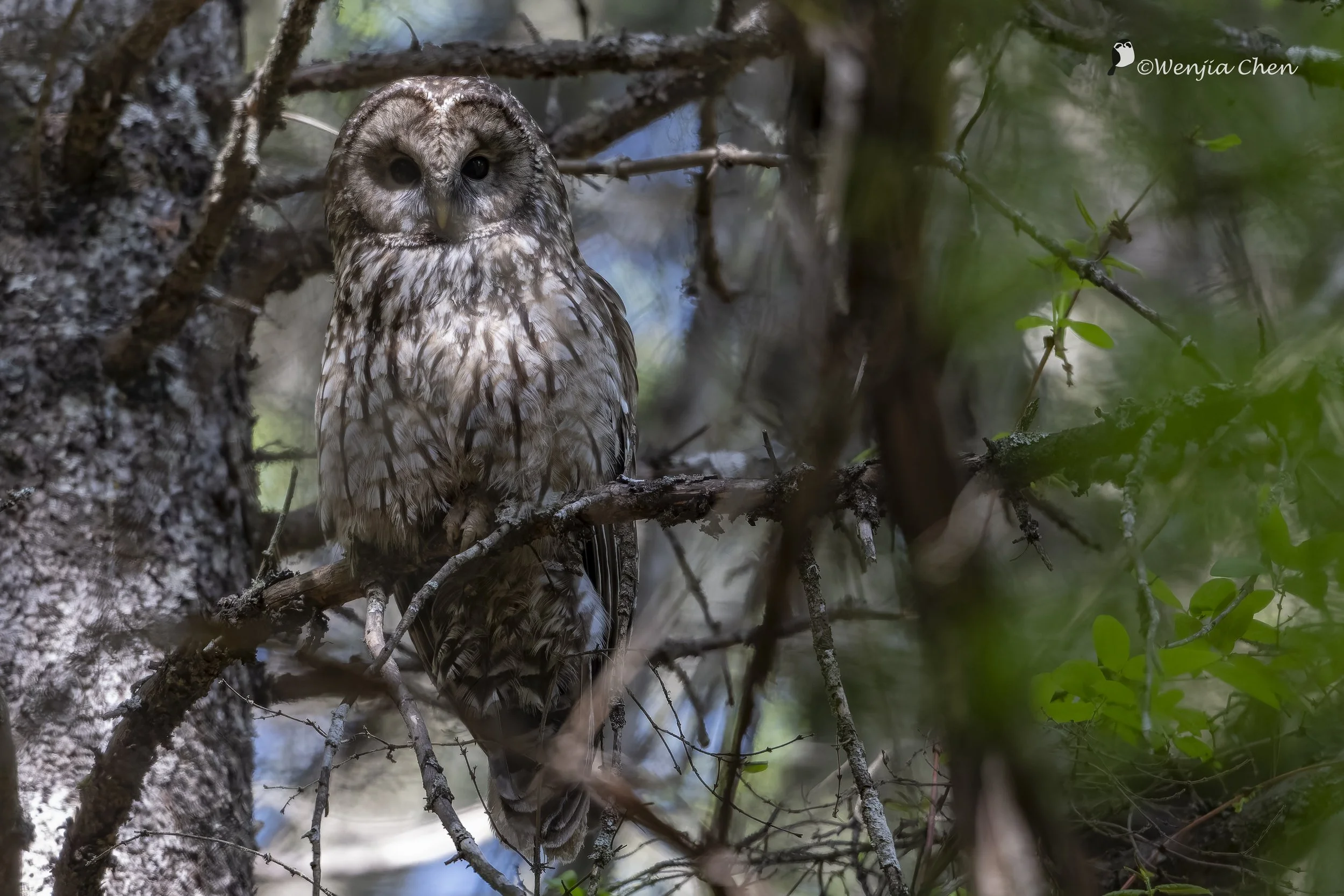
“Pere David’s Owl” — now treated as the isolated davidi subspecies of Ural Owl (Strix uralensis), this remarkable owl remains a favorite among birders thanks to its restricted range in the mountains of central China.
Date: 29 May-7 Jun, 2026
Locations: Erlang Shan, Hailuogou, Lianghekou, Mengbishan, Ruoergai, Baxi Forest, Chuanzhusi, Sichuan, China
Guide: Wenjia Chen
Introduction:
Western Sichuan is a birder’s paradise, offering a dramatic mix of habitats within just a few hundred kilometers. From the lush montane forests of Erlang Shan to the glacier-fed valleys of Hailuogou, and from the high-altitude alpine scrub of Mengbishan to the expansive wetlands and grasslands of Ruoergai, the region hosts a remarkable variety of endemic and Tibetan Plateau species.
Our ten-day journey in late May–early June 2025 followed a classic western Sichuan route, combining challenging mountain treks, forest exploration, and high-altitude grassland birding. With the breeding season in full swing, many of the region’s specialties were highly vocal, offering excellent opportunities for observation and photography. Highlights included Sichuan Jay, Przevalski’s Pinktail, Chinese Monal, and Pere David’s Owl, among others.
Day 1: Chengdu to Luding (29 May)
We gathered in Chengdu in the afternoon and immediately set off westward toward Luding. There was no birding on the road, but the group enjoyed a memorable introduction to local cuisine with a dinner of Sichuan specialties recommended by our hotel owner. The fiery flavors and aromatic spices provided a perfect start to the trip, fueling us for the physically demanding days ahead.
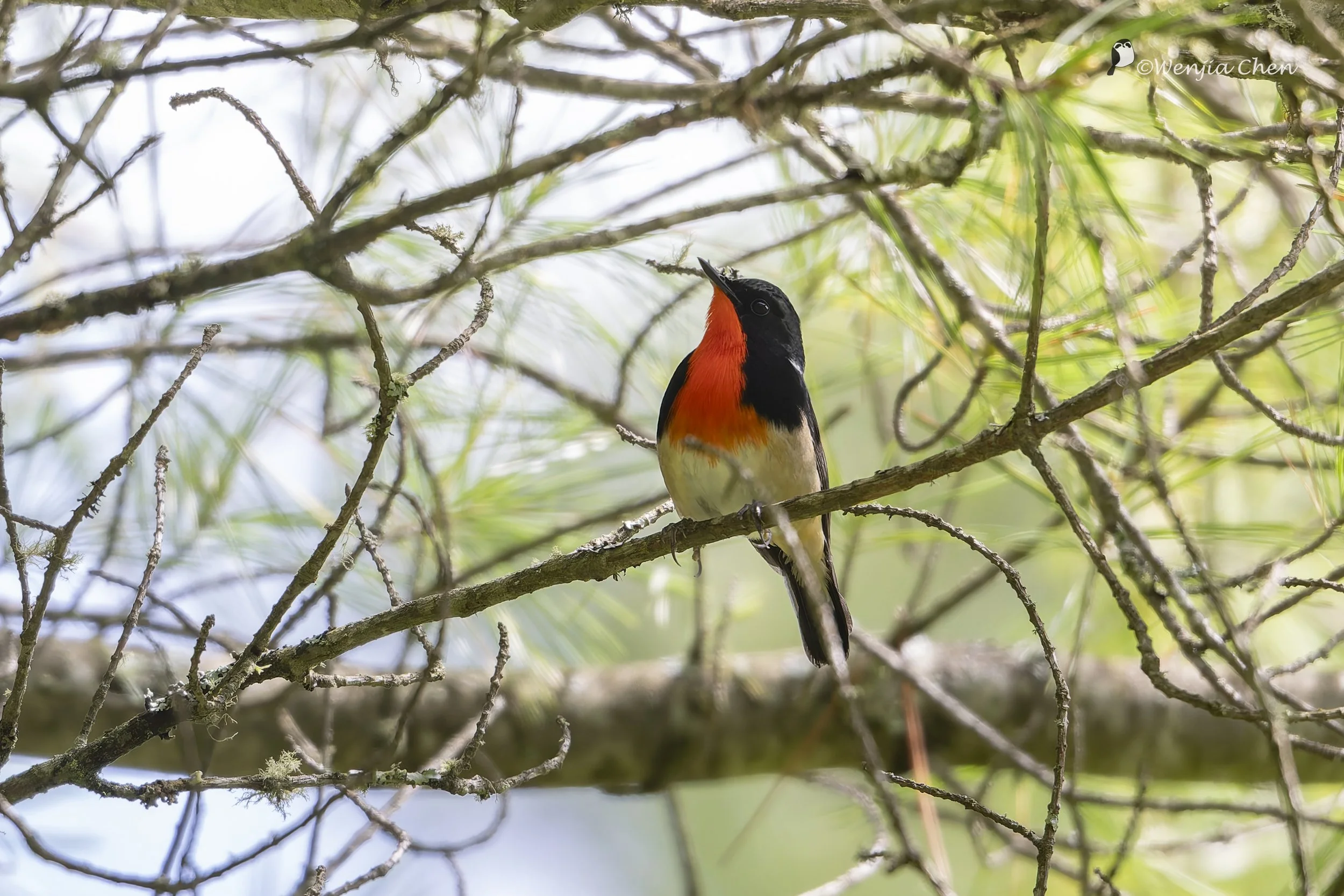
Firethroat (Calliope pectardens) — with its vivid colors and charming song, this lovable species is one of Sichuan’s most sought-after breeding birds.
Day 2: Erlang Shan (30 May)
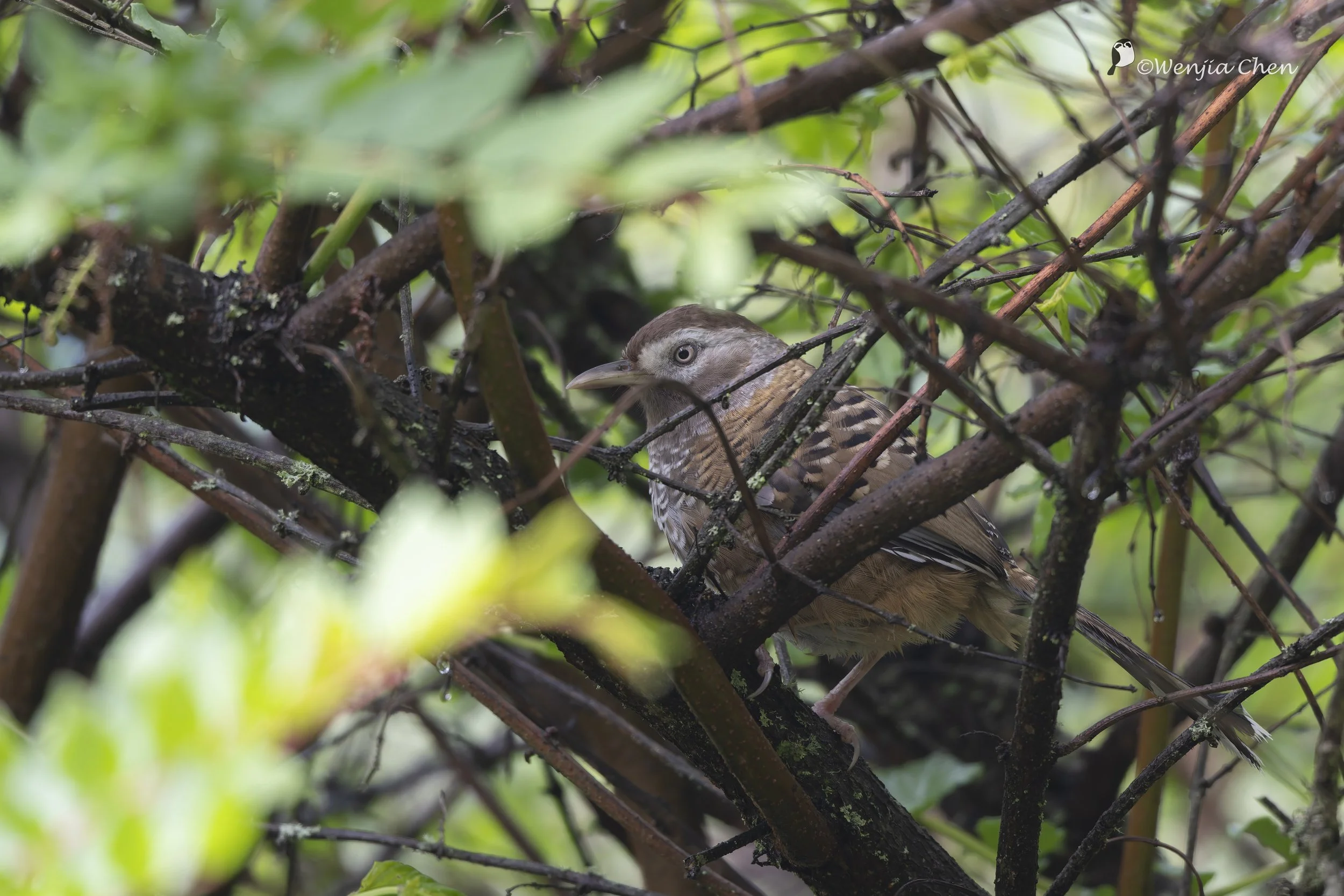
Barred Laughingthrush (Ianthocincla lunulata) — a shy and distinctive laughingthrush endemic to central China. Its beautiful song is often heard from dense cover.
Before dawn we reached the entrance of Erlang Shan, only to be greeted by heavy rain. After waiting for an hour, we began our hike along the forested mountain trail. Almost immediately, a stunning adult male Lady Amherst’s Pheasant darted across the path. The surrounding forests echoed with the calls of various Phylloscopus warblers and glimpses of Slaty-backed Flycatcher.
The surrounding forests echoed with the calls of numerous Phylloscopus warblers, while glimpses of Slaty-backed Flycatcher flitted between conifers. Five kilometers in, subtle movement in the dense undergrowth revealed our first endemic treasures: a pair of Barred Laughingthrushes, their muted colors blending with the foliage as they hopped from branch to branch.
Continuing along the main trail, the song of Firethroat captured everyone’s attention. A bold individual perched openly in a tall conifer, singing with remarkable confidence, offering extended observation for the group. On our return, two female Sharpe’s Rosefinches briefly appeared on treetops before vanishing.
The strenuous hike was followed by a drive to Moxi town, where we enjoyed a modern-Tibetan style crusine, preparing for the next day’s early departure.
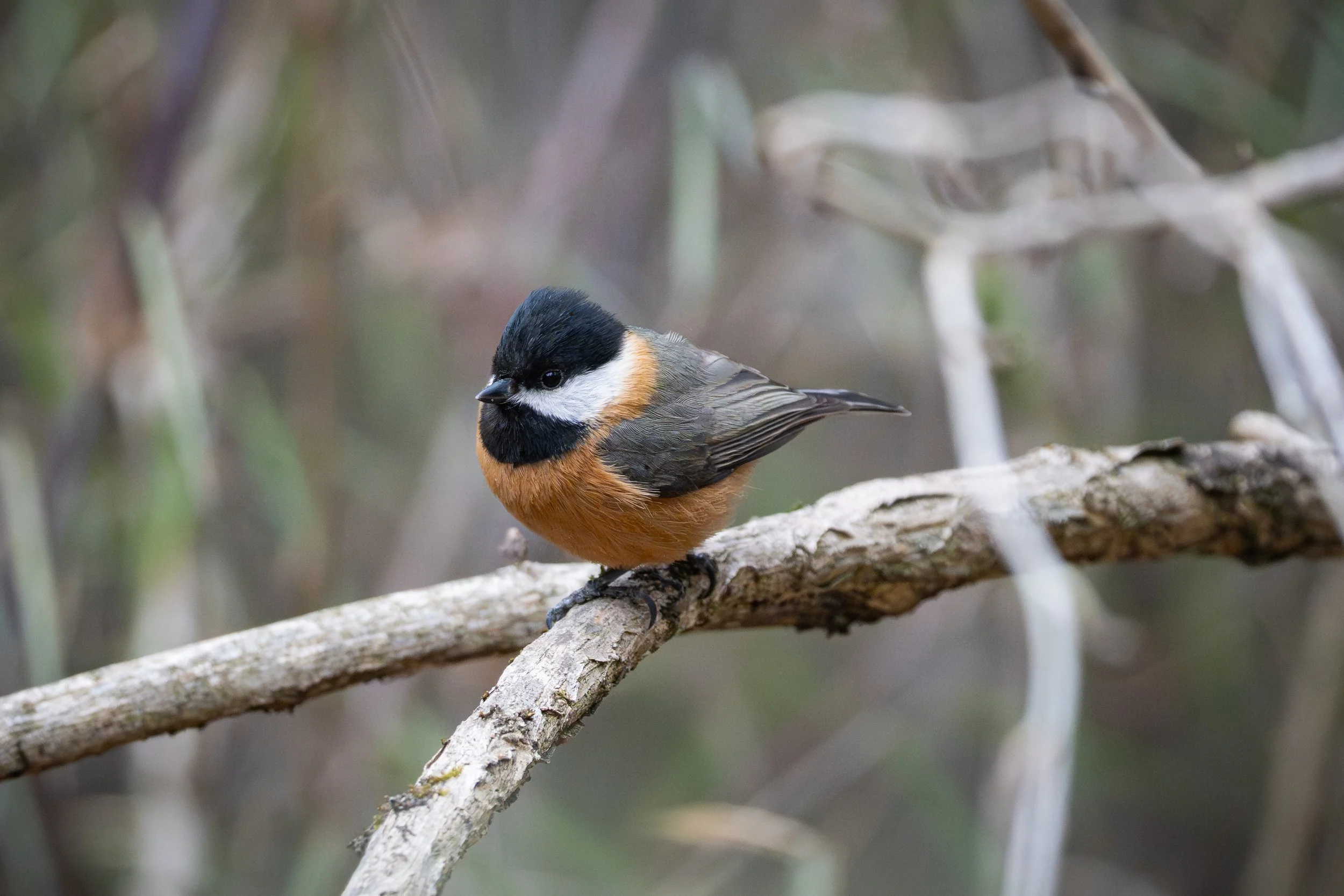
Pere David’s Tit (Poecile davidi)
Day 3: Hailuogou to Lianghekou (31 May)
A morning bus departed Hailuogou at 7:00 am toward Caohai Zi, a wetland area near the base of Gongga Mountain. The weather was bright and sunny, would provide breathtaking views of the snow-capped peaks to other tourists but making birds less active. We heard a Blue-fronted Robin, though it remained hidden in the grass. Other forest species such as Scaly-breasted Cupwing, Himalayan Shortwing, and Chestnut-headed Tesia were vocal but elusive. Pere David's Tit (Rusty-breasted Tit) appeared fleetingly, while a pair of Sapphire Flycatchers offered a brief but satisfying conclusion to the morning.
In the afternoon, we drove through rain toward high-altitude Lianghekou, arriving before dark to settle in for the night.
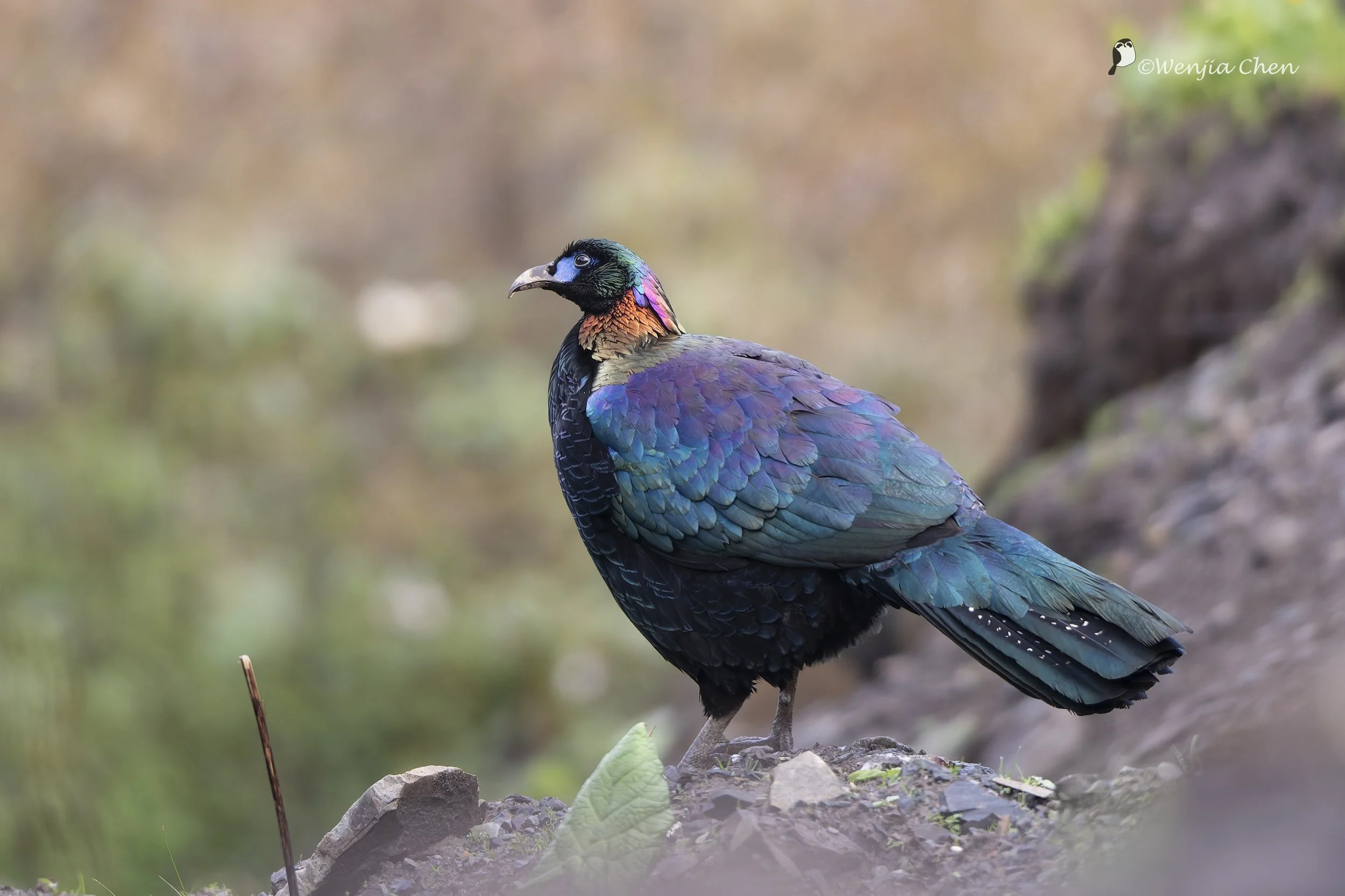
Chinese Monal (Lophophorus lhuysii) — a spectacular pheasant with dazzling rainbow-like colors, and one of China’s most iconic and beloved bird species.
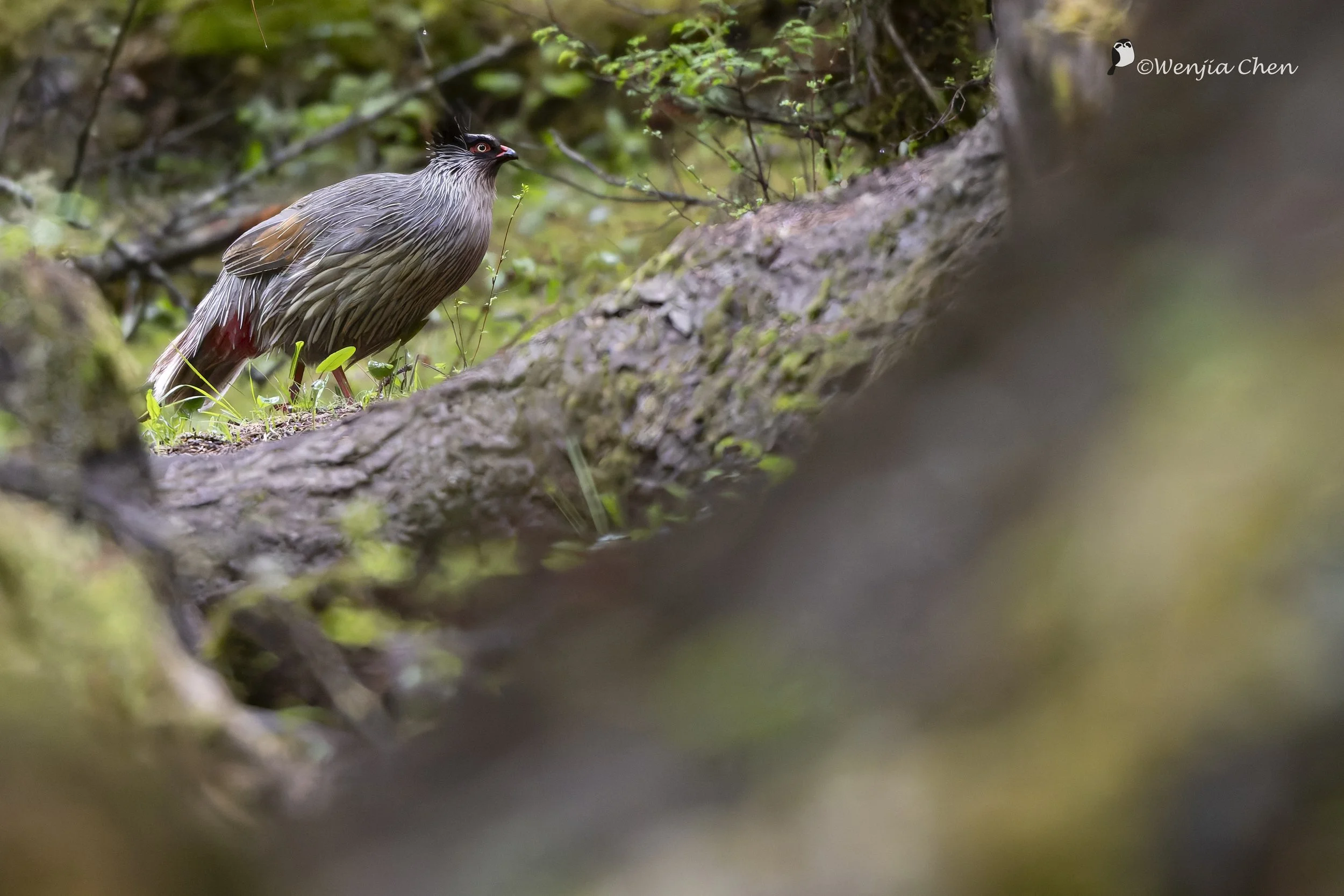
Blood Pheasant (Ithaginis cruentus)
Day 4: Lianghekou to Xiaojin (1 June)
Guided by local villagers, we climbed the mountains early in search of Chinese Monal. Along the way, we also encountered Blood Pheasant and White-eared Pheasant. The scrub and conifer habitat reminded us of Balangshan’s Huayanzi Tunnel, harboring lots of rosefinches.
Later, we drove to Xiaojin County, where the day ended with a hearty yak meat hotpot dinner — perfect preparation for the high-altitude birding ahead.
Day 5: Xiaojin to Mengbishan (2 June)
After a morning stop north of Xiaojin for Chinese Long-tailed Rosefinch, we reached Mengbishan. Half an hour into the climb, we observed the rarely recorded Deyben’s Parakeet flying above mist-shrouded native conifers.
The undoubted highlight of the day was a family group of Sichuan Jays, led by two adults with several fledglings. The adults’ bright yellow bills and the juveniles’ dark-to-yellow transitioning bills were clearly visible as they foraged boldly. This encounter lasted over half an hour before the group retreated deeper into the forest. The afternoon was marked by heavy rain, limiting further birding.
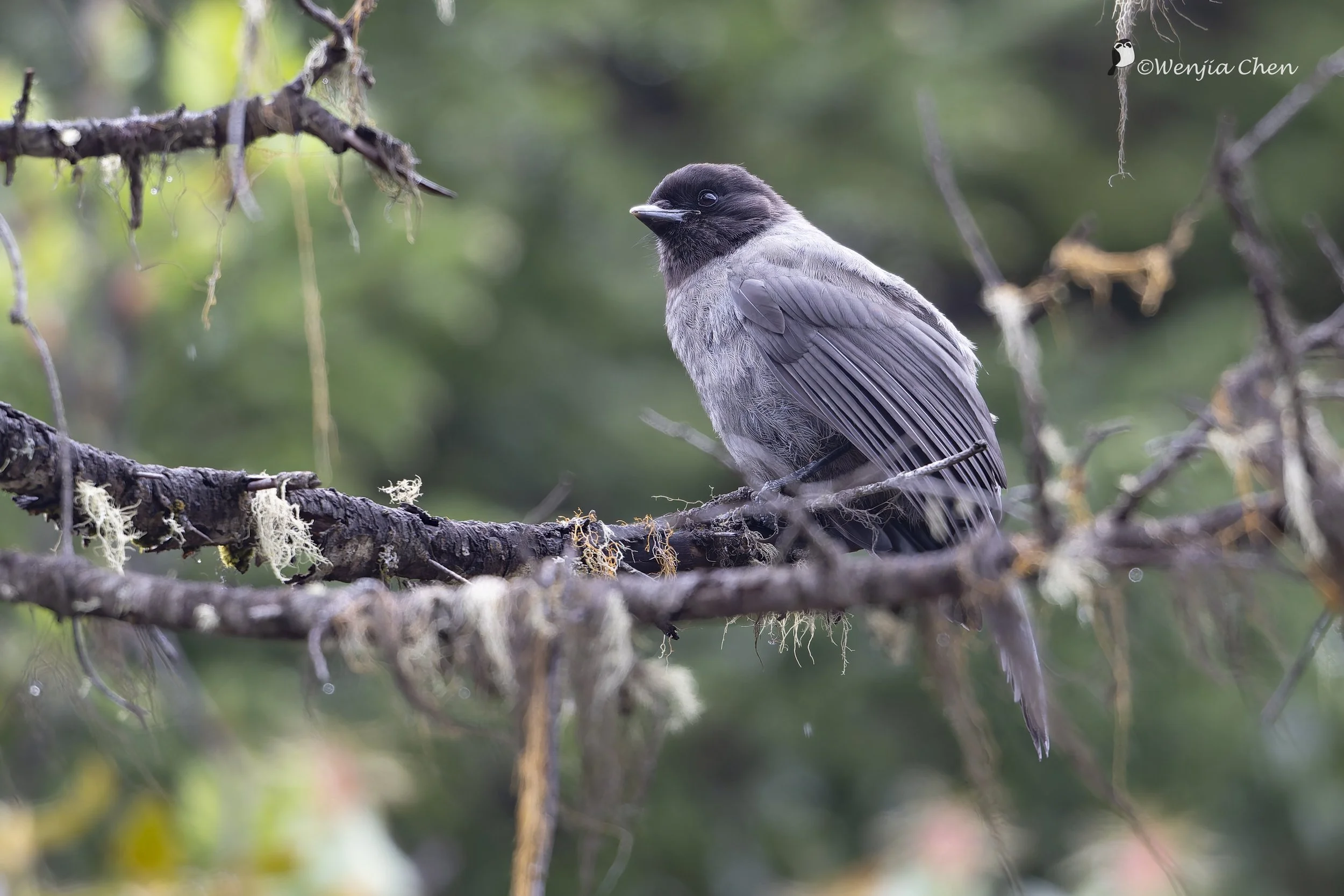
Sichuan Jay (Perisoreus internigrans)
Day 6: Mengbishan to Ruoergai (3 June)
We returned to Mengbishan early, despite having already seen many key targets. The morning was magical: Blood Pheasant, Chestnut-throated Partridge, Long-tailed Thrush, White-throated Redstart, Crimson-browed Finch, Tibetan Siskin, Three-banded Rosefinch, Przevalski’s Nuthatch, Collared Grosbeak, and Crested Tit-Warbler all made appearances.
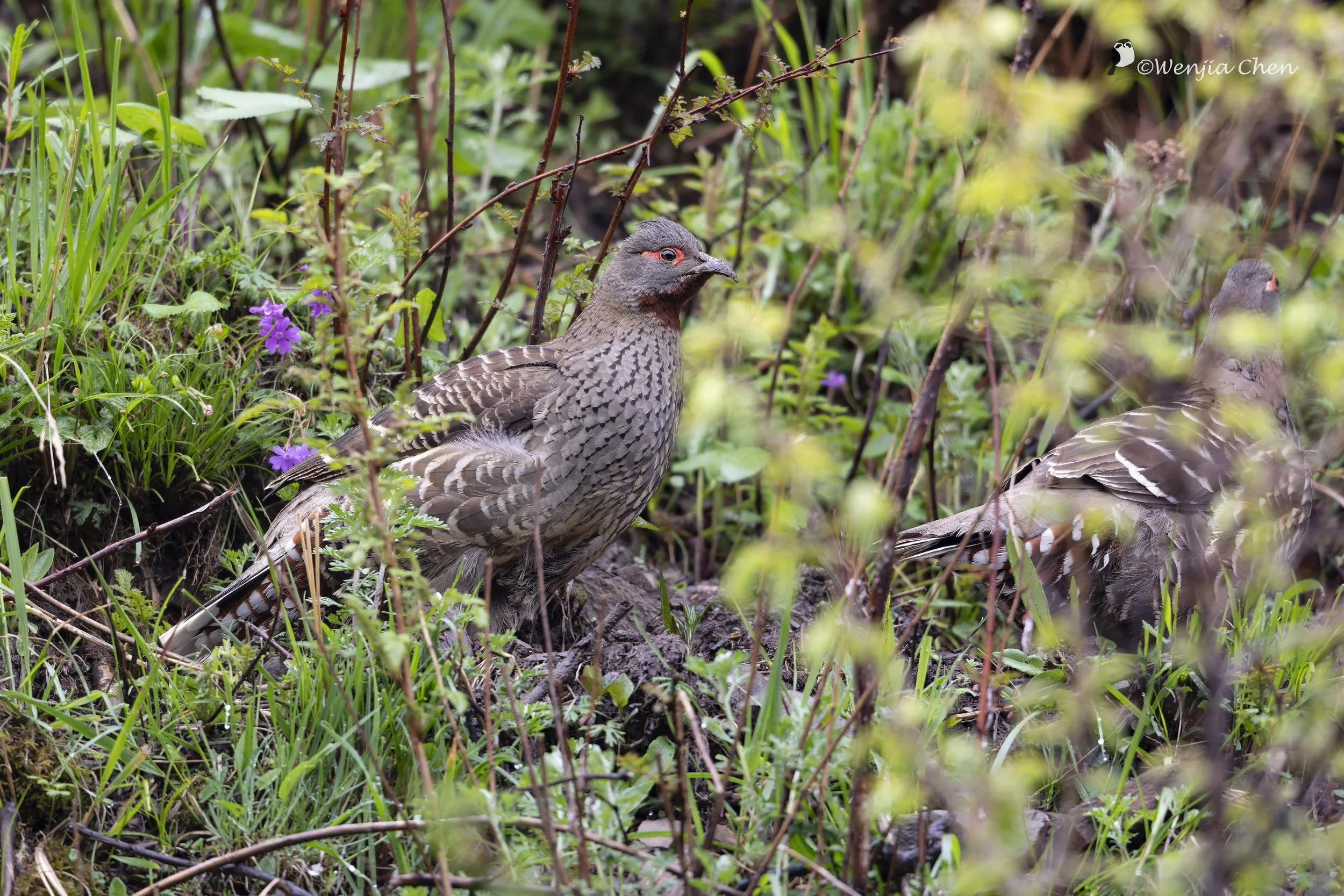
Chestnut-throated Monal-Partridge (Tetraophasis obscurus)
In the afternoon, traveling north toward Tangke, roadside stops produced Chinese Fulveta, White-browed Tit-Warbler, and Chinese Giant Shrike. A brief stop in alpine scrub yielded Przevalski’s Pinktail just as dusk fell. That evening, we attempted a search for Pere David’s Owl in Baxi Forest without success.
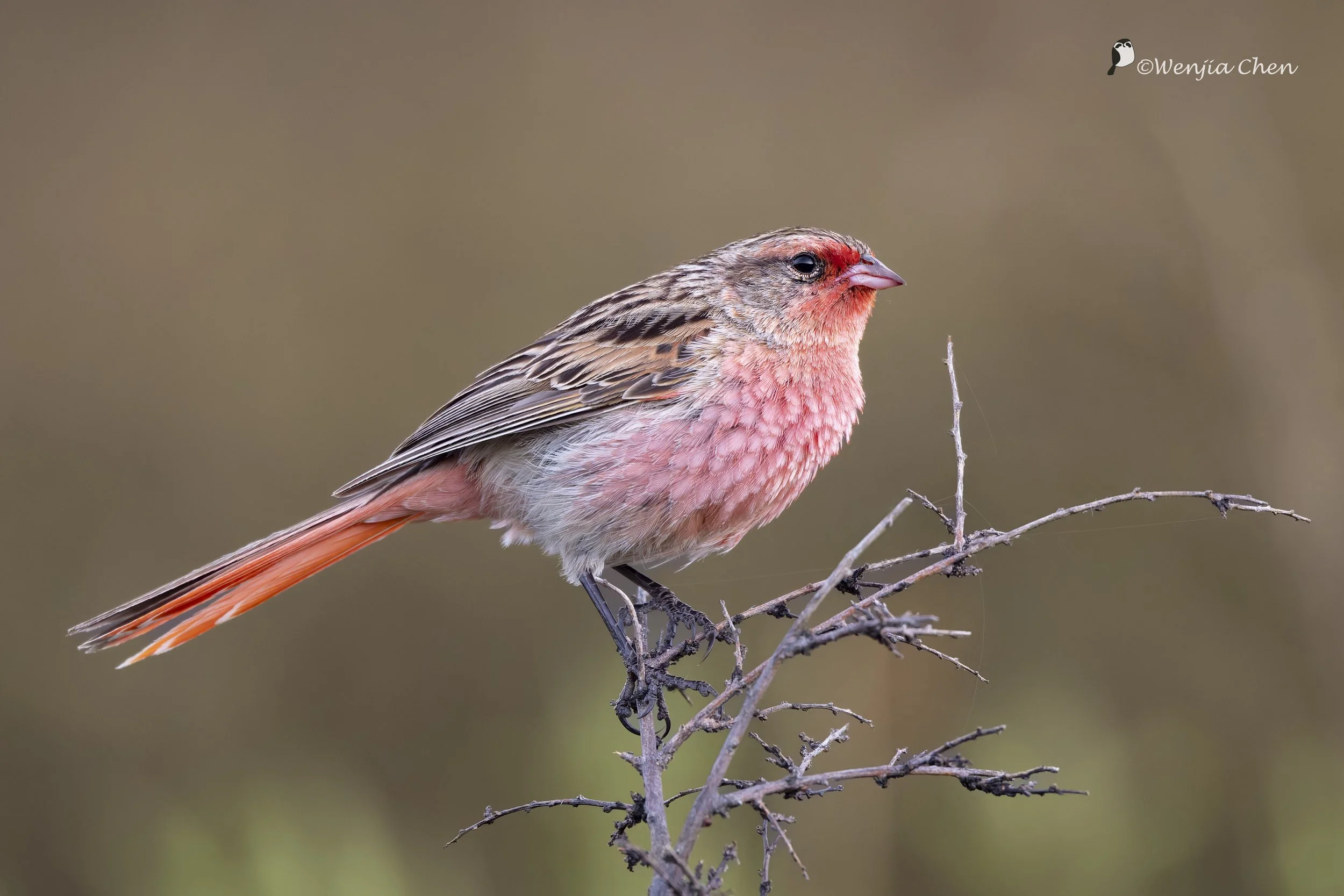
Przevalski’s Pinktail (Urocynchramus pylzowi) — a truly unique China endemic and the only member of its family, with an odd charm somewhere between a rosefinch and a bunting.
Day 7: Ruoergai (4 June)
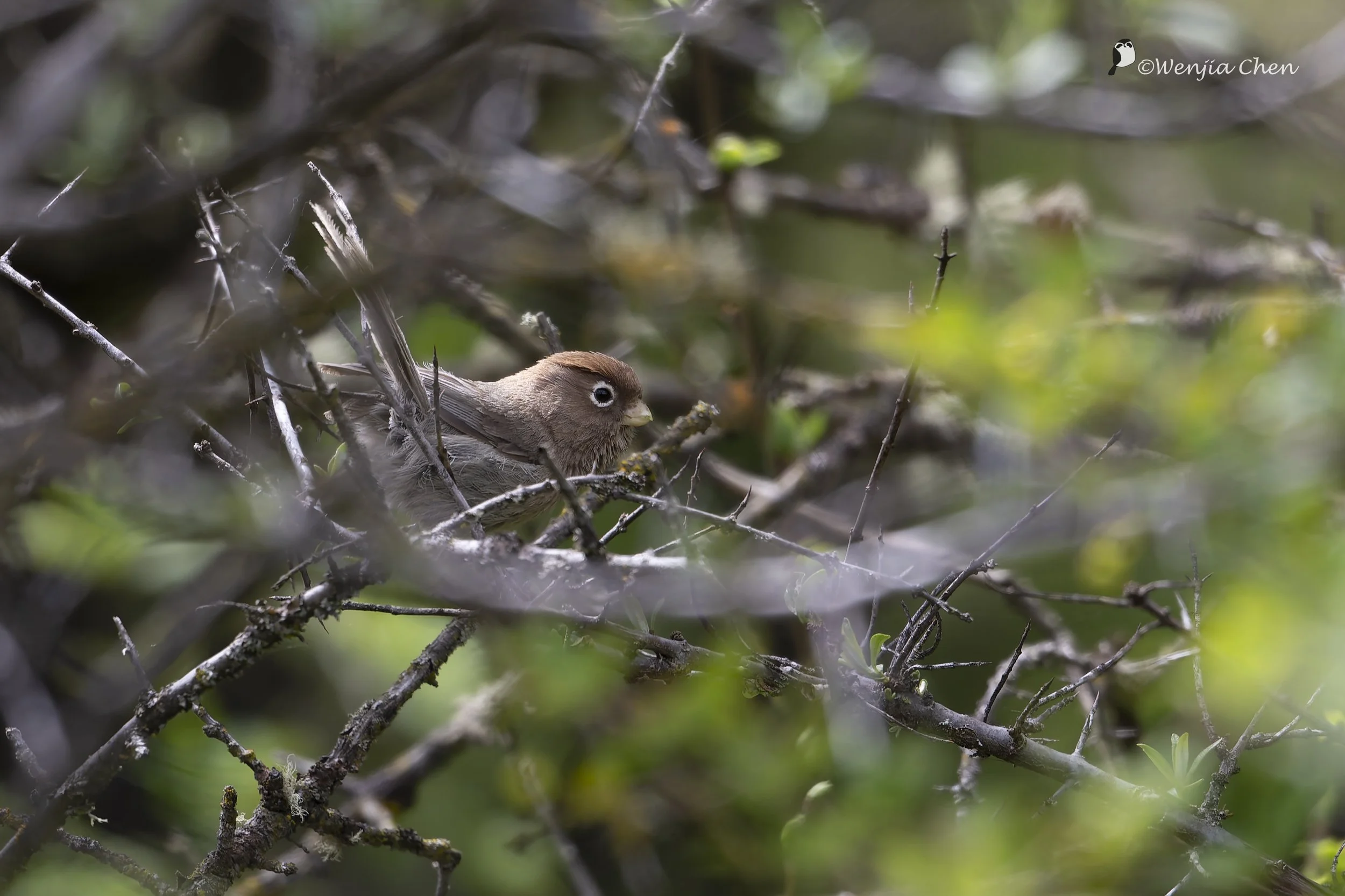
Spectacled Parrotbill (Suthora conspicillata)
After a late start due to fatigue, we headed to Qiujixiang in the morning to target Chinese Grouse and Blue-eared Pheasant, hearing but not seeing them. Seasonal caution during chick-rearing made the pheasants especially elusive. We enjoyed repeat views of Sichuan passerines and a small group of Spectacled Parrotbill.
In the afternoon, focus shifted to rare Chinese Mountain Cat near Hualake, though none were observed.
Day 8: Baxi Forest and Tangke (5 June)
An early start in Baxi Forest yielded ghostly glimpses of Chinese Grouse, while a Snowy-cheeked Laughingthrush appeared briefly before disappearing into dense thickets. Our patience was rewarded by a daytime encounter with Pere David’s Owl, singing for half an hour and allowing extended observation — the forest’s true master.
Later, a three-hour hike along the hillsides near Tangke produced White-browed Tit.
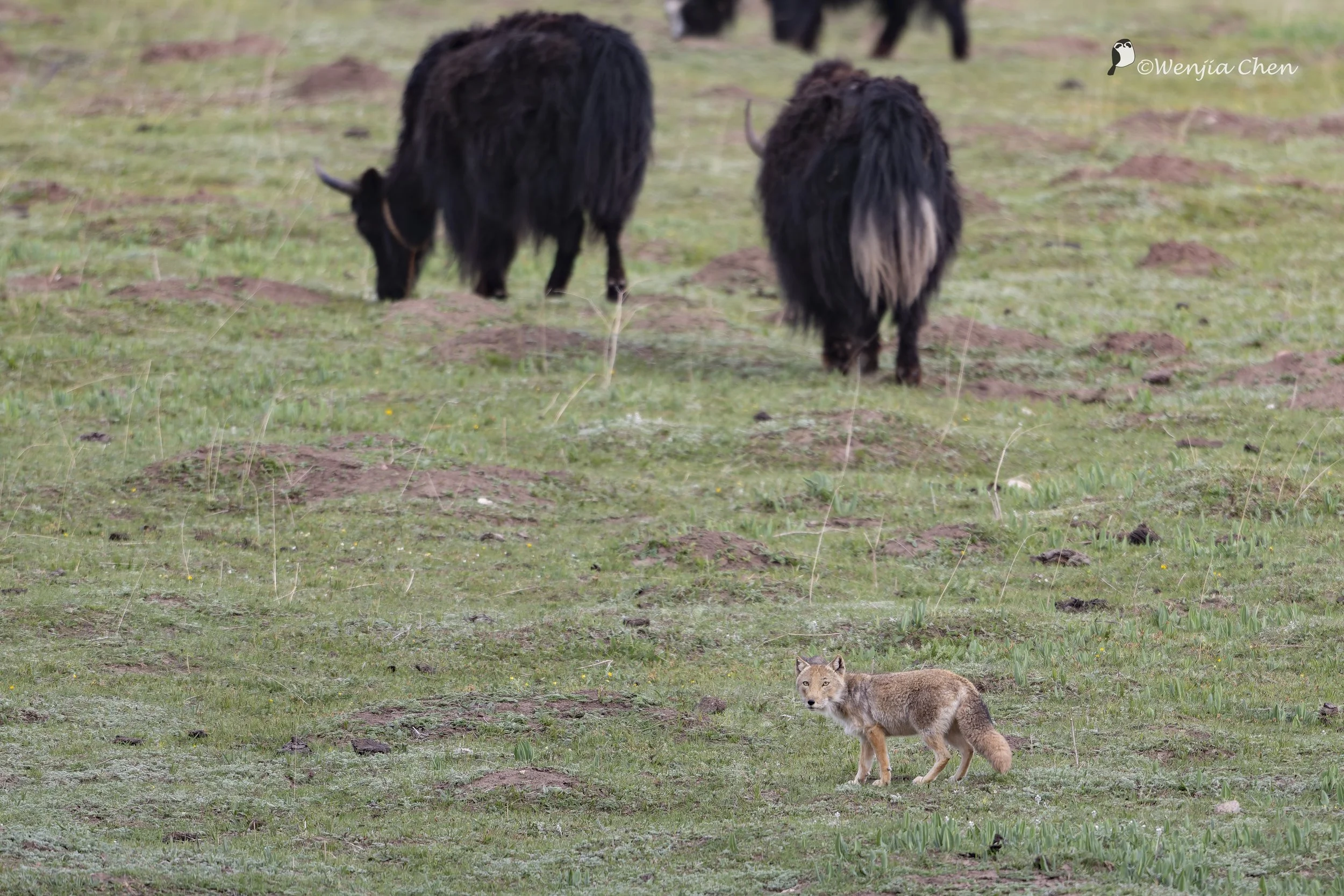
Tibetan fox (Vulpes ferrilata)
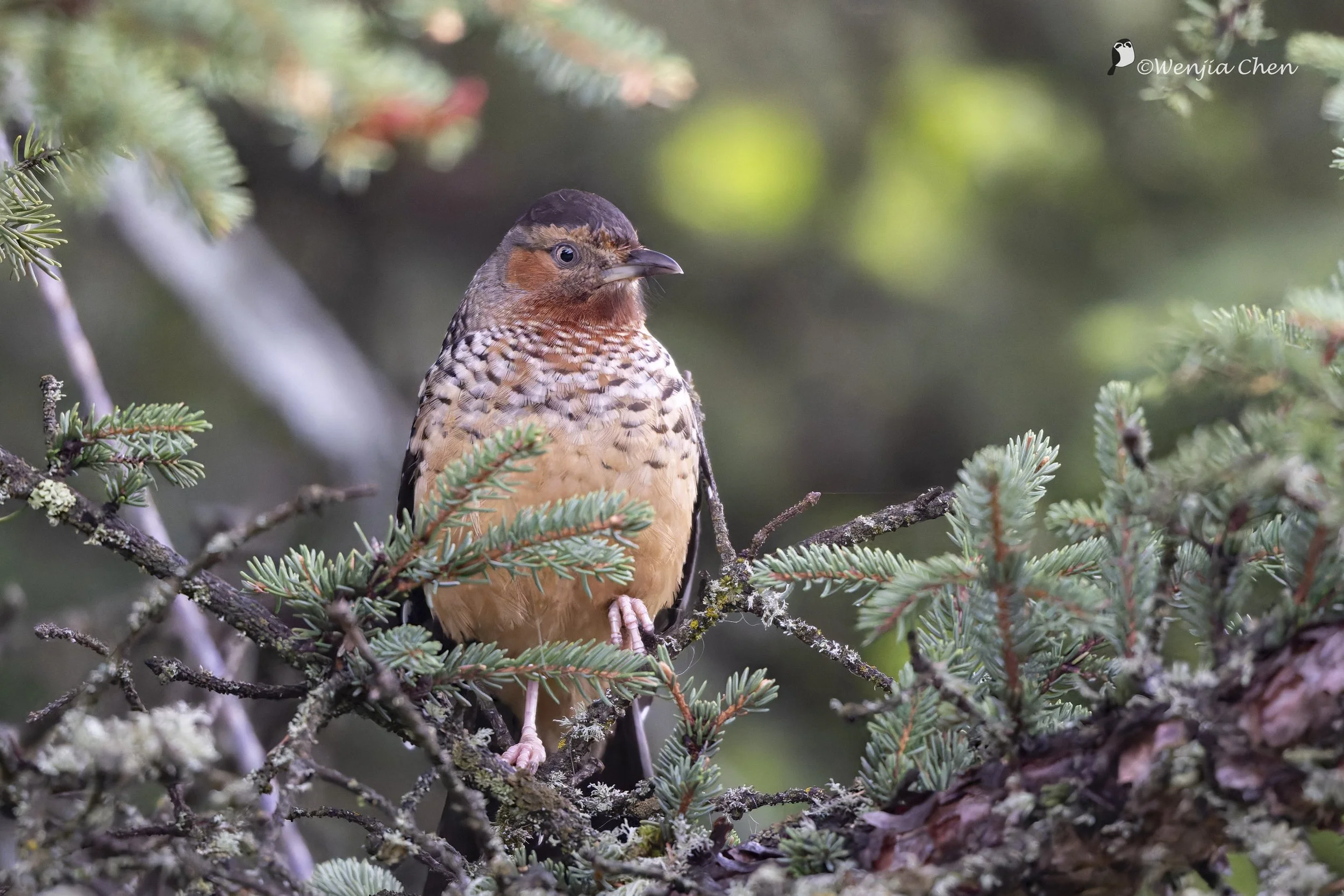
Giant Laughingthrush (Ianthocincla maxima) — a large and impressive laughingthrush of the alpine habitats of western China.
Day 9: Baxi Forest to Chuanzhusi (6 June)
Despite early morning attempts, Chinese Grouse and Snowy-cheeked Laughingthrush remained shy. We continued to Chuanzhusi, visiting Xueshanliang and Gami Temple. Severe weather with strong winds and heavy rain limited bird activity, so the afternoon was spent resting. Lunch at Chuanzhusi offered the only disappointment: the yak burger was notably unpalatable.
Day 10: Chuanzhusi to Chengdu (7 June)
Weather improved slightly, allowing a final visit to the Gami Temple and surrounding sacred mountain. From a distance, we observed Blue-eared Pheasant and a horned variant of Blood Pheasant. Several Giant Laughingthrushes were remarkably tame, feeding openly, while Siberian Rubythroats sang from dense thickets. The combination of spiritual solitude, striking landscapes, and vibrant birds made for a serene conclusion to our journey. We returned to Chengdu in the afternoon, concluding ten days of unforgettable birding.
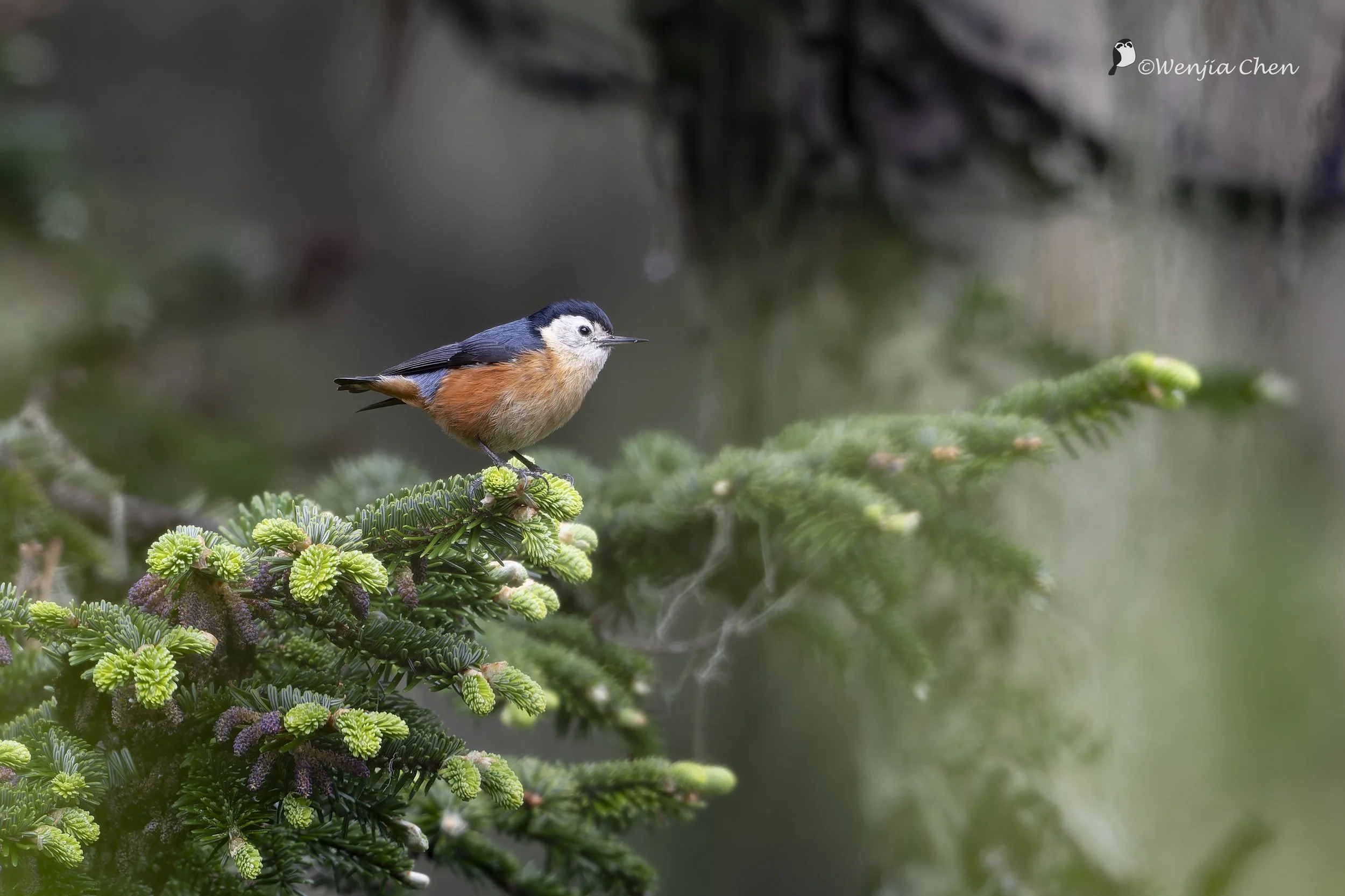
Przevalski's Nuthatch (Sitta przewalskii)
